Fort Worth Fire Pump Flow Test and Alarm Coordination
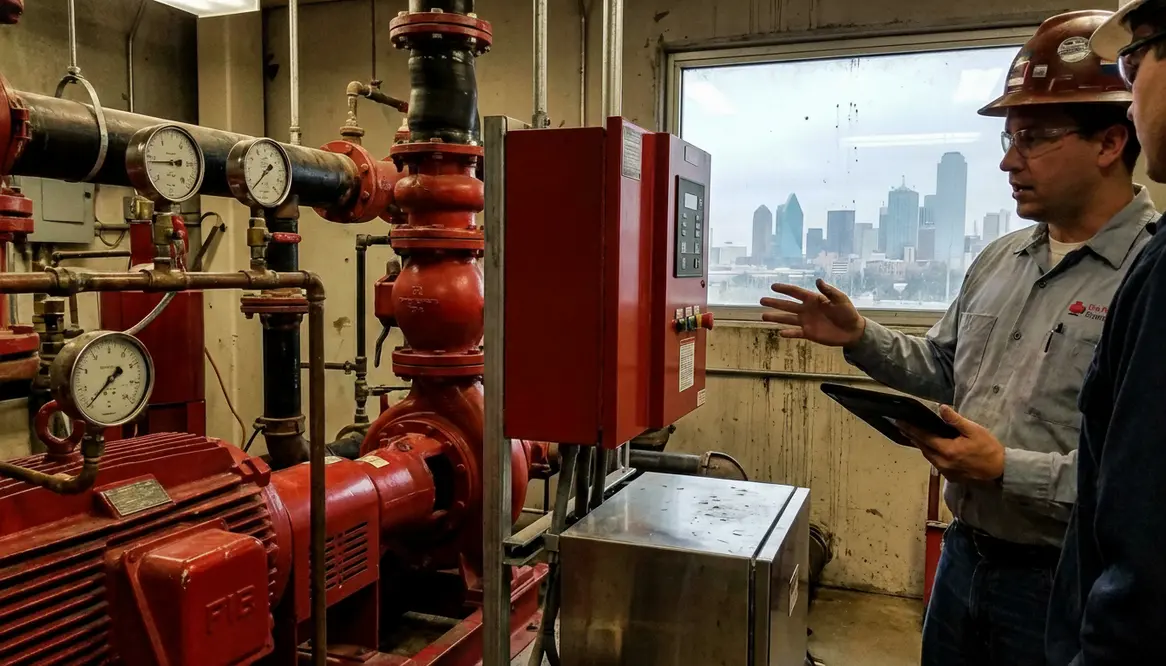
I have spent a fair share of mornings standing beside a roaring fire pump in a mechanical room that sounds like the backstage of a rock concert. Only instead of guitars, you hear steel pipes, pressure gauges, and the steady rumble of equipment built to save lives. When I talk with facility managers across Texas, one topic comes up again and again. The fort worth fire pump flow test coordinate alarm monitoring occupants process.
Now that phrase might sound like a mouthful. It almost feels like a password from a spy movie. However, for large commercial and industrial facilities in Fort Worth, it simply means making sure everyone knows what is about to happen before a fire pump flow test begins.
Because when thousands of gallons of water start moving through a system, alarms may trigger, monitoring centers light up like a Christmas tree, and occupants begin wondering if the building has suddenly decided to audition for a disaster film.
So today I will walk you through how I coordinate these tests. We will talk about alarm monitoring, communication with occupants, and how to run a smooth test that keeps everyone calm. And yes, if done right, the whole process becomes less Hollywood action scene and more well rehearsed orchestra.
Why Coordination Matters in Large Commercial Buildings
First, let us remember what a fire pump flow test actually does. It confirms that the pump can deliver the pressure and water flow your fire protection system requires. In major commercial towers, manufacturing plants, distribution centers, and hospitals, that pump is the muscle behind the entire fire suppression system.
However, during testing, the system behaves exactly like it would during a real emergency.
Consequently, alarms activate. Signals travel to the monitoring center. Security teams receive alerts. In some buildings, strobes flash and horns chirp. If nobody knows the test is coming, the reaction can range from confusion to full scale panic.
I once watched a facilities supervisor sprint down a hallway like an action hero because someone forgot to notify the alarm monitoring company. The monitoring operator called the fire department, and suddenly three trucks arrived to investigate a situation that existed only on paper.
Therefore, coordination protects more than equipment. It protects time, reputation, and operational stability inside major properties.
More importantly, it prevents unnecessary emergency dispatches that can strain local resources. In a city like Fort Worth, where emergency teams already stay busy, avoiding false alarms is simply the responsible thing to do.
Fort Worth Fire Pump Flow Test Coordinate Alarm Monitoring Occupants
When I approach a fort worth fire pump flow test coordinate alarm monitoring occupants plan, I follow a simple principle. Everyone who could possibly react to the alarm must know about the test before the pump ever starts.
That includes three key groups.
Alarm Monitoring Providers
First, I contact the alarm monitoring center. Most commercial properties route fire alarm signals to an offsite monitoring company that alerts emergency services when alarms appear.
Before testing, I call the monitoring center and place the system on test mode. This step temporarily prevents dispatch responses while signals occur during the flow test.
However, I never assume the request went through. Instead, I confirm the test window, verify the property address, and document the operator name. A few minutes of confirmation saves hours of explaining later.
Facility Operations Teams
Next, I coordinate with the building engineering team or facility manager. They know the building better than anyone. Together we choose a testing window that minimizes disruption.
For example, a large distribution center may prefer early morning testing before truck traffic ramps up. Meanwhile, a hospital or data facility might schedule during controlled maintenance hours.
Timing matters. After all, nobody wants a full pump test interrupting a critical manufacturing line or a board meeting on the top floor.
Building Occupants
Finally, we inform occupants. Not with vague notices, but with clear communication.
I recommend sending announcements through internal systems such as email alerts, tenant apps, or building notification boards. The message should explain that alarms may activate and that the activity is planned maintenance.
Once people understand what is happening, the building stays calm. And calm buildings are happy buildings.
How I Communicate With Monitoring Centers and Occupants
Now here is where the process becomes a little like directing a movie set. Everyone has a role, and timing keeps the scene running smoothly.
Column One: Monitoring and Technical Coordination
- Contact the alarm monitoring company before the scheduled test
- Place the fire alarm system into test mode
- Confirm the test duration and property details
- Verify that dispatch will be suspended during the test window
- Record confirmation numbers or operator names
Column Two: Occupant Communication and Building Awareness
- Send advance notices to tenants and department heads
- Post signage in common areas and elevator lobbies
- Coordinate with security desks and reception teams
- Explain that alarms may sound briefly during maintenance
- Provide a start time and estimated completion window
Because both sides move together, the building operates like a well rehearsed crew. The monitoring center expects signals. The occupants expect noise. Meanwhile, the testing team focuses on verifying pump performance instead of calming worried tenants.
In other words, preparation turns what could feel like chaos into routine maintenance.
What Facility Managers Often Ask Before a Fire Pump Flow Test
Many property managers ask me the same practical questions before we begin testing. And honestly, they are good questions.
For example, they ask whether alarms will activate. The answer is usually yes. Flow switches detect water movement, which signals the fire alarm system.
They also ask how long testing will last. In most commercial facilities, a complete flow test runs about thirty to sixty minutes depending on system size.
Another concern involves water discharge. Large pumps can release thousands of gallons during testing. Therefore, we plan discharge locations carefully to avoid flooding loading docks or parking areas.
Finally, managers ask whether the building remains protected during testing. The answer is reassuring. Even while testing occurs, the system typically remains operational. We simply control how signals are handled by the monitoring service.
Once those questions are answered, most managers relax. And when managers relax, the rest of the building usually follows.
Fort Worth Fire Pump Flow Test Coordinate Alarm Monitoring Occupants Best Practices
Running a fort worth fire pump flow test coordinate alarm monitoring occupants operation requires discipline and planning. Over the years, I have learned several practices that make the process far more reliable.
First, I schedule tests well in advance. Large commercial buildings often involve multiple tenants, security teams, and management layers. Advance scheduling prevents last minute confusion.
Second, I use clear communication instead of technical jargon. Occupants do not need a lecture on pump curves or pressure calculations. They simply need to know that maintenance testing will occur.
Third, I coordinate with security teams. Security desks are often the first place worried tenants call when alarms activate. If security understands the test schedule, they can calmly explain the situation.
Fourth, I confirm monitoring status immediately before the test begins. Even if the monitoring center confirmed earlier, I always verify again. Think of it as a pre flight checklist for fire protection.
Finally, once the test finishes, I notify everyone involved. Monitoring centers return the system to active status, and occupants receive confirmation that testing is complete.
That final message matters. Without it, people sometimes assume alarms will continue. Closing the loop keeps operations clean and professional.
If your team wants a deeper technical overview of how testing and inspection programs support long term reliability, resources like fire pump testing requirements offer a helpful perspective on frequency, procedures, and documentation.
Putting It All Together During Testing Day
On the day of a fort worth fire pump flow test coordinate alarm monitoring occupants event, the process feels almost like calling a playbook everyone has already memorized.
I arrive early to walk the fire pump room, verify valves and gauges, and confirm that discharge locations are ready. The facility team checks that access routes are clear and that security knows which doors technicians will use.
Right before the test begins, I call the monitoring center again. We verify the account, address, and test window one more time. If they say the system is in test mode, I ask them to confirm which signals they expect to see and how long they will allow the window to remain open.
Inside the building, occupants are already aware that maintenance is scheduled. Some might glance at the notification screens or the signs posted in elevator lobbies, but most continue their day without concern. That silence is the sound of a plan working.
Once the pump starts and water roars through the system, alarms may sound briefly. Security fields a few calls, calmly reminding callers that a planned fire pump test is underway. The testing team records pressures, flows, and readings, focusing on performance instead of public relations.
When the last data point is captured, we shut down the pump, stabilize the system, and check again for any unusual leaks, noises, or pressure drops. Only then do we move to the final stage: putting everything back exactly the way it was, with just one more confirmation call to the monitoring center.
Within a few minutes, the building returns to normal. Emails or messages go out confirming that the test is complete, and the fort worth fire pump flow test coordinate alarm monitoring occupants workflow is officially wrapped up for another year.
FAQ
Conclusion
When I oversee a fire pump test in a major Fort Worth facility, I see more than pipes and pressure gauges. I see a system that protects thousands of people and millions of dollars in property. That is why the fort worth fire pump flow test coordinate alarm monitoring occupants process matters. If your commercial or industrial facility needs professional pump testing and coordination, connect with the specialists at firepumps.org. We handle the details so your building stays protected and calm.