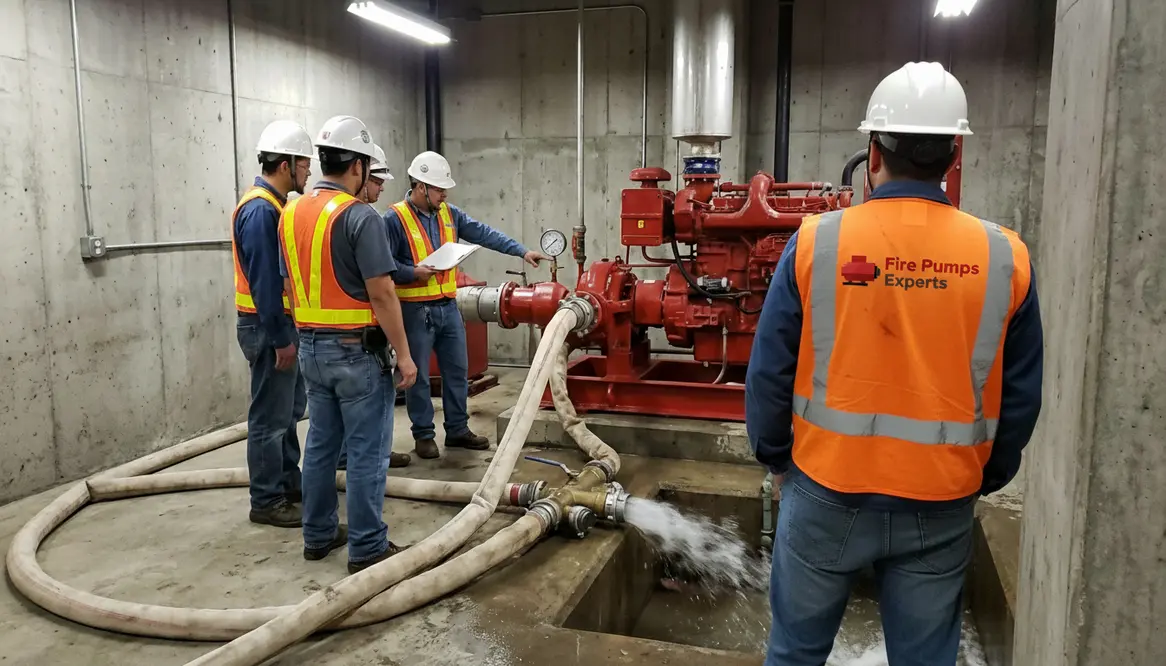
Fire Pump Acceptance Testing Guide for Facilities
I have spent enough time around commercial and industrial fire protection systems to know one thing for sure. A fire pump is only as good as its acceptance test. And yes, that moment when everything gets turned on for the first time can feel a bit like launching a spaceship, except instead of astronauts, we have contractors holding clipboards and hoping nothing explodes.
In our facility type fire pump guide, I often explain that each property type has its own demands. A high rise office tower behaves differently than a manufacturing plant. Still, no matter the setting, acceptance testing is the moment where theory meets reality. Let me walk you through what actually matters, without the fluff.
What is Fire Pump Acceptance Testing and Why Should I Care?
I will keep this simple. Acceptance testing is the official process that proves your fire pump system works as designed. It happens before the system is handed over, and it is witnessed by engineers, contractors, and often the authority having jurisdiction.
Now, here is the part developers sometimes underestimate. This is not just a box to check. If the system fails here, you are looking at delays, added costs, and a lot of uncomfortable meetings. And trust me, nobody enjoys explaining to stakeholders why water is not flowing where it should.
Additionally, acceptance testing validates flow, pressure, alarms, and backup power. It ensures that in a real emergency, your system performs without hesitation. Because when a fire starts, nobody gets a second draft.
How Do I Prepare My Project for a Smooth Acceptance Test?
Preparation is where most projects either shine or quietly fall apart. I have seen both.
First, I make sure installation is truly complete. That means aligned piping, calibrated gauges, and no temporary wiring pretending to be permanent. If it looks unfinished, it probably is.
Next, documentation needs to be airtight. Shop drawings, hydraulic calculations, and manufacturer data must match what is installed. If they do not, the test becomes more of an interrogation than a validation.
Finally, coordination matters. Fire pump acceptance testing involves multiple parties. Therefore, I always confirm that everyone shows up ready. Because nothing slows things down like waiting on someone who is “five minutes away” for an hour.
Key Components I Always Verify Before Testing Begins
Mechanical readiness essentials
I check pump alignment, coupling, and lubrication. Even a small misalignment can cause vibration issues that show up during testing.
Electrical systems in focus
The controller, transfer switch, and power supply must function seamlessly. Backup generators should start without hesitation.
Water supply reliability
Whether it is a tank or municipal feed, the supply must meet required flow rates. Otherwise, the test results become meaningless.
Instrumentation and data quality
Accurate gauges and flow meters are essential. Bad data leads to bad decisions, and nobody wants that.
The Flow Test Process Explained Without the Headache
This is where things get interesting. During the flow test, I gradually increase demand to measure how the pump performs at different points. Typically, we test at churn, rated flow, and peak demand.
At churn, the pump runs without flowing water. It tells us about pressure stability. Then, at rated flow, we confirm the system meets its design point. Finally, we push it to peak demand to see how it handles stress.
And yes, this is the part where water starts moving in serious volumes. It can feel like watching a controlled flood. Still, when everything works, it is oddly satisfying. Like seeing a perfectly executed scene in an action movie, minus the dramatic music.
Throughout the process, I compare actual performance to the pump curve. If the numbers do not line up, something is off. And that something needs fixing before anyone signs off.
Common Pitfalls I See Developers Overlook
Even experienced teams miss things. It happens.
One common issue is ignoring system integration. Fire alarms, sprinklers, and pumps must communicate properly. If they do not, the system becomes a collection of parts instead of a unified defense.
Another problem is rushing the schedule. Acceptance testing cannot be squeezed into a tight window without consequences. When people rush, mistakes multiply. And unlike a missed deadline, a failed fire pump test is hard to hide.
I also see developers underestimate the importance of the facility type fire pump guide. Different facilities require different performance expectations. A warehouse does not behave like a hospital, and treating them the same leads to trouble.
How Acceptance Testing Impacts Long Term Performance
Here is something I always remind clients. Acceptance testing is not just about today. It sets the tone for the entire lifecycle of the system.
If the system passes with clean, accurate data, future maintenance becomes easier. Technicians know what “normal” looks like. However, if the baseline is flawed, every future inspection becomes a guessing game.
Moreover, a properly tested system reduces risk. Insurance providers, inspectors, and building managers all rely on that initial validation. It is the foundation of trust in your fire protection strategy.
And let us be honest. Peace of mind is a valuable asset. Especially when you are responsible for a major commercial or industrial property. When it is backed by a clear facility type fire pump guide that matches your occupancy, that peace of mind is much easier to defend in front of investors and regulators.
FAQ
Final Thoughts and Next Steps
If you are developing or managing a commercial property, do not treat acceptance testing as an afterthought. Treat it like the final exam your building cannot afford to fail. When you align your system with a solid plan and lean on a proven facility type fire pump guide, you set yourself up for success. Reach out to experienced professionals, ask the right questions, and make sure your system performs when it matters most.
If you want a reference point for how structured guidance can look, resources like https://firepumps.org can help frame your questions and expectations. Pair that with your project-specific documentation and your own facility type fire pump guide, and you will be far better prepared when the acceptance test day finally arrives.