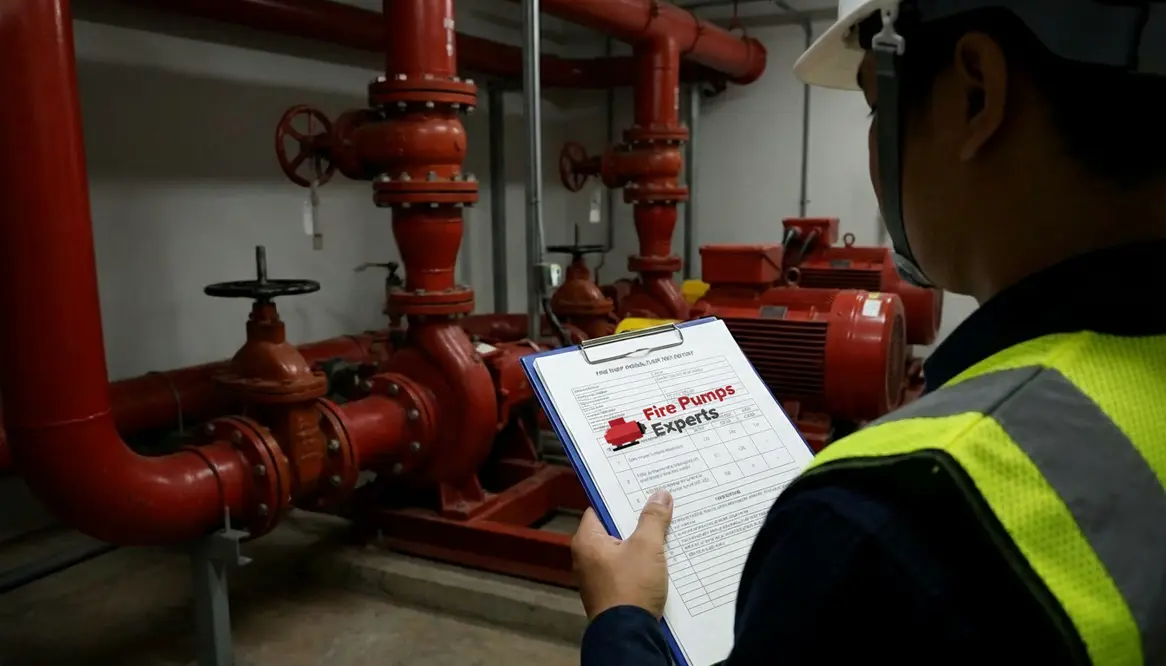
Fire Pump Annual Flow Test Columbus Marginal Pass Guide
How to read a “just barely” passing fire pump test without losing sleep, skipping the details, or gambling with your facility’s fire protection.
I have seen plenty of fire pump test reports in my day. Some look perfect. Some look… well, like a student who studied just enough to pass the exam but still sweats when the teacher walks by. If you operate a large facility in Ohio, you know the moment I am talking about. The annual report lands on your desk, and the result reads something like “marginal pass.”
Now the question becomes clear. What exactly does that mean for your system?
When discussing a fire pump annual flow test columbus interpret marginal pass, the conversation quickly moves from simple paperwork to real operational risk. After all, fire pumps protect warehouses, manufacturing plants, hospitals, data centers, and high rise properties. In other words, the kind of places where downtime costs serious money. So today I will walk through how I personally interpret a borderline result, what it actually tells us about pump performance, and when it signals a deeper problem waiting around the corner.
Think of it like a physical checkup. Passing is good. But a marginal pass is your pump clearing its throat and quietly saying, “Hey… maybe we should talk.”
Why “Marginal” Should Get Your Attention
A marginal pass is not a crisis. It is a warning light. Your pump met the minimum, but it is drifting away from its original performance. The sooner you understand why, the easier and cheaper it usually is to correct.
If your latest fire pump annual flow test columbus interpret marginal pass report feels vague, the goal is to turn that vague concern into clear next steps instead of guesswork.
What a Fire Pump Annual Flow Test Actually Measures
Before we decode a borderline result, we need to understand what the annual flow test measures in the first place. Fortunately, the idea is simple.
During the test, technicians run the fire pump through several flow points. Typically this includes churn, 100 percent rated capacity, and 150 percent capacity. Meanwhile we measure pressure, flow, and mechanical performance.
The goal is to confirm that the pump still performs close to its original acceptance curve. In other words, the pump should deliver the water volume and pressure it promised when it was installed.
However, real life happens.
Impellers wear. Suction conditions change. Valves drift slightly out of position. Even small changes inside a commercial facility can influence system hydraulics.
Therefore, the annual test acts like a yearly snapshot of pump health. If performance drifts too far below the original curve, the system fails. But sometimes it lands in the gray area. Not great. Not terrible. Just enough to pass.
And that gray area is where many Columbus facility managers start scratching their heads.
How I Approach a Fire Pump Annual Flow Test Columbus Interpret Marginal Pass Scenario
When I review a borderline result, I resist the urge to panic. Instead, I walk through the data step by step.
First, I compare the test curve to the original acceptance curve. The relationship between pressure and flow tells the real story. A marginal pass often appears when performance drops close to the lower tolerance allowed by NFPA standards.
However, numbers alone do not tell the full story. I also examine the system environment.
Questions I Ask When Reviewing the Report
- Was the water supply stable?
Municipal pressure changes can skew readings during a test. - Did we see vibration or unusual noise?
Mechanical signals often reveal internal wear before numbers fully collapse. - Were valves fully open and calibrated?
You would be surprised how many “pump problems” turn out to be valve position issues.
Meanwhile, I look for trends from previous years. One marginal pass may not mean much. However, three years of gradual decline tells a very different story.
Think of it like watching a baseball player’s stats. One off season happens. But if the batting average drops every year, the manager starts thinking about a replacement.
Signs a Marginal Result Might Point to a Larger Issue
Now here is where experience matters. A borderline pass can mean the pump is simply aging normally. On the other hand, it might be the early warning sign of performance failure.
Several clues help separate those two situations.
Consistent pressure drop across multiple flow points
If pressure falls noticeably at both rated and overload flow levels, internal wear is likely occurring inside the pump assembly.
Reduced churn pressure
Churn pressure tells us about pump condition without flow demand. A drop here often signals impeller wear or internal clearances growing too large.
Higher vibration levels
Commercial fire pumps should run smoothly. Excess vibration can indicate bearing issues or shaft alignment problems.
Driver performance changes
Electric motors and diesel drivers both influence pump output. If driver speed fluctuates, the pump cannot maintain expected pressure.
Interestingly, I often tell facility managers this simple truth.
Fire pumps rarely fail overnight. They whisper first. Marginal results are sometimes that whisper.
Ignore it long enough, and eventually the whisper turns into a very loud, very expensive conversation.
Common Causes of Marginal Pump Performance in Large Facilities
Across Columbus commercial and industrial properties, I repeatedly see the same few culprits behind borderline results.
First comes suction supply limitations. As cities grow, municipal systems evolve. Pressure conditions that worked perfectly ten years ago may no longer support peak pump demand.
Second comes internal wear. Pumps that run weekly for testing accumulate thousands of operating hours over their lifespan. Eventually impellers erode, clearances widen, and efficiency declines.
Third comes system changes inside the building.
Many large facilities expand sprinkler coverage over time. New hazard areas, warehouse storage changes, or additional floors all shift hydraulic demand. Suddenly the original pump operates closer to its limits.
And finally, there is the human factor.
Improper valve positions. Partially closed isolation valves. Flow meters slightly out of calibration. These small details can turn a strong test result into something that looks questionable.
Frankly, diagnosing the cause sometimes feels like detective work. Not quite Sherlock Holmes level, but close enough that I occasionally imagine dramatic background music during inspections.
Key Data Points I Review When Evaluating Marginal Results
To truly understand borderline performance, I focus on a handful of critical measurements.
Hydraulic Performance Checks
Pump Curve Comparison
I overlay current readings against the original factory curve. Even small deviations tell us how efficiency has shifted over time.
Suction Pressure Stability
Fluctuating supply pressure can distort test outcomes. Stable suction conditions are essential for accurate interpretation.
Discharge Pressure
This value reveals how effectively the pump converts mechanical energy into water pressure.
Mechanical & Historical Clues
Driver Speed
Whether electric or diesel, driver RPM must match design specifications to deliver proper pump output.
Flow Accuracy
Meter calibration matters. If measurement equipment drifts, results can appear worse than reality.
Historical Test Trends
Performance history often predicts future reliability better than any single test snapshot.
By examining these data points together, patterns appear quickly. And those patterns tell me whether the pump simply had a rough day or whether we need deeper maintenance planning.
What Should a Facility Do After a Marginal Pass
So the report arrives. It says marginal pass. Nobody loves that phrase. It sounds like a movie review that reads, “Well… at least the popcorn was good.”
Practical Next Steps After a Borderline Result
- Review the complete performance curve. Do not rely only on the pass fail summary. The curve tells the real story.
- Verify system conditions during the test. Confirm valve positions, supply pressure stability, and instrumentation accuracy.
- Schedule a follow up evaluation if needed. Sometimes a second test with calibrated equipment reveals a completely normal result.
- Plan maintenance if decline appears real. That might include impeller refurbishment, bearing replacement, or driver servicing.
For major commercial properties, this proactive step protects far more than a pump. It protects operational continuity, tenant safety, and regulatory compliance.
And frankly, proactive maintenance always costs less than emergency replacement during an inspection failure. That is one of the reasons many facilities partner with specialists who live and breathe fire pump testing requirements instead of treating each fire pump annual flow test columbus interpret marginal pass report as a one-off mystery every year.
FAQ: Fire Pump Testing and Marginal Results
Facility teams ask many of the same questions after they see a “barely made it” test summary. These answers help frame what your fire pump annual flow test columbus interpret marginal pass result is really telling you.
Conclusion
If you manage a large facility, do not treat a borderline result as background noise. A careful fire pump annual flow test columbus interpret marginal pass review reveals valuable insight into system health. Address small performance shifts early, and your fire protection system stays reliable when it matters most. If your latest test raised questions, bring in experienced eyes, review the data carefully, and make a plan before small issues become expensive surprises.