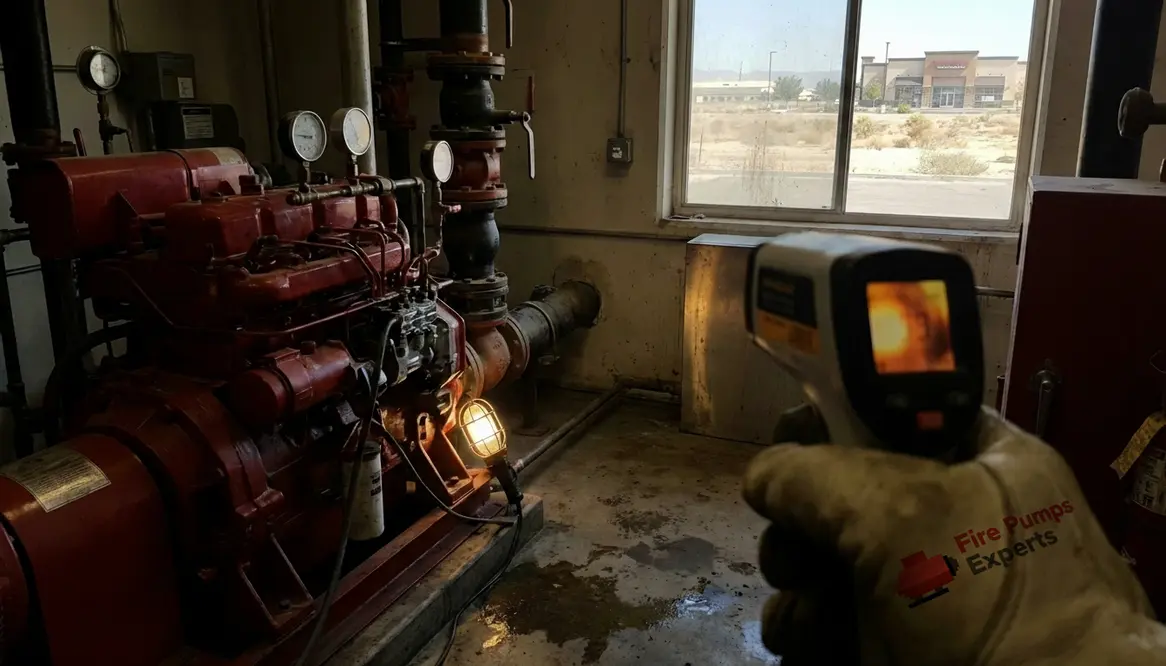
Fire Pump Heat Buildup Riverside CA Guide
I have spent enough time around pump rooms to know that silence can be deceptive. A system may hum along, steady and loyal, while trouble quietly builds beneath the surface. That is exactly what happens with fire pump heat buildup Riverside CA during extended operation. In large commercial and industrial facilities, where fire protection systems must perform without hesitation, heat is not just a byproduct. It is a signal. Ignore it, and you invite risk. Pay attention, and you stay ahead of failure.
At a glance: why heat buildup matters
- Quietly degrades seals, bearings, and casing
- Turns routine tests into stress events
- Amplified by warm Riverside pump rooms
- Directly tied to long term system reliability
Understanding Fire Pump Heat Buildup Riverside CA in Real Conditions
Let me paint the picture. A fire pump kicks on during a prolonged demand, maybe a test or a real emergency. At first, everything behaves. However, as time stretches on, friction, pressure, and recirculation begin to stack up. The pump starts to warm, then heat builds, and suddenly, what felt routine becomes a mechanical stress test.
In Riverside, ambient temperatures already lean warm. So, when a pump runs continuously, the system absorbs that external heat while generating its own. Consequently, seals wear faster, bearings strain, and water inside the casing can even approach damaging temperatures. It is not dramatic like a Hollywood explosion, but it is just as serious.
I like to say a fire pump under heat stress is like a marathon runner who skipped hydration. It may keep moving, but it is not going to end well.
What “real world” heat buildup looks like
In real facilities across Riverside, fire pump heat buildup Riverside CA often shows up during:
- Weekly or monthly testing that runs longer than planned
- System imbalances where a pump recirculates more than it discharges
- Hot summer days where the pump room feels like a sealed oven
- Undersized or poorly maintained ventilation systems
Why Extended Operation Pushes Systems to Their Limits
Extended operation is not rare in commercial properties. High rise buildings, distribution centers, and manufacturing plants often require long duration testing or sustained flow conditions. Because of this, pumps operate far beyond short burst scenarios they were initially designed to handle.
As a result, several factors combine:
- Internal friction increases as components spin continuously
- Water recirculation rises when discharge demand fluctuates
- Cooling becomes less effective under constant load
- Mechanical parts expand under heat stress
Moreover, when these factors overlap, the system no longer operates in its optimal range. It drifts into a zone where wear accelerates quietly. That is the danger. You do not always hear it or see it until performance drops.
The hidden cost of “it’s just a test”
Every extended test that pushes a pump into unnecessary heat buildup quietly shortens component life. Over a year of weekly testing, that “no big deal” mindset can translate into real repair bills, efficiency losses, and reliability gaps right when you need performance to be flawless.
What signs tell me my fire pump is overheating during long runs?
I keep this simple because, in the field, clarity matters more than theory. If I walk into a pump room and suspect heat buildup, I look for patterns, not just numbers.
Practical overheating checkpoints
- Casing temperature: If the casing feels hotter than expected, that is a clue.
- Sound change: A pump under thermal stress often changes tone, like a musician hitting a slightly off note.
- Pressure behavior: Fluctuations during steady demand can point to internal inefficiencies caused by heat.
- Seal and lube condition: Heat dries things out. Premature wear often has heat written all over it.
- Room feel: Sometimes the room just feels hotter than it should. That instinct has saved more systems than fancy dashboards ever did.
Preventing Fire Pump Heat Buildup Riverside CA Before It Starts
Now, here is where we shift from observation to control. Preventing heat buildup is not about one fix. It is about a series of deliberate choices that work together.
First, I ensure proper circulation. Relief valves and bypass lines must function correctly so water does not sit and cook inside the pump. Then, I focus on ventilation. Pump rooms in Riverside need airflow that matches operational demands, not just code minimums.
Equally important, I monitor run duration during testing. Long tests are necessary, but they should include intervals that allow the system to stabilize. Think of it as pacing. Even elite athletes rest between sets.
Key Prevention Steps
- Maintain relief valve performance
- Verify proper alignment
- Inspect lubrication regularly
- Monitor temperature trends
Operational Adjustments
- Schedule staged testing cycles
- Improve pump room airflow
- Track pressure consistency
- Use thermal monitoring tools
Because when these steps align, the system stays within safe thermal limits. And that means reliability when it matters most.
The Riverside Factor: Climate Meets Infrastructure
Riverside brings its own personality to the equation. Warm weather, dense commercial development, and high demand on infrastructure all influence how fire pumps behave. Therefore, what works in cooler regions does not always translate here.
I have seen facilities underestimate how quickly ambient heat compounds internal pump temperatures. In some cases, pump rooms lack sufficient cooling, which turns extended operation into a slow heat trap. It is like leaving your laptop in the sun and expecting it to run a full workload. Not impossible, but definitely not wise.
Why Riverside pump rooms run hotter than you think
- High ambient temperatures shrink your thermal safety margin.
- Concrete-heavy structures trap heat around mechanical rooms.
- Retrofits often add equipment without upgrading ventilation.
- “Code minimum” cooling is rarely enough for extended tests.
So, adapting to local conditions is not optional. It is essential for maintaining performance across large scale properties and keeping fire pump heat buildup Riverside CA in check during long-duration operation.
Long Term Impact on Commercial and Industrial Systems
Heat buildup is not just a short term inconvenience. Over time, it chips away at system integrity. Bearings degrade faster, seals lose effectiveness, and efficiency drops. Eventually, what started as minor heat stress becomes a full scale maintenance issue.
For large facilities, that translates into higher costs, unexpected downtime, and potential compliance concerns. And let us be honest, no facility manager wants to explain to stakeholders why a critical fire protection system failed during a routine test.
Heat, reliability, and your budget
- Shortened bearing and seal life increases replacement frequency.
- Efficiency losses mean pumps work harder to deliver the same flow.
- Hidden damage can surface as failures during inspections or emergencies.
- Chronic fire pump heat buildup Riverside CA can trigger more corrective work than planned maintenance ever would.
So, I treat heat management as part of long term asset protection. It is not flashy, but it is foundational.
FAQ: Fire Pump Heat Buildup in Commercial Systems
These are the questions that come up most often when fire pump heat buildup Riverside CA starts showing up in test logs and inspection reports.
Keep Your System Cool, Reliable, and Ready
When I think about fire pump reliability, I think about control. Not guesswork, not luck, but steady, informed oversight. If your facility in Riverside depends on continuous performance, then managing heat is not optional. It is critical. So, take a closer look at your system, refine your operation strategy, and partner with experts who understand large scale fire protection. Because when the moment comes, your system should respond with confidence, not compromise.