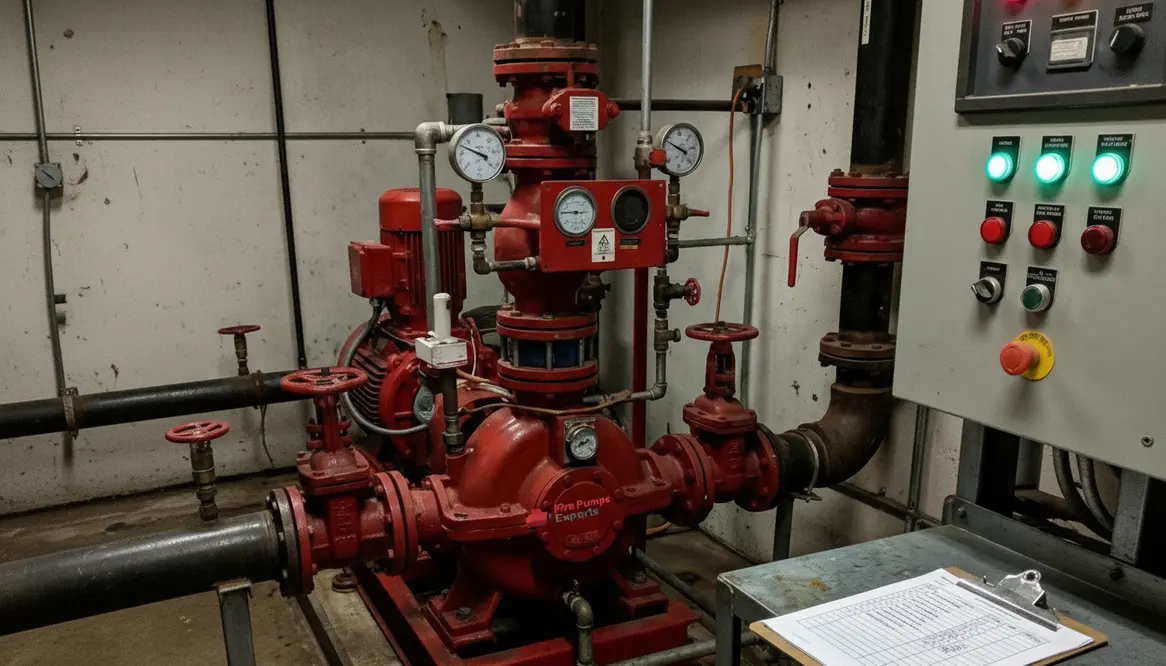
Fire Pump Inspection and Testing Requirements Denver
I have spent a good chunk of my career walking mechanical rooms that hum like a quiet orchestra. Down there, beneath office towers and industrial plants, sits the unsung hero of fire protection: the fire pump. It waits patiently for the one day nobody hopes will come. And here in Colorado, understanding the fire pump inspection and testing requirements denver enforces is not just good practice. It is the difference between a system that performs and one that simply looks impressive on paper.
Commercial campuses, distribution centers, hospitals, and high rise facilities across the city rely on these systems every day. However, a fire pump is not a “set it and forget it” machine. Denver codes, NFPA standards, and insurance expectations all demand regular inspection and testing. Therefore, I like to think of inspections as a conversation with the equipment. If you listen closely, the pump tells you exactly how healthy it is. And occasionally it whispers, “Hey friend, maybe tighten that coupling before things get dramatic.”
Fire Pump Inspection and Testing Requirements Denver Facility Teams Should Know
First things first. Denver largely follows NFPA 25, the national standard for inspection, testing, and maintenance of water based fire protection systems. However, local enforcement and documentation expectations can be strict. Facility managers responsible for large commercial or industrial properties must follow scheduled checks that range from weekly glances to annual performance testing.
In other words, the pump does not just get attention once a year. It gets a routine relationship.
The Basic Rhythm of Inspection and Testing
Here is the rhythm most facilities follow.
- Weekly inspections verify pump room conditions, gauges, and controller status.
- Monthly checks confirm the system starts correctly and maintains pressure.
- Annual flow testing measures actual pump performance under load.
- Controller and electrical reviews ensure reliable automatic operation.
Meanwhile, documentation matters almost as much as the test itself. Denver inspectors want records that show consistency. Think of it like a fitness tracker for your pump. If the data disappears, the story disappears with it.
Also, commercial buildings with diesel driven pumps carry additional responsibilities. Fuel levels, battery health, and engine conditions must stay within safe limits. Diesel pumps are reliable, but like any engine, they appreciate a little attention. Ignore them long enough and they will complain louder than a car that skipped three oil changes.
What a Real Field Inspection Looks Like Inside a Pump Room
Now let me paint the picture.
You open the pump room door. The smell of machinery oil hangs in the air. The controller lights glow like a quiet control panel from a 1980s sci fi movie. This is where the real work begins.
During inspections for major properties and industrial facilities, I move through the room in a consistent pattern. Consistency prevents missed details, and missed details tend to become expensive surprises later.
Mechanical Checks
- Pump casing condition
- Coupling alignment
- Valve positions
- Pressure gauge accuracy
- Relief valve operation
- Pipe leaks or vibration
Operational Checks
- Controller power status
- Automatic start signal
- Battery condition for diesel units
- Jockey pump activity
- Suction and discharge pressure readings
- Alarm signal transmission
Afterward, I run a supervised churn test. This allows the pump to start and operate without flowing water. It tells me whether the motor responds correctly and whether pressure stabilizes where it should.
Of course, annual testing goes much deeper. That process simulates real demand by flowing water through test headers or flow meters. If the pump cannot deliver rated capacity, it will show its cards during that test.
And trust me, pumps have personalities. Some roar like a muscle car. Others hum quietly like a well tuned electric guitar. Either way, the numbers must match the design curve.
Why Large Facilities Cannot Treat Fire Pump Testing as a Checkbox
It is tempting to see inspections as paperwork. However, large commercial campuses and industrial sites know better. Fire pumps support life safety systems that protect thousands of occupants and millions in property value.
Consequently, failures rarely happen without warning. They creep in slowly.
- For example, a suction valve partially closed after maintenance might reduce flow capacity.
- Similarly, worn pump packing can cause leaks that quietly worsen over time.
- Even something simple like controller voltage drift can delay startup.
These problems hide in plain sight. Regular testing exposes them before an emergency does.
Insurance carriers understand this reality well. Many industrial property insurers review pump testing records during risk assessments. Facilities that maintain strong compliance with the fire pump inspection and testing requirements denver enforces often benefit from smoother audits and stronger safety ratings.
And honestly, there is peace of mind in knowing the system will perform. When a fire alarm activates in a high rise, nobody wants the pump room equivalent of a buffering icon.
If I Asked “How Do I Prepare for a Denver Fire Pump Flow Test?”
Good question. And I like questions that lead straight to preparation.
Annual flow testing can look intimidating. Water moves fast. Gauges swing. Supervisors stand around with clipboards. Yet the process becomes simple when preparation happens first.
Pre-Test Preparation Checklist
Before the test begins, I focus on several steps.
- Confirm water supply stability from municipal or storage sources
- Verify discharge paths through test headers or flow meters
- Check pressure gauges for calibration accuracy
- Review pump curve ratings to compare expected results
- Notify building operations since alarms may activate
What the Annual Flow Test Proves
Once testing starts, the goal is simple. The pump must achieve three performance points.
- Churn pressure with no flow
- 100 percent rated flow
- 150 percent rated flow capacity
Each measurement reveals whether the pump still matches its design performance. If results fall outside acceptable tolerance, investigation begins immediately.
And yes, sometimes the numbers come back perfect. Those are satisfying moments. It feels a bit like a pit crew checking a race car and discovering the engine still purrs like it just left the factory.
If you want to go a level deeper into how design and installation standards influence this testing, you can explore how NFPA 20 regulates fire pump systems through trusted resources such as NFPA 20 overview for fire pump design, installation, and compliance. The performance checks you run in the field ultimately tie back to those design expectations.
Common Issues That Show Up During Fire Pump Testing
Even well maintained systems can develop quirks over time. Denver facilities often encounter a handful of recurring problems during inspections.
Fortunately, most appear long before a true failure.
- Controller faults caused by aging electrical components
- Air trapped in sensing lines affecting pressure readings
- Improper valve positions after maintenance activity
- Diesel engine battery degradation
- Scaling or obstruction inside suction piping
Because of this, experienced technicians approach testing like detectives. Every reading, vibration, or temperature shift tells a story.
Meanwhile, proactive facilities treat testing as an opportunity to improve reliability rather than simply pass inspection. Over time, that mindset keeps systems aligned with the fire pump inspection and testing requirements denver expects while also protecting mission critical operations.
FAQ: Fire Pump Testing for Denver Commercial Facilities
The questions below come up constantly during conversations about the fire pump inspection and testing requirements denver facility teams juggle alongside day-to-day operations.
Keeping Your Fire Pump Ready When It Matters Most
At the end of the day, fire pumps sit quietly in mechanical rooms across Denver, waiting for the one moment when everything depends on them. When facility teams respect the fire pump inspection and testing requirements denver enforces, those pumps stand ready without hesitation. If your commercial or industrial property needs dependable testing, experienced guidance, or a clear inspection strategy, now is the time to act. A well maintained pump system protects your building, your operations, and everyone inside it.