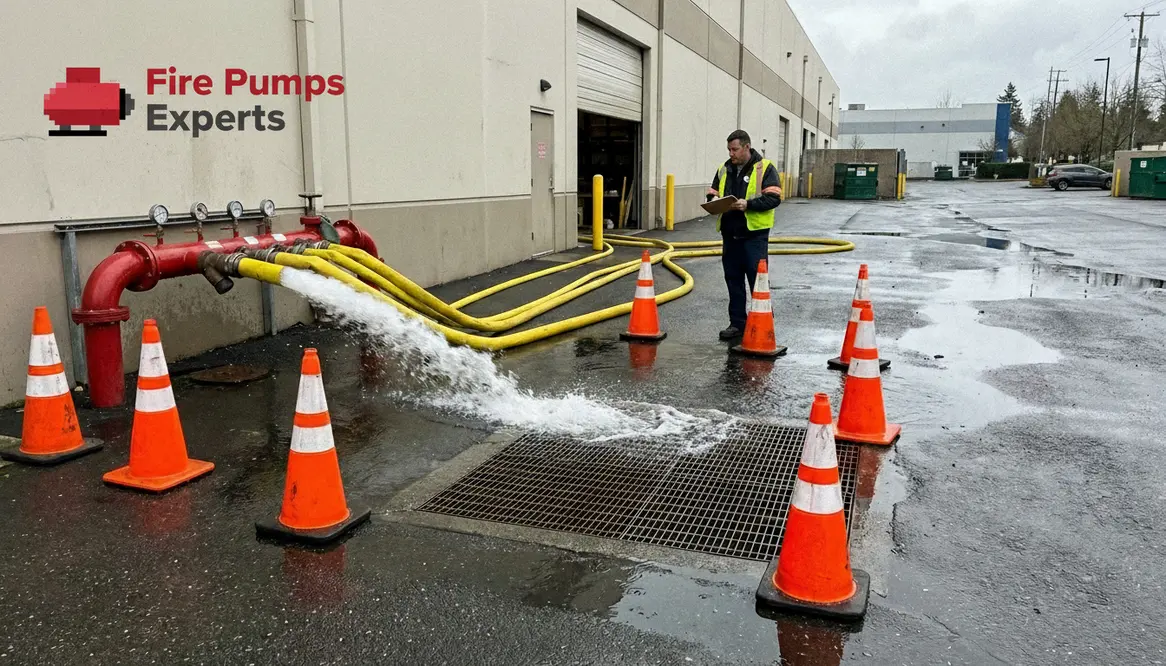
Fire Pump Flow Test Setup Seattle Safe Discharge Planning
I have spent enough time around commercial pump rooms to know that nothing wakes up a building engineer faster than the words “annual flow test.” It is the mechanical equivalent of a fire drill for your fire protection system. And here in the Pacific Northwest, the challenge gets even more interesting. When I talk about fire pump flow test setup seattle safe discharge planning, I am really talking about something deeper than hoses and gauges. I am talking about managing massive volumes of water in dense commercial environments without flooding the loading dock, angering the neighbors, or creating a surprise swimming pool in the parking garage.
In Seattle, where space is tight and regulations are serious, planning the discharge path during a fire pump test takes strategy. So today I am walking you through how I approach the process for large commercial and industrial facilities. Think high rise towers, hospitals, data centers, and major industrial campuses. Because when thousands of gallons per minute start moving, you want a plan that works the first time.
Fire Pump Flow Test Setup Seattle Safe Discharge Planning for Dense Urban Properties
Seattle does not hand you acres of empty land around most commercial buildings. Instead, you get tight service alleys, structured parking, nearby pedestrian traffic, and drainage systems that were not designed for sudden waterfalls.
Because of that, safe discharge planning becomes the backbone of a successful test. When I prepare a fire pump flow test setup seattle safe discharge planning strategy, I start with a simple question. Where will thousands of gallons per minute go without causing damage or safety hazards?
First, I evaluate available discharge points. Many modern commercial properties include dedicated test headers, typically located along an exterior wall or near a service drive. These headers allow technicians to connect hoses and direct water safely away from the structure.
However, the real challenge is managing volume. A fire pump in a high rise tower can easily move 1500 to 3000 gallons per minute. That is enough water to fill a backyard swimming pool in short order. Consequently, directing that flow toward storm drainage or approved containment areas becomes critical.
Seattle regulations also emphasize environmental awareness. Discharging chlorinated or stagnant water into certain areas can trigger compliance issues. Therefore I coordinate with site management and local guidance before the test begins.
And yes, I have seen what happens when planning is skipped. Picture a waterfall pouring across a loading dock while three engineers stare at it like they just opened the Ark of the Covenant. Not ideal.
What site constraints affect a commercial fire pump flow test in Seattle?
Every large property brings its own set of challenges. Even two towers on the same block can require completely different testing strategies.
When I evaluate a facility, I focus on several physical and operational constraints.
- Limited exterior space around the building for hose deployment
- Proximity to public walkways that require safety barriers
- Storm drain capacity that must handle high discharge volumes
- Nearby vehicle access such as loading docks or emergency routes
- Elevation differences that affect water flow direction
Additionally, many Seattle commercial properties sit on steep terrain. Water always chooses the fastest path downhill. Therefore I map the likely flow direction before the first valve opens.
Meanwhile, coordination with facility teams matters just as much. Data centers, hospitals, and manufacturing facilities cannot tolerate disruption. As a result, we schedule testing windows that avoid peak operations.
In other words, the pump test might last thirty minutes, but the planning often begins weeks earlier.
How I design safe discharge paths for large buildings
Once I understand the site, I begin building a discharge strategy. This step is where experience really earns its paycheck.
My goal is simple. Move water quickly, safely, and predictably away from the building.
First, I determine the total expected flow rate. That number tells me how many hoses and outlets the test header must use. Spreading flow across multiple lines reduces pressure and improves control.
Next, I plan the hose routing. Ideally, hoses direct water toward approved storm drains or large drainage channels. However, urban environments rarely cooperate with ideal conditions.
Therefore I often use staged discharge zones. Water flows through hoses, enters controlled areas like sloped pavement, and then travels toward drainage points.
Safety comes next. High velocity water can whip a hose like a caffeinated anaconda. Consequently, I secure lines carefully and maintain clear zones around discharge points.
Finally, I monitor the entire process during the test. Flow readings, pressure levels, and discharge behavior all tell the story of how well the system performs.
And if everything goes smoothly, the only sign the test happened is a slightly cleaner parking lot.
Equipment layout that keeps testing efficient and controlled
For large commercial properties, equipment layout determines whether a test feels smooth or chaotic.
When planning a fire pump flow test setup seattle safe discharge planning process, I organize equipment so every step flows logically. Gauges must remain visible, valves accessible, and technicians positioned safely.
Core Testing Equipment
- Calibrated pressure gauges
- Pitot tubes for flow measurement
- Large diameter discharge hoses
- Test header valves
- Flow calculation charts
Site Safety Controls
- Traffic cones and barriers
- Hose restraints
- Drainage monitoring
- Communication radios
- Facility coordination teams
With the equipment positioned correctly, the process becomes almost rhythmic. Open valve. Stabilize pressure. Record readings. Increase flow. Repeat.
It is a little like conducting an orchestra, except the orchestra moves water instead of violins. And the percussion section sounds suspiciously like a diesel engine.
Common mistakes I see during fire pump flow testing
Even experienced facility teams sometimes overlook critical details. Fortunately, most mistakes are preventable with proper preparation.
One frequent issue involves underestimated water volume. Without proper planning, discharge areas flood quickly. Suddenly the test becomes a water management exercise rather than a performance test.
Another mistake is poor hose positioning. If discharge hoses aim toward pedestrian areas or vehicle routes, the test becomes a safety risk.
Additionally, some properties ignore drainage limitations. Storm drains can only move so much water at once. Therefore releasing full pump capacity without evaluating drainage creates backup flow across pavement.
I have also seen facilities underestimate coordination. Security teams, building engineers, and testing technicians must work together. When communication fails, things get messy fast.
Imagine trying to control thousands of gallons per minute while someone asks if the water is supposed to be spraying toward the coffee shop entrance.
Trust me. Planning prevents those conversations.
Fire Pump Flow Test Setup Seattle Safe Discharge Planning for High Rise and Industrial Sites
Large Seattle properties demand a higher level of strategy. High rise buildings, hospitals, logistics centers, and industrial plants all operate complex fire protection systems. Therefore testing must verify performance without disrupting operations.
When I design a fire pump flow test setup seattle safe discharge planning approach for these sites, I prioritize three outcomes.
- Accurate performance verification of the pump system
- Controlled water discharge that protects the property
- Minimal operational impact for tenants and operations teams
For example, industrial campuses often include wide service drives that work well for hose deployment. Meanwhile downtown towers rely on precise hose routing and drainage planning.
Each building tells a different story. My job is to read the site carefully and make the test feel almost effortless.
Because when a real emergency happens, the fire pump must perform without hesitation. The flow test is how we prove that reliability.
If you want a deeper technical overview of inspection schedules and annual testing expectations, resources like the fire pump testing requirements guide from Kord Fire Protection at https://kordfire.com/fire-pump-testing-requirements-things-to-know/ pair nicely with a site-specific fire pump flow test setup seattle safe discharge planning strategy.
FAQ
Keeping Seattle’s Critical Buildings Ready
If you manage a commercial tower, hospital, industrial plant, or major facility, the reliability of your fire pump is not optional. A properly planned flow test confirms your system will perform when it matters most. My team specializes in safe testing strategies designed specifically for complex Seattle properties. Reach out today, and we will design a controlled, efficient testing plan that protects your building while keeping operations running smoothly.