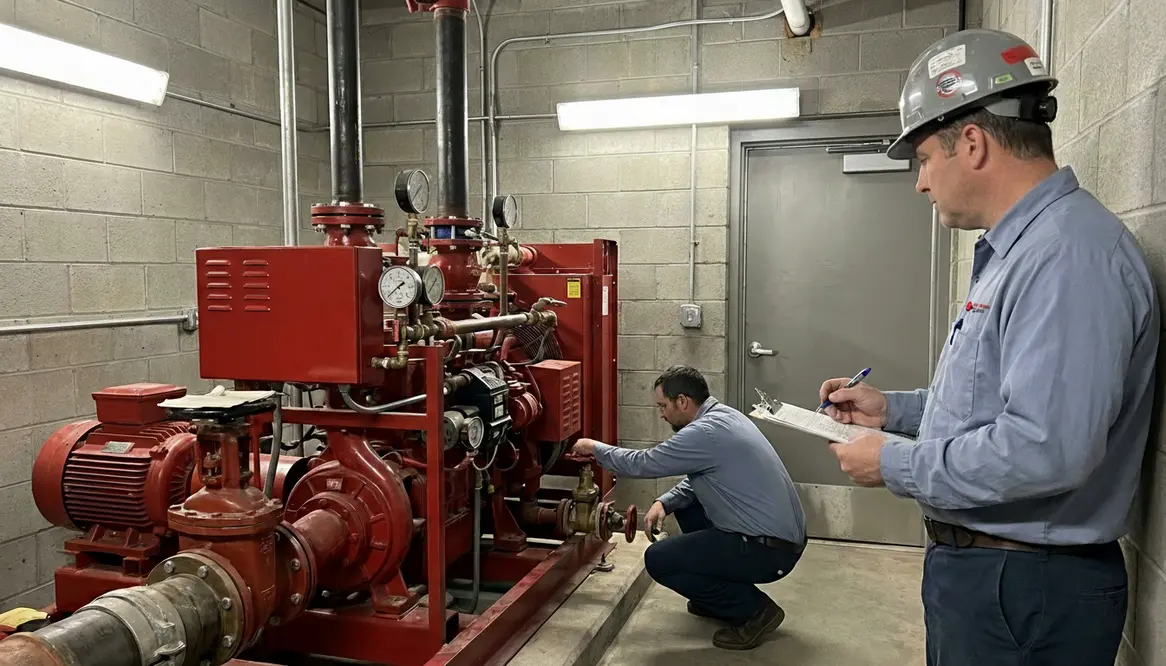
Fire Pump Inspection and Testing Requirements Nashville
Practical guidance for facility managers who want compliant paperwork, calm inspectors, and fire pumps that actually perform when the pressure drops.
Introduction
I have spent enough time around mechanical rooms and pump houses to know one simple truth. Fire protection systems do not care about paperwork, but inspectors certainly do. And when it comes to fire pump inspection and testing requirements nashville, the paperwork, the testing, and the timing all matter. A lot.
In commercial and industrial buildings across Nashville, the fire pump is the silent bodyguard of the sprinkler system. Most days it sits there quietly like the strong silent character in an old western. Then one day, when pressure drops and alarms start ringing, it must perform instantly. No warm up. No second chances.
Because of that, the city and NFPA standards require strict inspection and testing schedules. In this guide, I will walk through how I track compliance, what inspectors actually look for, and how facility managers can stay ahead of problems before they become expensive surprises. Think of it as practical guidance with a little personality. After all, even life safety equipment deserves a good story.
Why this matters in real buildings
Most of the time, your pump room never gets star billing. It hums in the background while tenants worry about rent, operations worry about uptime, and accounting worries about budgets. But on the day a main breaks, a head shears off, or a kitchen fire takes off a little too fast, everyone in the building silently hopes the pump is ready.
That readiness is exactly what your fire pump inspection and testing requirements nashville documentation is supposed to prove. Not just for the city, but for your risk managers and insurance carrier too.
Fire Pump Inspection and Testing Requirements Nashville Facility Managers Ask About
The first question I usually hear from building engineers sounds something like this.
What exactly do inspectors expect us to document and test?
The short answer is consistency. The longer answer involves weekly checks, monthly observations, annual flow testing, and detailed documentation that proves everything works exactly when it needs to.
Commercial properties in Nashville follow standards based largely on NFPA 25. However, local enforcement adds another layer of accountability. Therefore, the goal is not just running the pump once in a while. The goal is proving your system is reliable.
Here are the core testing intervals I track for large facilities.
- Weekly churn test where the pump runs without flowing water to confirm start up and pressure stability
- Monthly inspection checks of valves, controllers, fuel levels, and pump room conditions
- Annual flow testing that confirms the pump produces the rated pressure and flow
- Controller and alarm verification to ensure signals reach the fire alarm system
- Diesel engine maintenance including batteries, fuel supply, and cooling systems
In large commercial campuses, hospitals, distribution centers, and high rise properties, these routines become part of a facility rhythm. Much like morning coffee. Except the coffee rarely prevents six figure water damage claims.
How I Track Compliance Without Losing My Mind
Let me be honest. Managing inspection schedules across a large commercial property portfolio can feel like juggling flaming bowling pins while riding a unicycle. On a windy day.
However, practical tracking systems make the job manageable.
I focus on three layers of documentation.
1. Weekly operational logs
Each pump run gets documented with start pressure, churn pressure, and run duration. If anything drifts outside normal range, we investigate immediately. Waiting until the annual test is like ignoring the check engine light for twelve months. The car will have opinions about that.
2. Inspection reports
Monthly inspections verify valve positions, controller status, and physical conditions in the pump room. I also check for leaks, vibration, or temperature issues. Mechanical systems love to whisper before they scream.
3. Annual performance records
The annual flow test is the big one. Inspectors want proof the pump still meets its rated curve. That means measuring flow at 100 percent, 150 percent, and churn conditions.
Good documentation turns the entire process into a simple story. A story inspectors understand quickly.
And inspectors appreciate a good story almost as much as they appreciate working fire pumps.
Common Compliance Gaps I See in Nashville Commercial Buildings
Even well run facilities miss details. Not because people are careless, but because fire pump systems are complex and sometimes out of sight.
However, a few issues show up again and again when reviewing fire pump inspection and testing requirements nashville documentation.
- Weekly churn tests skipped during staffing changes
- Controller alarms not verified with the fire alarm panel
- Diesel pump fuel polishing or battery maintenance ignored
- Flow test data recorded but not compared to original pump curve
- Valve supervision switches left untested
Here is the thing. None of these issues are dramatic on their own. Yet together they create uncertainty about system performance.
And uncertainty is the last thing anyone wants during an emergency.
One time I watched a building manager discover their test header was blocked with debris right before the annual flow test. Imagine preparing for a marathon only to find your running shoes filled with concrete. That was a long afternoon.
Practical Workflow for Large Facilities
Commercial campuses and industrial plants require structure. A single pump serving a warehouse is one thing. Multiple pumps serving a hospital tower is a whole different story.
Below is the workflow I typically follow to keep compliance clean and predictable.
Operational focus
- Schedule weekly pump runs at the same time each week
- Assign one trained technician as the primary operator
- Record suction and discharge pressures every run
- Listen for vibration or unusual engine sounds
- Verify pump room temperature and ventilation
Documentation focus
- Maintain digital inspection logs for quick retrieval
- Archive annual flow curves and compare each year
- Track valve positions and supervisory switches
- Keep controller event history records
- Store reports where inspectors can review them quickly
When both sides of this process stay organized, compliance becomes predictable. Instead of scrambling before inspections, the facility team simply opens the records and says, here is the system history.
That moment feels pretty good. A bit like watching a perfectly executed scene in a heist movie. Everything planned. Everything documented.
Why Annual Flow Tests Reveal More Than You Expect
The annual test is where reality shows up.
During this test, technicians flow large volumes of water through calibrated outlets to measure real performance. Pressure readings get plotted against the original manufacturer curve.
When the numbers match expectations, everyone smiles.
However, when performance drops, the investigation begins.
- Impeller wear that reduces output
- Obstructions in suction piping
- Controller timing problems
- Diesel engine power loss
- Pressure sensing line blockages
Because of that, the annual test acts like a physical exam for the entire fire protection water supply. It confirms whether the pump still performs the way engineers intended.
For major commercial buildings, this data matters far beyond inspection day. Insurance providers, risk managers, and corporate safety teams all rely on these results.
In other words, the annual test is not just another compliance box. It is proof that the building can defend itself.
If you want a deeper look at what comprehensive pump services can include beyond your local jurisdiction, it is worth seeing how a full-service provider structures their offerings, like the fire pump programs outlined at Kord Fire Protection.
Fire Pump Inspection and Testing Requirements Nashville Teams Must Document Carefully
Nashville inspectors care deeply about documentation. Not because they enjoy paperwork, but because records prove reliability over time.
Whenever I help facilities align with fire pump inspection and testing requirements nashville, I emphasize three documentation habits.
- Record every test immediately after completion
- Keep logs accessible inside the pump room or digital system
- Store at least three years of historical records
This approach creates a clear timeline of system health. If an issue appears, we can track exactly when performance began to change.
Think of it like reviewing game footage after a football play. The history reveals what really happened.
And in the world of fire protection, history often prevents future failures. The more clearly your records support your fire pump inspection and testing requirements nashville efforts, the easier every future inspection becomes.
FAQ About Fire Pump Compliance in Nashville
Some questions come up so often in Nashville pump rooms that I can almost hear them echoing off the concrete. Here are quick answers facility teams can reference when they are mapping out their own fire pump inspection and testing requirements nashville schedule.
Conclusion
If you manage a large commercial or industrial property, staying ahead of pump maintenance is far easier than explaining a failed inspection. Clear schedules, detailed records, and proper annual testing keep your system ready when pressure drops and alarms rise. If you want help navigating fire pump inspection and testing requirements nashville, work with specialists who understand high demand facilities. The right team keeps the paperwork simple and the pumps ready when it matters most.