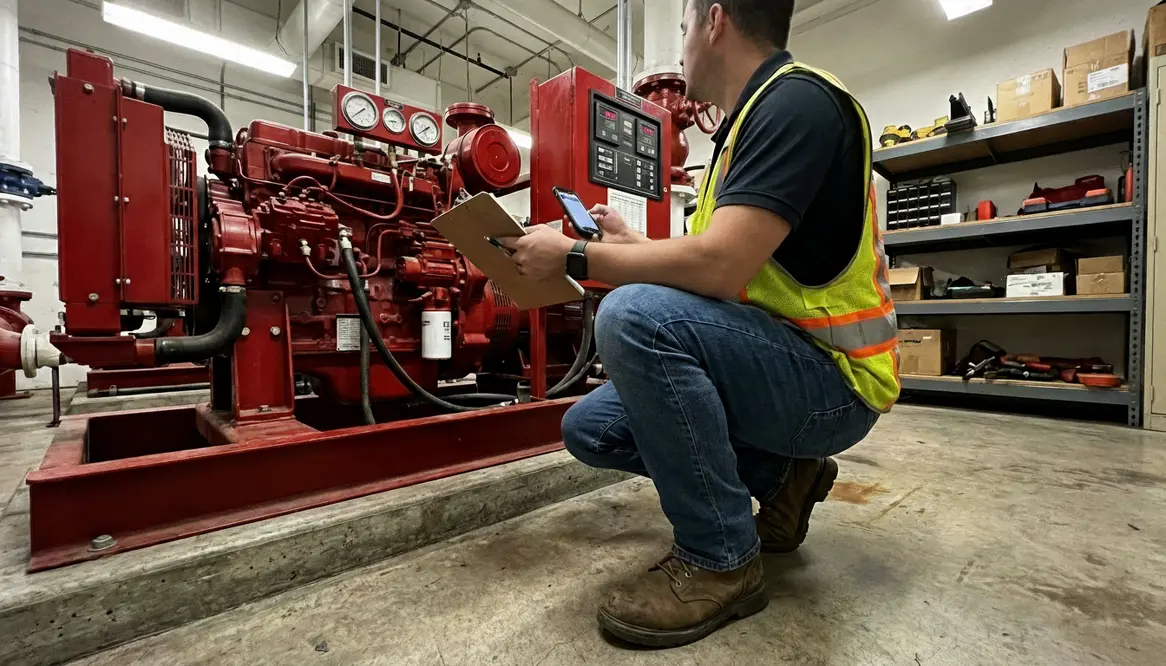
Fire Pump Inspection and Testing Requirements Phoenix
In Phoenix, fire protection is not a background detail. It is the quiet hero standing between a routine workday and a very bad headline. I have spent years walking mechanical rooms in large commercial towers, warehouses, hospitals, and manufacturing plants, and one thing never changes. A fire pump is only as reliable as the attention it receives. That is why understanding fire pump inspection and testing requirements phoenix is more than a compliance exercise. It is a discipline. When schedules slip or logs grow dusty, problems hide in plain sight. Today I want to walk you through how scheduling works, what logs really need to contain, and the defects I see most often across major commercial and industrial properties.
And yes, along the way we might laugh a little. Because if we cannot chuckle inside a loud mechanical room while a pump spins like a jet engine, we are missing the poetry of the job.
Understanding Fire Pump Inspection and Testing Requirements Phoenix for Large Facilities
Let us start with the foundation. The fire pump inspection and testing requirements phoenix follow national fire protection standards while local enforcement ensures the rules are actually followed. However, large commercial and industrial buildings operate in a different league than smaller structures. A hospital campus or distribution center can depend on a fire pump as the backbone of the entire suppression system.
Because of that, routine testing is not optional theater. It verifies that water will move with the right pressure when the alarm system calls for it.
Typically, I structure programs around three core intervals.
- Weekly inspections that confirm pump readiness, valve position, and controller status.
- Monthly churn tests where the pump runs without flowing water to confirm startup reliability.
- Annual flow tests that push the pump through full capacity using calibrated gauges and test headers.
However, each step serves a different purpose. Weekly checks catch environmental issues like leaks or electrical warnings. Monthly runs confirm the engine or motor actually starts. Meanwhile annual flow tests answer the big question. Can the pump deliver its rated performance when the building truly needs it?
In other words, inspections check readiness. Testing proves capability.
That distinction matters more than most people realize.
Why Phoenix Facilities Cannot Treat Fire Pumps as Afterthoughts
Hot, dry weather, high-value real estate, and dense commercial corridors mean there is very little margin for error. The fire pump sitting in your mechanical room is not just metal and pipe. It is the device your building counts on when sprinklers open and pressure has to hold steady.
Treating fire pump inspection and testing requirements phoenix as a checklist misses the point. The real goal is building muscle memory in your team, so the pump room feels as familiar as the lobby.
That is when inspection days feel calm, not like a last-minute scramble to explain why nobody has opened the logbook since last summer.
How I Build a Reliable Fire Pump Testing Schedule
If you manage a large facility, you already juggle elevators, chillers, generators, and a list long enough to make a grown engineer sigh. Therefore a fire pump schedule must be clear, predictable, and documented.
I approach scheduling with a simple principle. Consistency beats ambition.
Locking In the Right Rhythm
First, I anchor monthly churn tests to the same week each month. Facilities teams love patterns. When the routine never changes, tasks stop falling through the cracks.
Next, I align annual flow tests with cooler seasons when possible. Phoenix summers already feel like standing inside a hair dryer aimed directly at your soul. Running a full flow test during peak heat can add unnecessary strain to equipment and staff alike.
Finally, I coordinate testing with other life safety systems. Alarm contractors, sprinkler technicians, and pump specialists should operate like a band, not like three separate garage groups playing different songs.
When that rhythm works, compliance becomes routine rather than panic driven.
And trust me, the panic driven approach usually begins with someone saying, “The inspector is coming tomorrow.” That sentence has ended more peaceful afternoons than any villain in a Marvel movie.
What Should Fire Pump Logs Actually Contain
Logs tell the story of a fire pump’s life. Inspectors read them the way historians read old journals. A clean logbook shows discipline. A messy one suggests the mechanical equivalent of crossed fingers.
Therefore I treat documentation with the same seriousness as the physical inspection.
Each entry should include clear operational data.
Phoenix Logbook Essentials At a Glance
Well-kept logs do more than satisfy fire pump inspection and testing requirements phoenix. They shorten inspection conversations, help technicians spot trends, and give you proof that the pump has been loved, not ignored.
Think of each line as a breadcrumb trail showing how seriously your team treats life safety.
Operational Details
- Date and time of inspection or test
- Name of technician performing the check
- Pump start method and response time
- Suction and discharge pressure readings
- Controller indicators and alarms
Condition Observations
- Visible leaks or vibration
- Fuel levels for diesel pumps
- Battery voltage readings
- Valve positions and tamper switches
- Room temperature and ventilation
However numbers alone are not enough. I also encourage short notes about unusual behavior. Perhaps the pump hesitated before starting. Perhaps a gauge needle bounced like it had too much coffee.
Those details help identify patterns long before equipment fails.
Besides, a thorough log makes inspections smoother. When authorities review your records and see organized data, the entire conversation shifts. Instead of interrogation, it becomes confirmation.
Common Defects I See During Fire Pump Inspections
After years in pump rooms across Phoenix, certain issues appear again and again. They are not dramatic failures. Instead they are quiet oversights that slowly build risk.
Valve Position Problems
The most common problem is closed or partially closed valves. Someone performs maintenance, leaves a valve slightly turned, and suddenly the pump cannot deliver full flow. It is the mechanical version of trying to drink a milkshake through a coffee stirrer.
Battery and Controller Neglect
Another frequent issue involves battery systems on diesel pumps. Weak batteries may still crank the engine during testing, yet fail during a real emergency after sitting idle for weeks. Regular voltage checks and load testing prevent that unpleasant surprise.
Controller alarms also get ignored more often than they should. Facilities sometimes silence minor warnings without investigating the cause. Eventually the pump controller begins to resemble a Christmas tree.
Instrumentation and Sensing Line Issues
Finally, I often find clogged sensing lines or inaccurate gauges. When gauges drift out of calibration, operators make decisions using faulty information. That is a bit like navigating Phoenix traffic with a map from 1997. Technically possible, but not recommended.
Each of these defects is simple to correct. Yet if ignored, they compromise the entire fire protection system.
Why Testing Matters for High Value Commercial and Industrial Properties
Large buildings carry large consequences. A manufacturing facility may house millions in equipment. A data center might support operations across multiple states. Because of that, the pump protecting these assets must perform instantly.
Regular testing provides confidence that water supply and pressure will meet system demand. Additionally, it confirms coordination between alarms, controllers, and sprinkler networks.
Moreover, consistent inspection records demonstrate responsible risk management. Insurance carriers and authorities both look closely at documentation for major properties.
There is also a human factor that rarely appears in code books. When facility teams participate in routine pump tests, they become familiar with the system. They learn its sounds, vibrations, and normal readings. Therefore if something changes, they notice immediately.
That awareness is priceless.
And honestly, once people understand the equipment, the pump room stops feeling mysterious. It becomes just another part of the building. A loud part, yes. But dependable.
For a deeper look at how professional fire pump services support reliable performance, review Kord Fire’s overview of their fire pump inspection, testing, and maintenance capabilities and what comprehensive service really looks like.
FAQ About Fire Pump Inspections in Phoenix
Facility teams across Phoenix ask many of the same questions about fire pump inspection and testing requirements phoenix. Here are clear, practical answers you can use during planning and training.
Conclusion
Fire pumps protect the backbone of commercial and industrial buildings across Phoenix. However, they only perform when inspections, scheduling, and documentation stay disciplined. If your facility needs guidance navigating fire pump inspection and testing requirements phoenix, my team at firepumps.org stands ready to help. We specialize in large scale systems where reliability matters most. Reach out today, and together we will make sure your pump performs exactly when the moment calls for it.