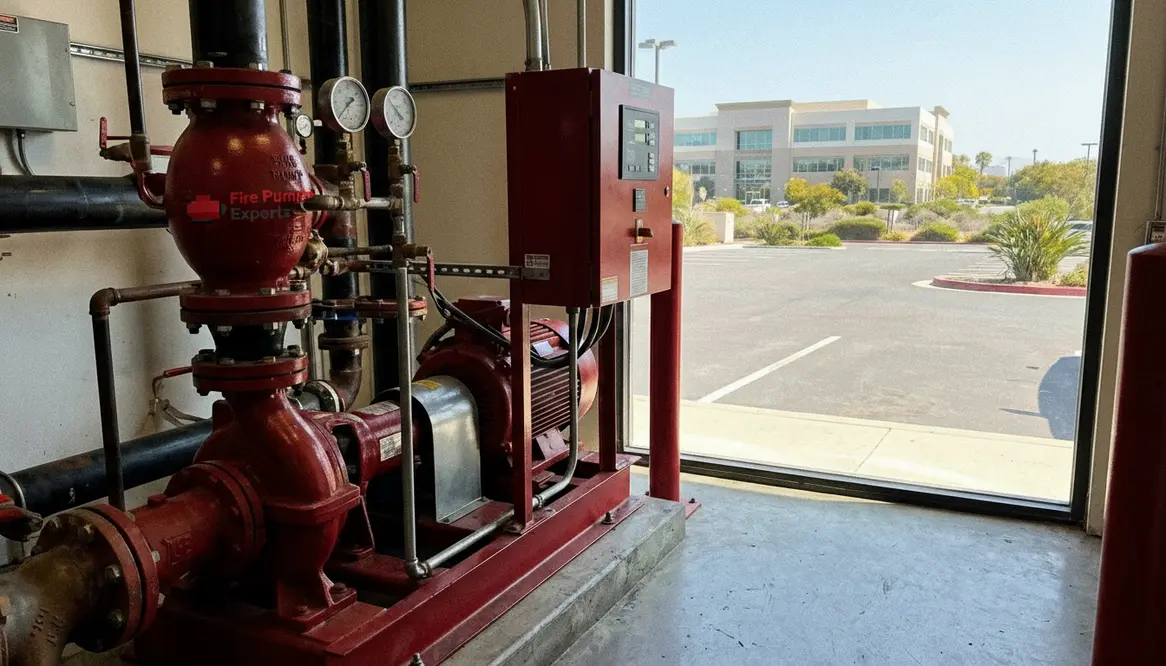
Fire Pump Performance for Carlsbad Commercial Buildings
Fire Pump Performance Expectations for Buildings in Carlsbad: A Builder’s Best Friend When Things Get Heated
Picture this: it’s 2 AM, alarms are shrieking, the sprinklers are going full Broadway water show, and your building’s only lifeline—its fire pump—is taking a nap. Not ideal, right? That’s why the phrase fire pump performance Carlsbad buildings should carry the weight of a seasoned action hero. We’re talking Bruce Willis in Die Hard, not Kevin from accounting.
In Carlsbad, where innovation meets industrial prestige and commercial footprints stretch wide, the expectations on fire pump systems extend far beyond “working.” They need to perform. Spectacularly. Every time. Instead of treating your fire pump like a forgotten mechanical side character, it needs to be cast in the lead role whenever there is smoke, heat, and chaos in the script.
When you prioritize fire pump performance Carlsbad buildings can rely on, you protect people, inventory, and uptime in a way that sprinklers alone just cannot deliver. This is where smart builders, facility managers, and owners separate themselves from the “good enough” crowd and step into the realm of systems that are actually ready for a real emergency.
The Role of Fire Pumps in Commercial Building Safety
Here’s the thing about fire pumps: they don’t wear capes, but they save millions in property damage every year. These systems aren’t just mechanical add-ons; they’re critical pressure-boosting lifelines that convert your passive fire protection into a full-blown firefighting brigade… in a box.
Especially in commercial and industrial facilities in Carlsbad, where square footage is working overtime, simply relying on gravity-fed water supplies doesn’t cut it. When buildings expand vertically or involve high-volume sprinkler systems, fire pumps bring the muscle to ensure every ounce of water gets where it’s needed, pronto.
Imagine installing a top-of-the-line Italian espresso machine and never checking if the plumbing can handle it. That’s what skipping out on proper fire pump expectations looks like. The machine might be beautiful, but when it sputters during the morning rush, you suddenly understand the importance of what’s happening behind the wall.
Pressure, Coverage, and Confidence
The practical purpose of a fire pump is to deliver consistent, sufficient water pressure across the entire suppression system. That includes risers, remote corners, mezzanines, and those “we’ll never actually use this space” storage rooms that somehow always end up full of pallets and combustible packaging.
When the design matches the real-world fire pump performance Carlsbad buildings require, you don’t have to guess whether top-floor sprinklers or far-end hose valves will perform. You know. That confidence is priceless when the stakes are measured in lives and eight-figure structures.
How Fire Pumps Actually Work (For Those of Us Without an Engineering Degree)
Alright, let’s strip away the jargon. A fire pump’s job is simple in theory: move water from a source (like a tank or city supply) and push it—emphasis on “push”—into your fire suppression system at higher pressure. Here’s what’s at play:
- Water source: This could be a tank or a city hydrant. Think of it as the “juice.”
- Pump: The machine that boosts pressure. Think hydraulic gym rat.
- Driver: Either electric motor or diesel engine. This is the muscle behind the muscle.
- Controller: The brain. It starts the pump when pressure drops during a fire event.
Once activated, the pump goes full throttle. It doesn’t sip water. It gulps. Big-time. This is precisely why maintenance and performance expectations aren’t optional—they’re essential. Every moving part is under stress, and any hidden weakness has a habit of showing up right when you least want it to.
From Quiet Standby to Full-Scale Fight Mode
Most days, the pump sits quietly, waiting. But the instant system pressure drops because sprinklers open or standpipes are charged, that controller wakes up the driver and the pump roars to life. In a few seconds, your pipe network goes from calm to combat-ready.
In that transition, fire pump performance Carlsbad buildings depend on is all about predictability: the pump must start automatically, reach its rated flow and pressure, and stay there until the hazard is under control. No drama, no surprises, just reliable brute force.
Why Carlsbad’s Commercial Properties Have Unique Fire Pump Demands
Carlsbad isn’t your average small town with a single Starbucks and a strip mall. This coastal paradise runs deep with industrial parks, R&D facilities, sprawling office campuses, hotels, labs, and an enviable biotech boom. And unlike that third cousin who only shows up for free food, fire regulatory codes here never take a day off.
High-density commercial buildings demand consistent water pressure distribution—not just at ground level, but top floors, corner stairwells, exterior risers, and those oddly long warehouse wings. Each structural detail influences how your fire pump should perform. And building inspectors in Carlsbad aren’t known for their leniency. Think less Mr. Rogers, more Gordon Ramsay if he carried a clipboard.
Designing for Real-World Carlsbad Conditions
Between coastal humidity, mixed-use occupancies, and evolving code requirements, the fire pump configuration that worked for a basic tilt-up warehouse 15 years ago may not cut it for a modern biotech facility today. That’s why serious owners focus on fire pump performance Carlsbad buildings need for both current operations and future expansion, not just today’s minimum requirement.
So no, you can’t buy some discount pump from a catalog and say, “Good enough.” It’s about choosing the right configuration—and more crucially—making sure it consistently delivers under load, year after year, inspection after inspection.
What Building Owners Ask (But Are Afraid to Admit)
Let’s clear the air. When I talk to property owners in town, these are the real questions I get, right before the “But don’t quote me on that.” Lucky for you, I will.
“Do I really need a performance test every year?”
You bet. That’s not me talking—it’s NFPA 25, Section 8.3. The standard mandates annual flow testing and weekly churn tests. Besides, it’s not about checking boxes—it’s about knowing your assets won’t betray you with a sad wheeze when the time comes.
“Can I just check the PSI and call it a day?”
Checking PSI is like judging a movie by its trailer. You’re not seeing the full story. Flow rate, motor performance, pressure consistency—these pieces paint the real picture.
“What happens if I skip maintenance?”
You’re essentially writing a love letter to Murphy’s Law. Without upkeep, even small issues like valve corrosion or a failing relay can cause full system breakdowns.
“Is outrageous performance really necessary?”
Outrageous? Absolutely. Because when lives and multi-million dollar assets are involved, mediocre won’t cut it. This isn’t a middle school science fair. It’s commercial fire safety.
These questions usually come from a place of budget fatigue, not recklessness. But the truth is that reliable fire pump performance Carlsbad buildings depend on is one of the few investments that proves its worth the one time you desperately need it.
Testing, Tuning, and Trusting Your Pump
Fire pump testing isn’t just a feel-good annual ritual. It’s a chance to peel back the curtain on wear, electrical anomalies, unexpected cavitation, or the ever-dreaded drop in flow capacity. If your pump’s not hitting its predetermined GPM and PSI during flow testing, it’s time for a serious sit-down—because that’s short for “failure” in code speak.
So what should a test cover?
- No-flow (churn) test: Ensures pump starts and circulates while idle
- Flow test: Simulates real-world emergency draw from downstream hydrants
- Pressure relief valve checks: Overpressure = major damage risk
- Controller functionality: Fail here, and nobody’s getting water anywhere
Keep in mind—with Carlsbad’s rigorous inspection culture, test certifications and test data log formatting matter. It’s the difference between a sticker of approval and a “see me after class” from the fire marshal.
If you want a deeper walkthrough of what thorough testing looks like in practice, Kord Fire Protection’s article on fire pump testing requirements is a solid reference that aligns with NFPA 25 and real-world field expectations.
Compliance Ain’t Optional (Sorry, Maverick)
This might tickle your inner rebel, but you’re not gonna “wing it” with the law. Carlsbad follows California Fire Code (CFC), the NFPA 20 Standard for Installation, and the aforementioned NFPA 25 for Testing and Maintenance. You skip any of these, and local authorities will likely notice—fast.
In high-value buildings, ticking those regulatory boxes is about much more than avoiding fines. It’s about:
- Securing long-term insurability
- Qualifying for occupancy permits
- Minimizing business interruption risk
- Protecting tenant leases and asset reputation
Plus, if your building ever faces a fire event, you’ll want that post-incident report to read, “System performed to specification,” and not, “Pump failed to engage.” Trust me, that second one? It haunts.
Codes, Inspections, and Your Reputation
Codes exist because somewhere, at some point, a system didn’t perform and the outcome was ugly. Modern standards are the collected lessons of all those failures. Prioritizing compliant fire pump performance Carlsbad buildings can document and defend is as much a reputational move as a technical one.
Staying Ahead of Problems Before They Pass the Point of No Return
Fire pump performance isn’t just a condition—it’s a culture of preparedness. Letting small issues pile up is like ignoring a check engine light while driving cross-country. Sure, you might make it. Or… you might end up FaceTiming your mechanic from a Nevada truck stop.
Partnering with a certified service provider who knows the codes, the climate, and the quirks of Carlsbad’s building types? That’s the real win. These experts understand that high-tech manufacturing centers and multi-floor biotech facilities don’t run on generic solutions. They require optimized calibration, local water pressure familiarity, and, ideally, zero attitude.
Turning Maintenance Into a Strategic Advantage
When you move from reactive “fix it when it squeals” thinking to planned testing, tuning, and documentation, fire pump performance Carlsbad buildings rely on becomes a selling point, not just a line item. Prospective tenants, corporate safety teams, and insurers all notice when your fire protection program is organized, documented, and obviously taken seriously.
FAQs About Fire Pump Performance in Carlsbad Buildings
If you’re still sorting through what’s mandatory, what’s smart, and what’s just overkill, these quick answers help anchor the essentials.
Conclusion: Stay Ready, So You Don’t Have to Get Ready
When fire strikes, hesitation isn’t an option—performance is. For industrial and commercial buildings in Carlsbad, ensuring your fire pump system delivers at full strength isn’t just a nice-to-have. It’s your frontline defense. When you align system design, code compliance, and real-world testing, you get fire pump performance Carlsbad buildings can trust when everything else is going wrong.
If you’re unsure about compliance, testing, or whether your pump will actually perform the way the nameplate claims, don’t gamble. Contact Firepumps.org today and make sure your system gets the standing ovation it deserves—preferably without any actual fires involved.