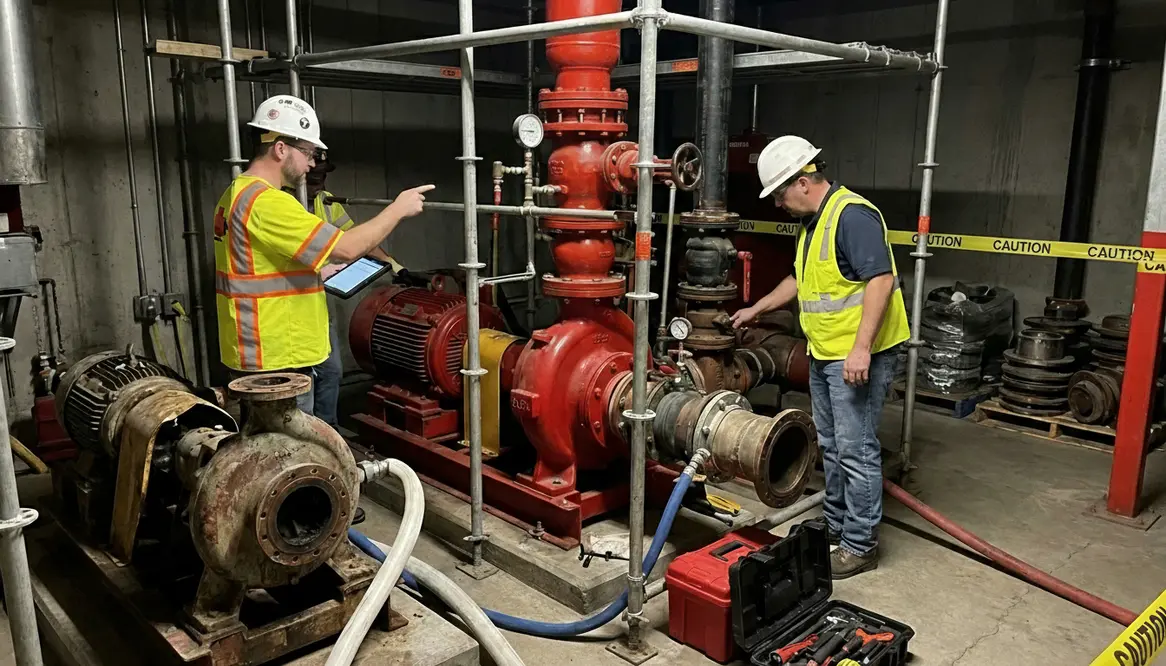
Fire Pump Replacement Planning Without Downtime
Replacing the quiet guardian of your fire protection system without anyone noticing is possible. It just takes foresight, coordination, and a serious respect for what can go wrong when you rush.
I have seen a lot of machinery in my time. Some loud, some proud, and some that only matter when everything else goes wrong. Fire pumps fall into that last category. Quiet guardians. Until they are not. That is why fire pump replacement planning is not something I treat like a last minute grocery run. In large commercial and industrial buildings, a poorly timed replacement can disrupt operations, frustrate tenants, and invite risk. So today, I am going to walk you through how I approach it calmly, carefully, and with just enough humor to keep us awake.
Start With Clarity, Not Chaos
First things first, I do not guess. I assess. I review the current system performance, maintenance records, and compliance status. If the pump has been limping along like it just finished a marathon in flip flops, it is time to act.
However, I never jump straight into replacement. Instead, I coordinate with facility managers, engineers, and fire protection specialists. This ensures the scope is accurate. After all, replacing the wrong components is like fixing a leaky faucet by repainting the sink. Looks nice. Solves nothing.
Additionally, I map out operational dependencies. Which systems rely on the pump? What hours are critical? Because knowing when not to touch the system is just as important as knowing how.
A quick reality check before you touch the pump
- Is the existing system still code compliant?
- Do you have recent inspection and test reports?
- Have you documented any recurring performance issues?
- Is there a clear, written justification for replacement?
How do I schedule fire pump replacement planning without downtime?
I get this question a lot. And the answer is simple, but not easy. I plan around the building, not the other way around.
First, I identify low demand periods. Nights, weekends, or seasonal slowdowns. Then, I coordinate temporary fire protection measures. This could include fire watch personnel or temporary pumping systems. Yes, it sounds like overkill. But so does explaining to stakeholders why operations halted mid week.
Moreover, I break the project into phases. Instead of a full shutdown, I isolate sections where possible. That way, the building keeps breathing while we work behind the scenes.
And here is the truth. A smooth schedule is not about speed. It is about precision. Like a good heist movie, except everyone is wearing hard hats and nobody is stealing anything.
Core elements of fire pump replacement planning without downtime
- Align work windows with low occupancy and low process demand.
- Design and document temporary fire protection measures in advance.
- Phase the work so only what must be offline is actually offline.
- Confirm insurance carrier expectations before you start cutting pipe.
Coordination That Actually Works
Now, coordination is where many plans fall apart. Emails get lost. Timelines blur. Suddenly, everyone is surprised. I do not allow that.
Instead, I establish a single communication chain. One point of contact. Clear updates. No guessing games. Furthermore, I align contractors, inspectors, and internal teams early.
Because in commercial properties, even a small misstep can ripple across tenants, operations, and safety compliance.
Also, I always confirm permit requirements and inspection schedules in advance. Waiting on approvals mid project is like waiting for your phone to charge at one percent. Painfully slow and entirely avoidable.
People and roles
- Single project lead with authority to make decisions
- Clear roles for facilities, safety, security, and contractors
- Named backups for nights, weekends, and emergencies
Information and timing
- Central schedule everyone can see and update
- Notification timelines for tenants and operations
- Locked-in dates for inspections and final testing
What steps matter most in fire pump replacement planning?
Technical Side
- Evaluate pump capacity and system demand
- Confirm compatibility with existing infrastructure
- Plan for electrical and control integration
- Test backup power connections
Operational Side
- Schedule work during low impact hours
- Arrange temporary fire protection
- Notify tenants and stakeholders early
- Prepare contingency plans
Both sides matter equally. Ignore one, and the other will remind you quickly. Usually at the worst possible time.
Linking planning to long-term reliability
Solid fire pump replacement planning should not only get you through installation day. It should also leave you with cleaner documentation, clearer maintenance routines, and a setup that makes your next NFPA 25 inspection feel a lot less stressful. If you want help evaluating your pump performance, Kord Fire’s fire pump services are a good place to start that conversation.
Execution Without the Drama
When the day arrives, I keep things simple and controlled. The team follows a predefined sequence. Removal, installation, connection, and testing. No improvisation. This is not jazz.
During installation, I ensure continuous monitoring. If something shifts off plan, we address it immediately. Because small delays are manageable. Big surprises are not.
Then comes testing. Full system testing. Not a quick flip of the switch and a hopeful nod. I verify flow rates, pressure levels, alarms, and backup systems. Everything must perform as designed.
And yes, I stay until it works. Because walking away early is how problems grow up to become emergencies.
A simple execution checklist
- Lockout/tagout verified and documented
- Temporary fire protection in place and logged
- Old pump isolated, removed, and disposed according to policy
- New pump installed with all supports, guards, and labeling
- Electrical and controls connected, checked, and function tested
- Full flow test, alarm verification, and backup power test completed
- All results recorded as part of your ongoing fire pump replacement planning file
Compliance Is Not Optional
Let me say this clearly. Fire protection is not a suggestion. It is a requirement.
So I make sure the replacement meets all applicable codes and standards. This includes NFPA requirements, local regulations, and insurance criteria. Additionally, I document everything. Inspections, approvals, and test results.
Because when auditors come knocking, and they will, I prefer to greet them with a complete paper trail instead of an awkward silence.
Also, I train on site staff after installation. A new system is only as good as the people who understand it.
Compliance questions to lock in before you start
- Which codes, standards, and insurer requirements apply to this project?
- What permits and notifications are required before work begins?
- Who needs to witness testing and sign off at completion?
- How will training, manuals, and as-built drawings be delivered and stored?
Final Thoughts and Next Steps
In the end, fire pump replacement planning is about control. Not just over equipment, but over timing, communication, and risk. When done right, operations continue smoothly, tenants stay unaware, and safety remains intact.
If you manage a commercial or industrial facility and your system is nearing the end of its life, now is the time to act. Reach out, start the conversation, and build a plan that works quietly in the background. Because the best fire pump replacement is the one nobody notices happened.
Treat your next fire pump project as a strategic upgrade instead of a rushed repair. Use fire pump replacement planning to line up inspections, temporary protection, tenant communication, and commissioning so that when the new pump spins up for the first time, the building barely blinks. That is the goal: a critical change, delivered with almost boring reliability.