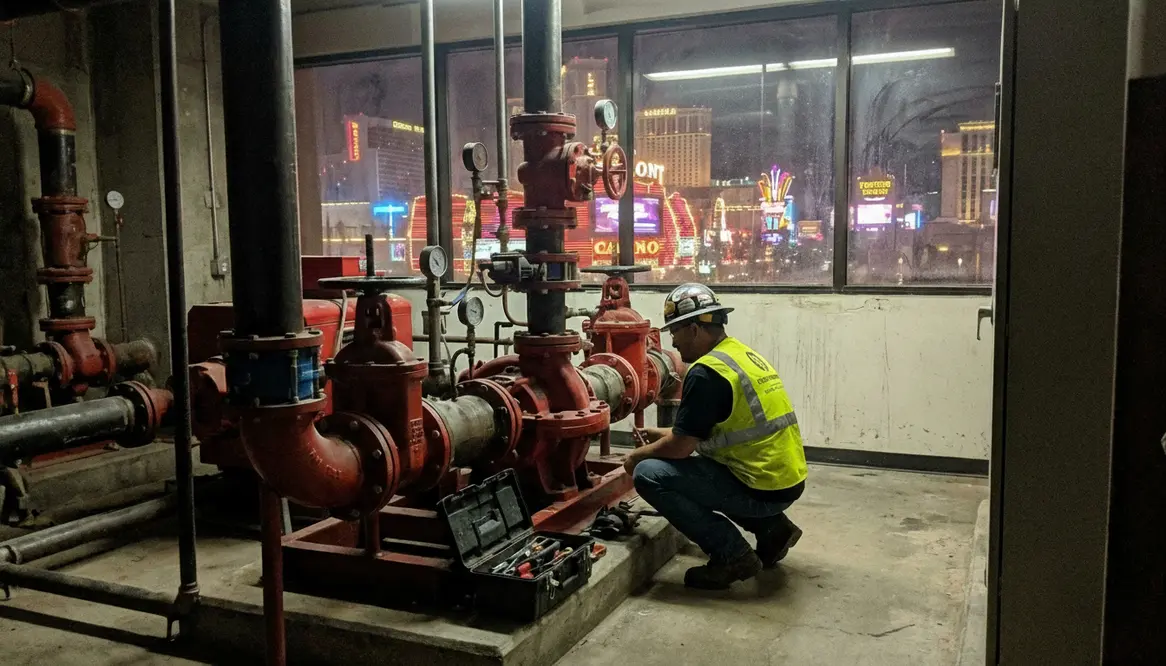
Las Vegas Developer Fire Pump Needs and Maintenance
High stakes belong on the Strip, not in your fire pump room. Here is how to keep your Las Vegas systems ready, steady, and unapologetically reliable.
I have spent years around critical building systems, and if there is one thing I never gamble on in Las Vegas, it is fire protection. In a city built on bright lights and high stakes, your developer fire pump needs cannot be left to chance. When an emergency hits, your fire pump does not get a warm up lap. It performs immediately or not at all. So today, I am going to walk you through how I keep fire pump systems ready for action, calmly, consistently, and without the kind of surprises that belong in a casino, not a mechanical room.
What does a fire pump actually do in a large Las Vegas property?
Simply put, it moves water with purpose. However, in high rise buildings, resorts, and industrial facilities, water pressure alone is not enough. That is where the fire pump steps in, boosting pressure so sprinklers and standpipes perform as designed.
Moreover, in a place like Las Vegas where scale matters, these systems are not optional extras. They are the backbone of fire protection strategy. I like to think of the fire pump as the quiet bodyguard. You rarely notice it, yet when trouble shows up, it handles business without hesitation.
Why this matters for developer fire pump needs
For large mixed use projects, casinos, and resorts, developer fire pump needs extend far beyond “install a pump and walk away.” You are designing for long term reliability, complex occupancy loads, demanding insurance requirements, and stringent code expectations, all stacked inside a city that never really sleeps.
If that backbone fails, the entire fire protection strategy for the building wobbles. That is why the smartest developers put fire pumps in the same category as structural systems: mission critical, never optional, and always documented.
Routine Testing Keeps Surprises Off the Table
I always say this with a straight face and a slight smile, hope is not a maintenance plan. Regular testing is the difference between confidence and crossed fingers.
Weekly churn tests keep the pump lubricated and ready. Meanwhile, monthly and annual flow tests confirm it performs under real demand. Because of that, I never skip documentation. Logs tell a story, and in my experience, they often whisper warnings before systems fail.
Additionally, Las Vegas environments can be harsh. Heat, dust, and continuous operation in large properties all take a toll. Therefore, consistent testing ensures your system does not quietly drift out of compliance.
If you want a deeper code based view of inspection frequencies and testing expectations, resources like routine fire pump inspections and their importance can help you align your internal program with industry standards and best practices.
My Go To Maintenance Checklist for Developer Fire Pump Needs
When I manage developer fire pump needs, I keep things structured and intentional. No guesswork, no shortcuts.
Mechanical focus
- Inspect pump alignment and vibration levels
- Check seals and bearings for wear
- Verify proper lubrication
- Monitor unusual noise because yes, pumps talk
Electrical and control systems
- Test controllers and backup power sources
- Confirm automatic start functions
- Inspect wiring and connections
- Validate alarm signals reach monitoring systems
At the same time, I make sure valves are positioned correctly and not tampered with. You would be surprised how often a closed valve becomes the villain of the story.
Environment Matters More Than You Think
Las Vegas is not exactly known for mild weather. Because of that, fire pump rooms need proper ventilation and temperature control. Excessive heat can shorten equipment life, while dust buildup can interfere with performance.
Furthermore, I always keep pump rooms clean and accessible. It sounds simple, yet clutter has a way of turning small issues into big ones. Think of it like trying to fix your car engine with a pile of luggage on top of it. Not ideal.
For developer fire pump needs tied to large campuses or vertically stacked resorts, I also pay attention to what surrounds the room: nearby kitchens, laundry facilities, or loading docks can all introduce extra heat, moisture, or dust that quietly erode reliability over time.
Partnering with the Right Experts for Long Term Reliability
I do not believe in going it alone, especially when managing large scale commercial systems. Experienced fire protection professionals bring insight that goes beyond checklists.
Therefore, I recommend working with specialists who understand complex facilities, from high rise towers to expansive industrial sites. They help align your system with code requirements while also optimizing performance. In other words, they keep you compliant and confident.
Also, they tend to spot subtle issues early. And trust me, early detection is far less dramatic than emergency repairs at 2 a.m. No one wants their fire pump to have a personality crisis in the middle of the night.
For developers, this kind of partnership turns one time projects into long term protection strategies. Your developer fire pump needs do not stop at turnover; they run for the life of the building, and so should your relationship with the experts watching over them.
Staying Code Compliant Without the Headache
Regulations are not exactly light reading, yet they matter. In Las Vegas, fire codes and NFPA standards guide everything from installation to testing.
Because of this, I stay proactive. I schedule inspections ahead of deadlines and ensure all documentation is accurate. Additionally, I keep communication open with local authorities. It makes inspections smoother and eliminates last minute surprises.
Compliance is not just about avoiding fines. It is about ensuring your building performs when lives and assets are on the line.
Getting familiar with guidance on NFPA 20 driven design and installation, or walking through real world inspection schedules, will make your internal conversations about budgets and upgrades a lot easier. When stakeholders understand that developer fire pump needs are written into code, not opinion, approvals usually happen faster.
FAQ: Fire Pump Readiness for Commercial Properties
Below are quick answers, but always match them to your site specific conditions and local code requirements.
Conclusion
If you manage a major facility in Las Vegas, your fire pump is not just equipment, it is your safety net. I encourage you to take a proactive approach, stay consistent with maintenance, and work with experts who understand complex systems. When your developer fire pump needs are handled with care, you gain peace of mind and reliability when it matters most. Reach out today and make sure your system is always ready to perform.