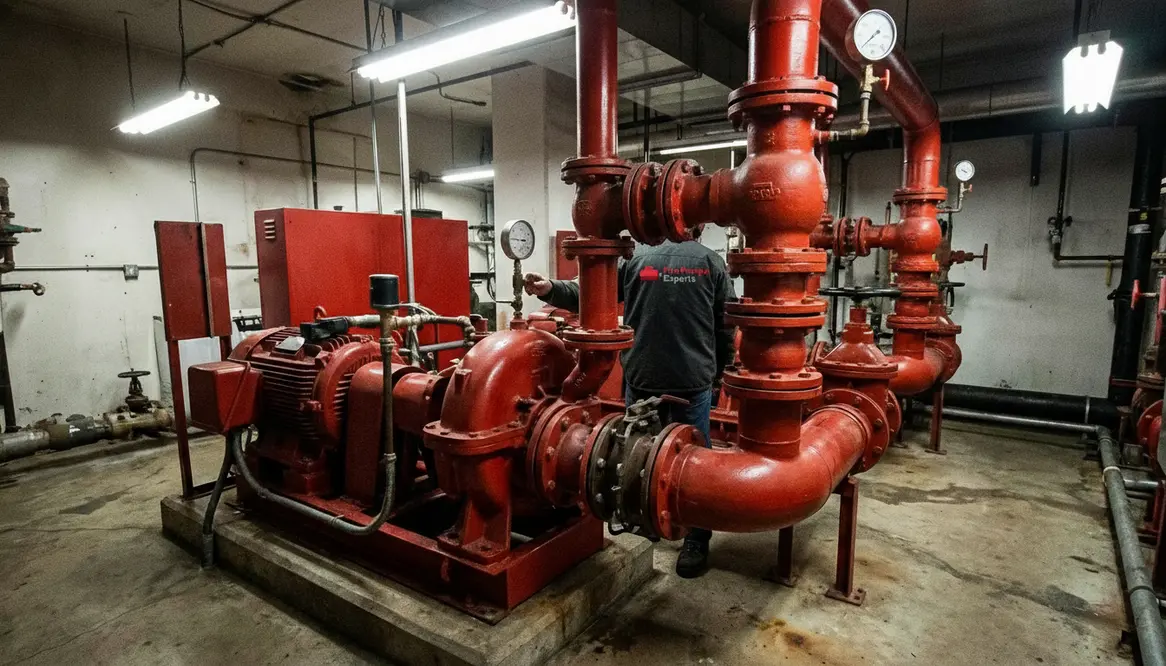
Fire Pump Testing Procedures Kern County Compliance
Turning a silent mechanical room into a dependable line of defense starts with knowing exactly what your fire pump can (and cannot) do when the alarm sounds.
I have seen it too many times. A powerful fire pump sits in a mechanical room, silent and confident, yet no one truly knows if it will perform when the moment calls. That is where fire pump testing procedures come into play. In Kern County, these procedures are not just paperwork. They are a living system of inspections, flow tests, and performance checks that confirm your equipment can deliver under pressure. And yes, pressure is exactly the point.
So, let me walk you through what matters, what gets overlooked, and how to stay compliant without losing sleep or your budget.
Kern County quick snapshot
- NFPA-based standards enforced by local fire authorities
- Strong focus on documentation and repeatable testing
- Commercial and industrial facilities expected to prove ongoing reliability
Fire Pump Compliance in Kern County Starts with Knowing the Rules
First, Kern County does not treat fire protection lightly. Local fire authorities follow NFPA standards closely, and they expect commercial and industrial property owners to do the same. That means your system must meet installation codes, but more importantly, it must prove ongoing reliability.
Now, here is where many owners stumble. They assume installation equals compliance. It does not. Compliance lives in the routine. It lives in documented inspections, weekly churn tests, and annual flow verification. Without those, your system is just an expensive decoration.
Additionally, inspectors in Kern County often look for detailed records. If your logs are incomplete or inconsistent, that alone can trigger a violation. Think of it like showing up to court without evidence. You may know the truth, but you cannot prove it.
Compliance tip: Treat your fire pump testing procedures like financial records. If it is not written down, it effectively did not happen.
What do fire pump testing procedures actually involve?
Good question. And thankfully, the answer is not as mysterious as it sounds.
At its core, fire pump testing procedures are about confirming three things: flow, pressure, and reliability. Each test builds a story about how your system behaves under real world demand.
Here is how that typically unfolds:
Weekly checks ensure the pump starts correctly. No hesitation, no strange noises, no drama.
Monthly inspections look at valves, controllers, and fuel levels for diesel units.
Annual flow tests push the system to perform at full capacity. This is where truth shows up uninvited.
And yes, during that annual test, it can feel a bit like a gym session for your building. Everything works harder, and weaknesses reveal themselves quickly. Better during a test than during an emergency, right?
Core testing focus
- Weekly churn tests for automatic start
- Monthly visual and mechanical inspections
- Annual flow verification at multiple points
- Recordkeeping that matches NFPA expectations
Why it matters
- Confirms the pump hits rated pressure and flow
- Reveals hidden mechanical or electrical issues
- Provides documented proof for Kern County inspections
- Protects occupants, property, and business continuity
Common Compliance Gaps I See in Commercial Properties
Even well managed facilities can miss critical details. In fact, the bigger the property, the easier it is for small issues to hide.
For example, I often see neglected test headers. They sit there, untouched, like a treadmill used only in January. However, without proper use, you cannot validate flow performance.
Another issue is outdated documentation. Systems evolve, components get replaced, yet records stay frozen in time. That disconnect creates confusion during inspections.
Then there is the human factor. Staff turnover can leave knowledge gaps. One technician understands the system deeply, the next one inherits a binder and a shrug.
What goes wrong
- Missed weekly runs
- Incomplete test logs
- Improper valve positions
- Ignored warning signals
What fixes it
- Scheduled automation
- Clear documentation systems
- Routine visual checks
- Professional testing support
When you tighten these areas, compliance becomes far less stressful.
Why Fire Pump Performance Testing Matters More Than You Think
It is easy to treat compliance like a box to check. However, performance testing tells a deeper story. It shows how your system behaves under real demand, not just ideal conditions.
For instance, a pump might start perfectly but fail to maintain pressure at higher flow rates. That is not a minor issue. That is the difference between controlling a fire and watching it spread.
Moreover, Kern County inspectors understand this. They do not just want proof that tests occurred. They want proof that results meet standards.
And here is a little truth wrapped in humor. Fire pumps are like action heroes. They do nothing most of the time, but when they are needed, they must perform flawlessly. No retakes. No stunt doubles.
From test data to real-world readiness
When you treat your fire pump testing procedures as a performance audit instead of a chore, you start seeing trends: slow degradation in pressure, emerging vibration issues, controller glitches. Those patterns are early warnings that give you time to repair, upgrade, or call in expert help before a real emergency exposes the weakness.
If you want a deeper technical breakdown of testing expectations and NFPA standards, resources like the fire pump testing guides from Kord Fire Protection at this fire pump testing requirements article are worth bookmarking.
How I Keep Large Facilities Consistently Compliant
Over time, I have found that consistency beats intensity. You do not need chaos before an inspection. You need rhythm throughout the year.
First, I align testing schedules with operational calendars. That way, nothing gets lost during busy seasons.
Next, I rely on clear reporting. Every inspection, every result, every adjustment gets documented in a way that anyone can understand. No decoding required.
Finally, I bring in specialists when needed. Complex systems deserve experienced hands. Especially in large commercial and industrial properties, the margin for error is simply too small.
And yes, this approach saves money in the long run. Emergency repairs cost more. Failed inspections cost time. Preventive care keeps both in check.
Turning procedures into a program
- Build a 12-month calendar around your fire pump testing procedures so weekly, monthly, and annual tasks are visible to everyone.
- Create simple checklists that match Kern County and NFPA expectations.
- Assign clear ownership so tests are never “someone else’s” job.
- Review results quarterly to spot trends instead of reacting to failures.
FAQ About Fire Pump Compliance in Kern County
Before we wrap up, there are a few questions that come up over and over again when people start tightening up their fire pump testing procedures.
Stay Ready Before the Alarm Ever Sounds
Compliance is not about reacting. It is about preparing long before anyone smells smoke. When your system is tested, documented, and maintained with care, you gain more than approval. You gain confidence.
If you manage a commercial or industrial facility in Kern County, now is the time to tighten your process, verify your performance, and make sure your fire pump stands ready. Treat your fire pump testing procedures as a year-round reliability plan, not a once-a-year headache.
Because when the moment comes, it should not hesitate. And neither should you.