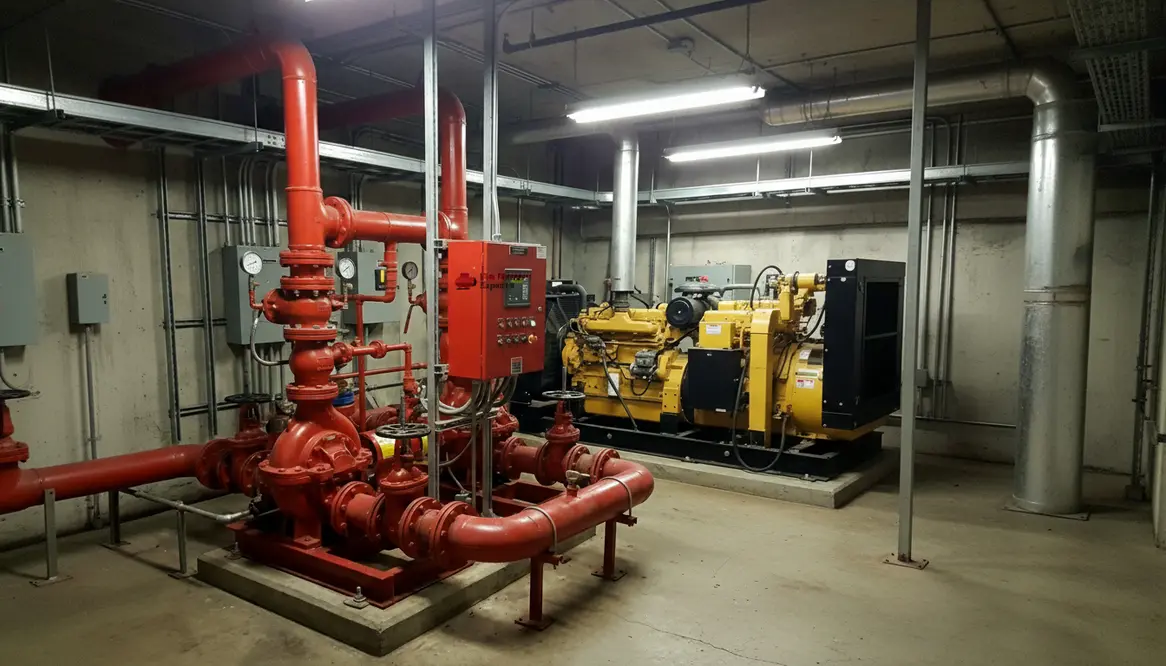
Fire Pump Requirements by Facility Type Guide
I have spent years walking through mechanical rooms that hum like quiet orchestras, where every valve and gauge plays its part. And at the heart of it all sits a fire pump, waiting patiently for a moment we all hope never comes. Understanding fire pump requirements by facility type is not just a code exercise. It is a matter of timing, pressure, and trust. In this guide, I will walk you through how different commercial and industrial properties approach fire protection, and why each one demands its own rhythm.
What does each facility actually need from a fire pump?
Let me answer this plainly. Not every building fights fire the same way. A high rise office tower does not behave like a manufacturing plant, and a hospital certainly does not gamble with downtime. So, I always start by asking how the building lives and breathes.
For example, office buildings rely on consistent pressure across many floors. Meanwhile, warehouses demand volume over long distances. And then there are data centers, where even a brief interruption can feel like pulling the plug on the internet itself. Consequently, the pump must match both risk and layout, not just meet a generic standard.
Fire Pump Requirements by Facility Type in High Rise Buildings
When I step into a high rise, I think vertically. Water has to climb, and gravity is not exactly cooperative. Therefore, these systems need high pressure fire pumps, often paired with jockey pumps to maintain stability.
Additionally, zoning becomes essential. Without it, upper floors might feel like they are sipping water through a straw. I have seen systems struggle because someone underestimated elevation loss. It is like trying to drink a milkshake through a coffee stirrer. Not a winning strategy.
Because of this, redundancy is not optional. Backup power sources, usually diesel driven pumps, step in when electricity decides to take a vacation. And electricity does love a dramatic exit during emergencies.
Industrial Facilities and Heavy Hazard Demands
Now we shift gears. Industrial sites do not whisper. They roar. Chemicals, fuels, and high heat processes raise the stakes significantly. So, fire pump requirements in these environments lean toward higher flow rates and durable construction.
I often see horizontal split case pumps here, built like tanks and ready for sustained operation. Furthermore, foam systems may integrate with the pump setup, especially where flammable liquids are involved.
In these facilities, response time is everything. A delay of even a few seconds can turn a manageable incident into something far more cinematic, and not in a good way. Think less blockbuster and more insurance nightmare.
Commercial Campuses and Mixed Use Properties
These properties like to keep things interesting. Offices, retail, parking structures, sometimes even residential components all sharing one system. It is a bit like hosting a dinner party where everyone has different tastes.
Because of that, I design with flexibility in mind. Variable speed pumps help adjust to changing demand, while looped distribution systems keep water moving efficiently.
Key considerations
- Multiple hazard classifications within one system
- Peak demand during business hours
- Integration with building management systems
Common solutions
- Variable frequency drive pumps
- Redundant pump assemblies
- Smart monitoring for real time adjustments
As a result, these systems need to think on their feet. Or more accurately, spin on their shafts.
Healthcare and Mission Critical Facilities
If there is one place where failure is not an option, it is here. Hospitals and data centers operate with zero tolerance for downtime. So, I approach these projects with an extra layer of caution.
Fire pump requirements by facility type in these environments often include dual pump systems, independent power supplies, and continuous monitoring. In fact, alarms and alerts are designed to speak louder than a fire alarm at a rock concert.
Moreover, maintenance access matters. You cannot shut down a hospital wing just to tighten a bolt. Everything must be serviceable without disrupting operations. It is like changing a tire while the car is still moving. Not easy, but absolutely necessary.
How I Align Compliance with Real World Performance
Codes give us the rules. Experience gives us the wisdom to apply them. I always balance both. While standards like NFPA set the baseline, each facility brings its own quirks.
Therefore, I focus on testing and commissioning. A system that looks perfect on paper can still fall short in practice. Flow tests, pressure verification, and backup activation checks ensure everything performs when it counts.
And yes, I have learned that ignoring small details leads to big problems. A slightly undersized pipe or a poorly placed valve can undo an otherwise solid design. It is the engineering version of forgetting your lines on stage. Everyone notices.
Understanding fire pump requirements by facility type in practice
Where the requirements start
Everything begins with risk: occupancy type, height, floor area, and how irreplaceable the operations are. Fire pump requirements by facility type expand from there, drawing on NFPA standards, insurance criteria, and sometimes very opinionated local authorities having jurisdiction.
Translating rules into hardware
Those rules turn into pump type, rated flow, rated pressure, suction arrangement, and power source. The trick is making sure the numbers on the data sheet match the real friction losses, elevation changes, and possible future expansions of the system.
When you compare different occupancies side by side, the contrast stands out. High rises chase pressure. Industrial plants chase flow and durability. Healthcare and data environments chase reliability above all else. Commercial campuses often sit in the middle, trying to keep everyone reasonably happy.
FAQ
Final Thoughts and Next Steps
I have seen what happens when fire protection is treated as an afterthought. It is not pretty, and it is certainly not cheap. The truth is, understanding your facility and aligning it with the right system is the difference between control and chaos. If you are managing a commercial or industrial property, now is the time to take a closer look at your setup, ask better questions, and make sure your fire pump system is ready long before it is ever needed. If you want to compare more examples of fire pump requirements by facility type and see how others have approached similar challenges, resources at https://firepumps.org can be a useful starting point.