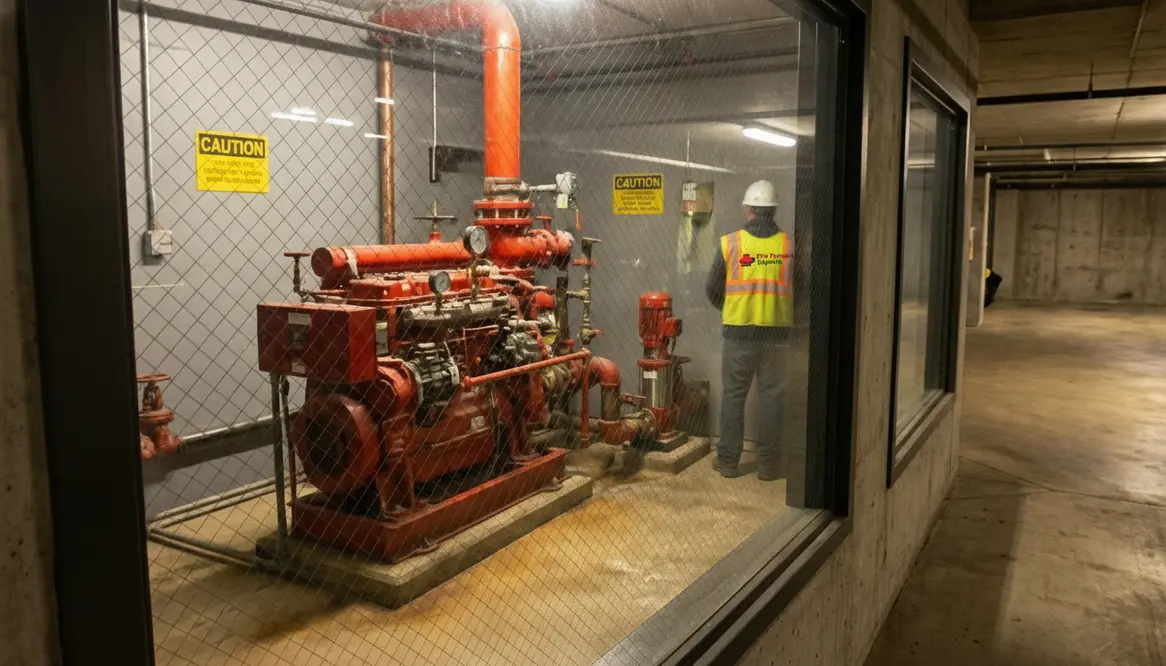
Fire Pump Requirements for Commercial Garages
I have spent enough time around commercial buildings to know one thing for certain: when it comes to fire protection, silence is good, but readiness is better. That is where systems like food warehouse fire pumps quietly set the standard. They sit in the background, calm and unassuming, until the moment they are called to perform. Now, when we shift our focus to commercial garages, the stakes remain just as high. Vehicles, fuel, confined layouts, and constant activity create a unique fire risk that demands more than a basic setup. It demands precision, planning, and yes, a little respect for the power of water under pressure.
Understanding Fire Pump Requirements for Commercial Garages
Let me walk you through it. Commercial garages are not your average structures. They combine fuel sources, tight parking layouts, and limited ventilation. Therefore, fire pump systems must meet higher performance expectations.
First, I always look at the building classification and hazard level. Most commercial garages fall under ordinary hazard group classifications, but that is just the beginning. The real work starts with calculating water demand. Sprinkler systems alone often cannot maintain adequate pressure, especially in multi level or underground garages. That is where fire pumps step in, ensuring consistent flow when the system needs it most.
Additionally, codes such as NFPA 20 and NFPA 13 guide the design. However, I never treat them like a checklist. I treat them like a blueprint for safety. Because in this line of work, close enough is not good enough.
How Do I Size a Fire Pump for a Commercial Garage?
This is the question I hear most often, and for good reason. Sizing a fire pump is both science and judgment.
To start, I calculate the total sprinkler demand, including hose allowances. Then, I evaluate the available water supply. If the municipal system cannot meet the required pressure and flow, a fire pump becomes essential. Simple, right? Well, not quite.
Because next comes the nuance. I consider peak demand scenarios, future expansion, and system losses. Friction loss in piping, elevation changes, and even temperature can affect performance. Therefore, I always build in a margin of safety. Not an excessive one, but enough to sleep well at night.
Think of it like casting a superhero. You do not pick someone who can barely save the day. You pick someone who can handle the sequel too.
Key Components That Make or Break the System
Now, let us get into the parts that truly matter. A fire pump system is only as strong as its weakest component.
Primary Elements
- Pump unit matched to demand
- Reliable power source such as diesel or electric
- Controller for automatic operation
- Jockey pump to maintain system pressure
Support Systems
- Water storage or suction supply
- Backflow prevention devices
- Pressure relief valves
- Monitoring and alarm integration
Each piece plays a role. For instance, I always emphasize the controller. It is the brain of the operation. Without it, even the best pump becomes an expensive paperweight. And nobody wants that, especially not during an emergency.
Why Reliability Matters More Than Raw Power
It is tempting to think bigger is better. More horsepower, more flow, more everything. However, I have learned that reliability wins every time.
A properly designed system starts quickly, runs smoothly, and delivers consistent pressure. That means regular testing, proper installation, and choosing equipment that can handle real world conditions. Dust, heat, vibration, and long idle periods all take their toll.
In fact, I often compare fire pumps to classic cars. They look impressive, but if they do not start when you turn the key, the charm fades fast. The same principle applies here, except the consequences are far more serious.
Lessons I Borrow from Food Warehouse Fire Pumps
Although commercial garages have their own challenges, I often take inspiration from food warehouse fire pumps. These systems are built for scale, consistency, and strict safety standards.
For example, warehouses demand uniform water distribution across massive areas. That same mindset helps when designing for large parking structures. I focus on eliminating weak zones, ensuring every corner receives adequate coverage.
Additionally, redundancy is key. In large facilities, backup systems are not optional. They are expected. Bringing that philosophy into garage design improves resilience and reduces risk.
It is a bit like learning from a seasoned chef. Even if you are just making a sandwich, you still benefit from knowing how a five star kitchen operates.
Common Mistakes I See in Commercial Garage Installations
Even experienced teams can get this wrong. I have seen it happen more times than I would like to admit.
One common issue is underestimating demand. Designers rely too heavily on minimum code requirements without accounting for real world conditions. Another problem is poor maintenance planning. A system that cannot be easily tested or serviced will eventually fail.
Then there is the classic oversight of power reliability. Electric pumps without backup power can become useless during outages. And let us be honest, fires do not wait for the grid to cooperate.
Therefore, I always push for a balanced approach. Smart design, quality components, and a maintenance plan that people will actually follow.
How Food Warehouse Fire Pumps Influence Better Garage Design
Design Discipline
High performing food warehouse fire pumps are built around disciplined hydraulics, predictable flows, and unforgiving coverage requirements. Translating that discipline into commercial garages leads to clearer zoning, better hydrant locations, and sprinkler layouts that do not leave blind spots between stalls and drive aisles.
Operational Mindset
Facilities that rely on robust food warehouse fire pumps treat inspections, testing, and maintenance as a rhythm, not a chore. When commercial garages adopt the same mindset, weekly churn tests, clear testing connections, and accessible valves stop feeling like extras and start feeling like standard operating procedure.
The end result is a garage system that behaves more like the best designed food warehouse fire pumps installation: predictable, verifiable, and ready for the worst minute of the building’s life.
FAQ: Fire Pump Requirements for Commercial Garages
Before looking at specific questions, it helps to remember that the logic behind high performing systems in warehouses and garages is related. The same engineering discipline that shapes food warehouse fire pumps can dramatically improve reliability in parking structures when it is applied with care.
Final Thoughts and Next Steps
When I design fire pump systems for commercial garages, I focus on clarity, strength, and reliability. Every decision matters, from sizing to installation to long term care. If you are planning or upgrading a facility, now is the time to get it right. Work with experts who understand large scale systems and demand real performance. Reach out today and make sure your building is not just compliant, but truly protected.
If you want to see how large-scale facilities tackle similar challenges, studying projects that rely on food warehouse fire pumps is a strong starting point. They showcase what it looks like when hydraulics, redundancy, and maintenance all line up with the same goal: a system that is always ready, even when the rest of the building is quiet. For deeper technical guidance and reference material, you can explore resources at https://firepumps.org and align your next garage project with proven best practices.