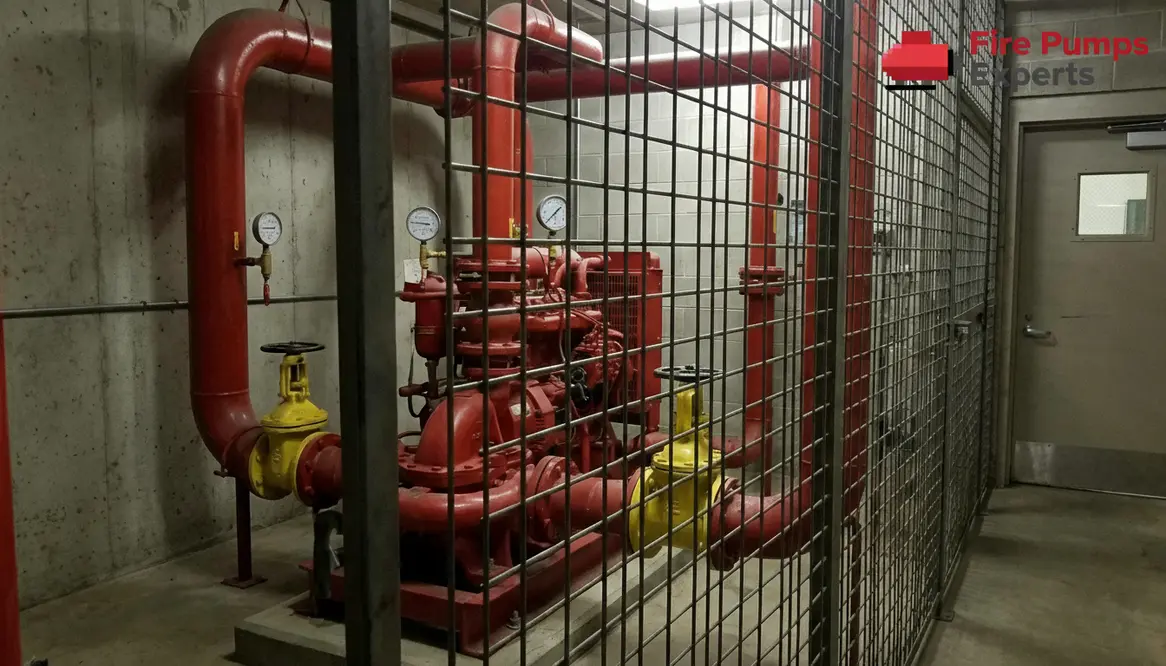
New Construction Fire Pump Requirements for Prisons
I have spent enough time around critical infrastructure to know one thing for certain. When it comes to correctional facilities, failure is not an option. That truth becomes even more clear when we talk about new construction fire pump requirements. These systems are not just code checkboxes. They are the quiet guardians behind reinforced walls, ready to perform under pressure without hesitation. And yes, much like a seasoned prison warden in a movie, they do not get rattled.
So let’s walk through what really matters here. Not the fluff. Not the textbook talk. The real-world application that keeps facilities compliant, protected, and operational.
Why fire pump systems in correctional facilities demand a different mindset
First, correctional facilities are not typical commercial buildings. Movement is controlled. Access is limited. Response time is everything. Therefore, the fire protection system must compensate for those constraints.
I have seen facilities where a delayed response could turn a small incident into a logistical nightmare. Because of that, fire pump systems must deliver consistent pressure across secured zones without relying on human intervention. Additionally, redundancy is not a luxury here. It is a necessity.
And let’s be honest. When doors lock automatically and security protocols kick in, nobody wants to rely on a “maybe it works” pump. This is not the place for surprises.
How do new construction fire pump requirements apply to secure facilities?
In simple terms, these requirements ensure that every newly built correctional facility installs systems that meet strict performance and reliability standards. However, in practice, it goes deeper.
I always look at three core factors. First, water supply reliability. Second, pump capacity under peak demand. Third, integration with life safety systems. As a result, the fire pump must not only meet code but also function seamlessly with lockdown procedures and emergency protocols.
Moreover, compliance standards often require backup power integration. Because if the grid fails, the fire pump cannot just shrug and say “not my problem.” It needs to keep going.
Translating code language into operational reality
On paper, new construction fire pump requirements read like a checklist of flows, pressures, and power sources. Inside a correctional facility, that checklist becomes a live system that has to perform during a lockdown, during a storm, and during any event where staffing is stretched thin.
Design considerations that actually impact performance
Design is where theory meets reality. And in correctional environments, reality tends to win every time.
For instance, I always emphasize strategic pump placement. Accessibility for maintenance is critical, yet security cannot be compromised. Therefore, designers must strike a balance between protection and practicality.
Additionally, pipe layout plays a huge role. Long runs, multiple secure zones, and pressure loss calculations all influence how the system performs. If you underestimate demand, you risk inadequate coverage. If you overcompensate, you waste energy and resources.
And here is a truth that might sting a little. A beautifully designed system on paper means nothing if it cannot be maintained properly. Which brings me to the next point.
Designing specifically for correctional constraints
Unlike a typical office tower, a prison’s circulation paths, secure chases, and reinforced construction all affect how new construction fire pump requirements are put into practice. Every penetration, valve location, and riser path has to be secured, monitored, and still workable for the crews who will one day need to service or upgrade the system.
Maintenance expectations inside controlled environments
Maintenance inside a correctional facility is not as simple as walking in with a toolbox and a coffee. Every visit involves coordination, clearance, and timing.
Because of that, fire pump systems must be designed with durability and ease of service in mind. I always recommend clear access routes, simplified component layouts, and robust monitoring systems.
Furthermore, routine testing must align with facility operations. This means scheduling around lockdowns, staff availability, and security protocols. It is a delicate dance. And no, you do not want to be the one who accidentally triggers a system test during meal time.
Key system priorities
- Consistent pressure across all zones
- Reliable backup power integration
- Secure yet accessible equipment placement
- Real time monitoring and alerts
Common challenges
- Restricted maintenance access
- Complex pipe routing
- Coordination with security systems
- High demand during peak occupancy
Building maintainability into the initial design
When new construction fire pump requirements are reviewed early with facility operations and security teams at the same table, the result is a layout that respects both clearances and custody. That planning prevents the future headache of escort-heavy maintenance visits that take half a day just to reach a single valve.
Integration with broader life safety systems
A fire pump does not operate in isolation. It is part of a much larger ecosystem. Therefore, integration becomes critical.
I always look at how the pump connects with alarm systems, suppression systems, and emergency controls. When everything works together, response times improve dramatically. On the other hand, poor integration can create delays that no facility can afford.
Also, modern systems often include remote monitoring capabilities. This allows facility managers to track performance in real time. Think of it as having a watchtower, except instead of scanning the horizon, it is watching pressure levels and flow rates.
Making the pump a smart part of the security picture
When new construction fire pump requirements are aligned with access control, smoke control, and emergency communications, the result is a coordinated response rather than a series of disconnected alarms. That coordination matters when staff have seconds to decide whether to hold, move, or evacuate specific housing units.
Cost versus reliability in long term planning
Now let’s talk about the elephant in the room. Cost.
It is tempting to cut corners during construction. However, when it comes to fire pump systems, that approach almost always backfires. In fact, I have seen facilities spend significantly more fixing avoidable issues than they would have spent doing it right the first time.
Investing in systems that meet new construction fire pump requirements ensures long term reliability. More importantly, it reduces operational risk. And in correctional facilities, risk is something you manage aggressively, not casually.
Besides, no one wants to explain to stakeholders why a critical system failed because of budget shortcuts. That conversation never goes well.
Seeing fire pumps as long-term infrastructure, not a line item
When teams treat new construction fire pump requirements as a strategic infrastructure decision rather than a last-minute budget squeeze, they tend to choose equipment, layouts, and monitoring solutions that will still be performing when today’s brand-new facility feels like an old institution.
FAQ: Fire pump systems for correctional facilities
The questions below come up repeatedly when teams start applying new construction fire pump requirements to prison projects. Keeping the answers clear and practical helps everyone from design to operations stay aligned.
Final thoughts and next steps
When I look at correctional facilities, I see environments where precision matters and reliability is everything. Fire pump systems are not just mechanical components. They are critical safeguards that support safety, compliance, and operational continuity. If you are planning a new project or upgrading an existing system, now is the time to align with proven standards and experienced partners. Reach out to a trusted commercial fire protection specialist and make sure your facility is ready when it matters most.
If you want deeper technical guidance, look for resources that focus specifically on correctional applications of new construction fire pump requirements rather than generic commercial templates. Specialist organizations and industry guides, such as those you might find referenced by https://firepumps.org, can help your team sort out the difference between “good enough on paper” and “built to perform inside a secure perimeter.”