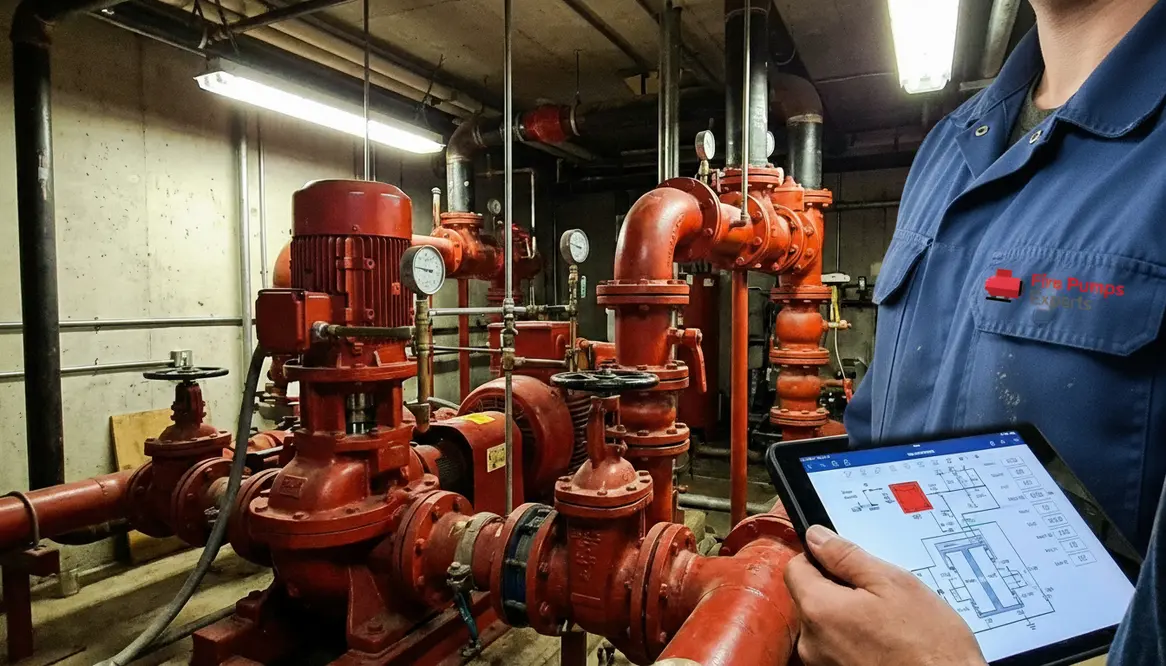
Fire Pump Sizing Guide for Commercial Facilities
I have seen a lot of things in mechanical rooms. Some impressive. Some… let us just say “ambitious.” But nothing quite matches the quiet drama of fire pump sizing. It is not flashy. It does not hum like a sports car. Yet, when the moment comes, it decides whether a system performs like a hero or folds like a lawn chair at a backyard barbecue.
In commercial and industrial facilities, where lives, assets, and operations hang in the balance, getting this right is not optional. It is foundational. So, let me walk you through why this matters, how it works, and where people tend to trip over their own shoelaces.
Why Fire Pump Sizing Matters More Than You Think
I like to think of a fire pump as the heartbeat of a fire protection system. If the flow is weak or inconsistent, the whole body struggles. And while it may be tempting to “just go bigger,” that approach can backfire faster than a poorly written movie sequel.
First, an oversized pump can create excessive pressure. That leads to damaged pipes, leaking valves, and a system that ages faster than milk left in the sun. On the other hand, undersizing leaves you with inadequate water flow during a fire event. That is not a gamble anyone wants to take.
Therefore, proper fire pump capacity selection ensures the system meets demand without overcompensating. It is a balancing act. And like any good performance, timing and precision matter. This is where a thoughtful approach to fire pump sizing separates a resilient system from one that only looks good on paper.
Done right, this work never makes the news. Done wrong, it becomes the post-incident case study everyone reads and nobody wants to be featured in.
How Do I Determine the Right Fire Pump Size?
Start With Risk, Not Equipment
Let me answer this the way most people actually ask it. You do not guess. You calculate. And yes, there is a bit of math involved, but nothing that requires a PhD or a montage set to dramatic music.
Start with the hazard classification of the building. A high rise office does not behave like a manufacturing plant storing flammable materials. Next, evaluate the required flow rate and pressure based on sprinkler system demand. This is where fire pump sizing stops being a buzzword and starts becoming a concrete set of numbers.
Account for Real-World Water Behavior
Then, factor in water supply conditions. City supply might look reliable on paper, but during peak demand, it can drop like your phone battery at 2 percent.
Finally, account for friction loss in pipes and elevation changes. Water, much like people, does not enjoy climbing uphill.
All of these elements shape the final pump selection. When done correctly, the system performs smoothly, without drama. And in this case, boring is exactly what we want.
Common Mistakes That Can Cost You Big
Overestimating demand often leads to oversized pumps. It sounds safe, but it creates long term mechanical stress.
Ignoring system changes is another culprit. Buildings evolve. Tenants change. Equipment gets added. Yet, the pump stays the same. That mismatch can quietly grow into a serious problem.
Poor coordination between design teams also plays a role. When engineers, contractors, and facility managers are not aligned, details slip through the cracks.
However, the biggest mistake is treating fire pump sizing as a one time task. It is not. It should be revisited as the building and its risks evolve.
Balancing Flow and Pressure in Real World Systems
Flow Considerations
I focus on delivering enough water to meet sprinkler and standpipe demand simultaneously. This ensures coverage across all critical zones.
Additionally, I account for peak scenarios, not just average use. Fires do not wait for convenient conditions.
Pressure Considerations
I make sure pressure levels support upper floors and distant areas. However, I also keep them within safe limits to avoid system damage.
Pressure relief and control valves become key players here, keeping everything stable and predictable.
When flow and pressure work together, the system feels almost effortless. Like a well rehearsed orchestra. No chaos. No surprises. Just performance.
Fire Pump Sizing for Large Commercial and Industrial Facilities
Now, let us talk scale. In major properties, everything becomes more complex. More floors. More zones. More variables. It is like upgrading from a bicycle to a cargo plane.
In these environments, I look beyond basic calculations. I consider redundancy, future expansion, and operational continuity. A facility cannot afford downtime, especially during an emergency.
Moreover, I evaluate multiple pump configurations. Sometimes, a single large pump works. Other times, a combination of pumps provides better flexibility and reliability.
And here is where experience matters. Because while software can crunch numbers, it cannot replace practical insight. It does not walk the site. It does not hear the subtle hum of a system under stress.
That human layer makes all the difference, especially when you are pairing thoughtful fire pump sizing with a field-tested service partner. For example, a dedicated fire pump service team like Kord Fire’s fire pump experts can bridge the gap between design intent and real-world performance.
FAQ: Quick Answers You Can Use
Before we wrap up, here are some of the questions that come up the most when people start taking fire pump sizing seriously.
Final Thoughts That Actually Matter
At the end of the day, fire pump sizing is not just a technical checkbox. It is a commitment to safety, reliability, and long term performance. When done right, it fades into the background, quietly doing its job. When done wrong, it becomes the kind of story no facility manager wants to tell.
If you are responsible for a commercial or industrial property, now is the time to take a closer look. Evaluate your system. Ask the hard questions. And if something feels off, trust that instinct. Because when it comes to fire protection, “good enough” rarely is. Thoughtful fire pump sizing, revisited over the life of the building, is one of the quiet habits that keeps people, assets, and operations safe when it counts.