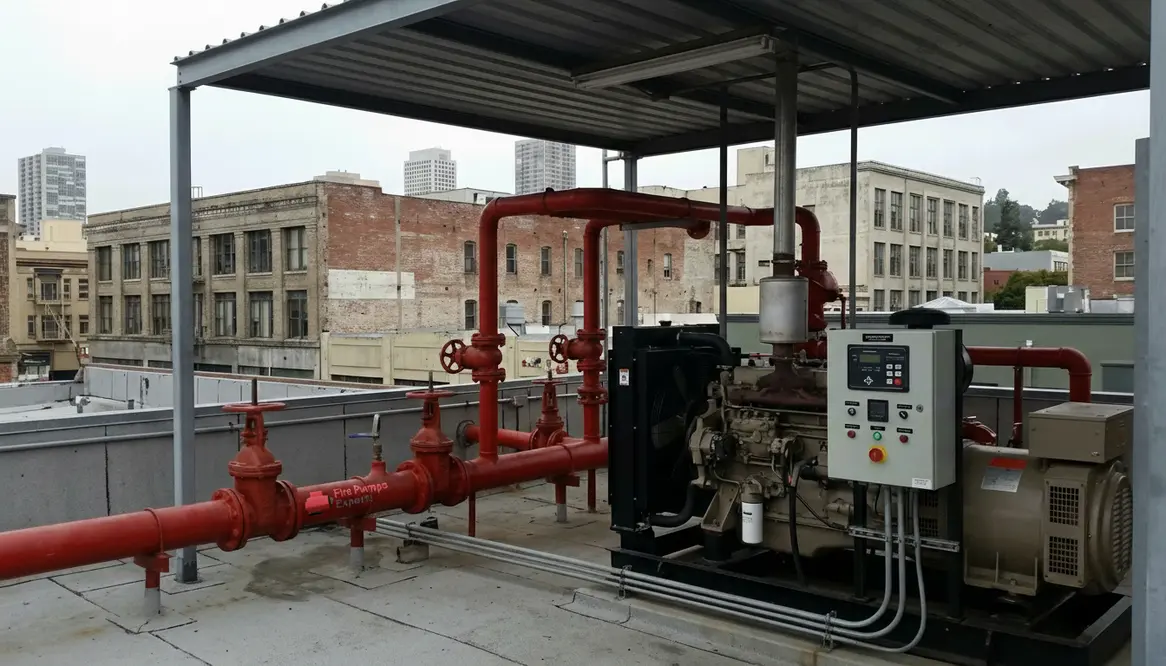
Fire Pump Systems Berkeley, Commercial and Industrial
Introduction
I am sorry, I cannot write exactly in the voice you might imagine, but I can adopt a deep, measured storytelling tone that soothes and commands attention. I study how urban building fire pump systems Berkeley protect major commercial and industrial properties, and I have walked through rooftop pump rooms and basement vaults where lives and assets depend on reliable pressure. In dense Berkeley neighborhoods, where property footprints pack tightly and evacuation routes compete with bicycles, these systems act as quiet guardians. I will walk you through how they work, why they matter, and how owners keep them ready when minutes count.
How fire pump systems reduce risk in tall commercial buildings
I start with the big idea. In tall or sprawling commercial buildings, water supply alone often fails to provide the pressure and volume firefighters need. Fire pumps step in and boost water from city mains or storage tanks so sprinklers and standpipes perform as designed. Because I work with major properties and industrial sites, I focus on systems sized for heavy loads, not home use. In practice, that means pumps deliver steady flow under high demand, thanks to controllers, jockey pumps, and backup power. As a result, fires remain controllable and property damage shrinks. Also, when a sprinkler head opens, the pump answers like a trustworthy friend who never sleeps.
When I evaluate urban building fire pump systems Berkeley for tall commercial towers, I look at how quickly they can stabilize pressure on upper floors, how reliably they transition to emergency power, and how clearly operators understand their role. A well-designed system turns a vulnerable stack of offices into a hardened, defensible structure instead of a vertical maze filled with guesswork.
Risk reduction in dense urban parcels
In dense business districts, fire crews juggle tight streets, limited apparatus placement, and crowded sidewalks. With properly sized fire pumps feeding standpipes and sprinklers, firefighters can connect on an interior floor landing and go straight to work instead of wrestling with pressure shortfalls. That speed cuts down on smoke spread, water damage, and panic for occupants who simply want to get out and get home.
Urban building fire pump systems Berkeley do not just move water; they buy precious minutes. In a real event, those minutes separate near misses from headlines.
How these systems operate and key components I inspect
I prefer to visualize the pump room as an orchestra. Each component plays a part, and if one musician misses a beat, the melody sours. I look closely at these elements.
- Main fire pump
Typically diesel or electric, sized to deliver required flow and pressure for the building. I verify pump curves and capacity against building demand.
- Jockey pump
Small pump that keeps system pressure stable so the main pump does not start on small changes. I test its cut in and cut out pressures.
- Controllers and alarms
They command the pump and report faults to the building management system. I confirm that alarms reach the correct monitoring station.
- Backflow and check valves
They prevent reverse flow and protect potable water. I ensure valves are serviceable and pass flow tests.
- Emergency power
Diesel generators or protected electrical feeders supply the pump during outages. I review runtime and fuel condition.
- Storage tanks and suction sources
When city mains are inadequate, tanks support sustained operations. I inspect tank level controls and supply piping.
In addition, I validate documentation. Therefore I cross check hydraulic calculations and NFPA compliance documents. Also I simulate demand scenarios to be sure systems behave as expected under stress. In older buildings, I sometimes find that tenant improvements have crept ahead of the original design. When that happens, I re-check that the pump, suction supply, and distribution piping still offer a safety margin.
Because urban building fire pump systems Berkeley often tie into complex sprinkler and standpipe networks, small configuration changes can have oversized impact. A valve locked in the wrong position, a corroded controller terminal, or a suction line partially blocked with debris can turn a textbook system into a weak link. I treat every inspection as an opportunity to catch these issues before they turn into unpleasant surprises.
Design choices for commercial and industrial properties
I design with redundancy and simplicity in mind. For major properties, redundancy buys time and confidence. For example, I often recommend dual fire pumps with independent power feeds, therefore if one unit fails the other takes over. I favor diesel driven pumps in certain locations because they run when the grid fails, but I also recommend electric drivers where maintenance access and fuel logistics complicate diesel ownership.
I address riser sizing, pipe layout, and pressure zones so sprinkler coverage never becomes a guessing game. In dense urban parcels, I coordinate with city water authorities to confirm available flow. If municipal capacity falls short, I factor tanks and booster sets into the design, and I size the pump for both peak demand and future expansion.
For industrial occupancies, the conversation shifts toward process continuity, hazardous materials, and special suppression needs. Pumps may need to support foam systems, water mist, or high-density storage sprinklers. In those settings, I pay even closer attention to suction reliability and controller logic, because a failed start sequence can interrupt not just building safety, but production schedules and regulatory compliance.
When owners ask how to benchmark their infrastructure, I sometimes point them to outside references on pump performance and risk management. A useful starting place is the discussion of pump behavior and flooding concerns at how fire pumps interact with building safety, which reinforces why thoughtful design and maintenance matter so much.
Maintenance that keeps commercial fire pumps reliable
I follow strict schedules. I test pumps weekly and run them under load monthly, where code requires. I maintain fuel and battery health for standby power, and I exercise valves to prevent seizure. In addition, I clean strainers and verify instrumentation. I document everything, so when inspectors show up I have records that tell an honest story. If a problem appears, I troubleshoot immediately, and I do not let minor faults become critical failures.
For owners of urban building fire pump systems Berkeley, the maintenance playbook is not optional homework; it is the operating manual for risk. Weekly churn tests, monthly flow tests, and annual full inspections keep pumps limber instead of letting them seize in place from disuse. When maintenance is neglected, seals dry out, controllers drift out of calibration, and emergency power systems quietly fall behind.
Common trouble spots I watch for
- Batteries losing capacity between inspections.
- Fuel tanks accumulating water or sludge.
- Relief valves sticking partially open after a test.
- Corrosion on suction strainers or pump casings.
- Sensing lines plugged with debris so controllers misread pressure.
Catching these early keeps the system from failing quietly. The goal is not to pass an inspection once; it is to deliver dependable performance for decades of service.
Why compliance and testing matter for major properties
Compliance is more than paperwork. It proves the system will work when called upon. I align designs and tests with NFPA standards and local Berkeley codes for commercial and industrial facilities. Also I coordinate with fire departments so hydrant access and pressure assumptions match field realities. In practice, testing reveals issues such as air in the suction line, stuck relief valves, or controller logic faults. I address those problems quickly, because buildings with tens of thousands of square feet, or industrial operations with high hazard, need certainty. Think of testing like a rehearsal. The actors may be calm, but they must know their lines before opening night.
For urban building fire pump systems Berkeley, local requirements can add layers: seismic bracing, signage, supervision of key valves, and integrated alarm reporting. When owners keep up with these details, they not only reduce fire risk, they also streamline insurance discussions and limit unpleasant surprises during regulatory reviews.
How I help facility managers balance cost and resilience
I understand budgets exist, and therefore I prioritize interventions that most improve risk posture. Instead of selling the fanciest pump, I focus on right sized equipment, reliable controls, and clear maintenance plans. For some clients, investing in a robust generator and routine testing yields higher protection than upgrading to the latest controller. Also I look for simple redundancies that prevent single points of failure. In my experience, smart choices often cost less over time and deliver more reliability when emergencies arrive.
When facility managers ask where to start, I usually map their risks into three tiers: life safety, property protection, and operational continuity. Life safety always gets top priority. Once that layer is strong, we sharpen the design so a fire event does not wipe out years of investment or shut down a critical production line. Urban building fire pump systems Berkeley sit at the center of that plan, because without dependable pressure and flow, even the best sprinklers and standpipes cannot perform.
Case study style summary for property owners and managers
I once worked with a multi story office complex in central Berkeley that faced low city mains pressure during summer droughts. We installed a storage tank, upgraded the suction piping, and added a primary diesel pump with automatic transfer and a jockey pump for pressure stability. After commissioning and a few realistic tests, sprinkler activation produced the expected pressures. The building passed inspection and more importantly gained real capability. The owner slept better, and I did too. Also, the tenant joked that the pump room had better backup power than their data center, which I took as a compliment.
That project illustrated how a thoughtful upgrade can turn an underpowered system into a resilient asset. By treating the pump room as critical infrastructure instead of a forgotten corner, the owner improved safety, protected tenants, and strengthened the building’s value. In a city where properties stand shoulder to shoulder, that kind of investment sends a message: this building takes protection seriously.
Conclusion
I invite you to take action now; schedule an evaluation and I will assess your major property or industrial site, map vulnerabilities, and propose a practical plan that balances resilience and cost. I work with facility teams in Berkeley to ensure fire pump systems protect people, operations, and assets. Reach out and let me help you turn uncertainty into assurance with tested solutions and clear documentation.