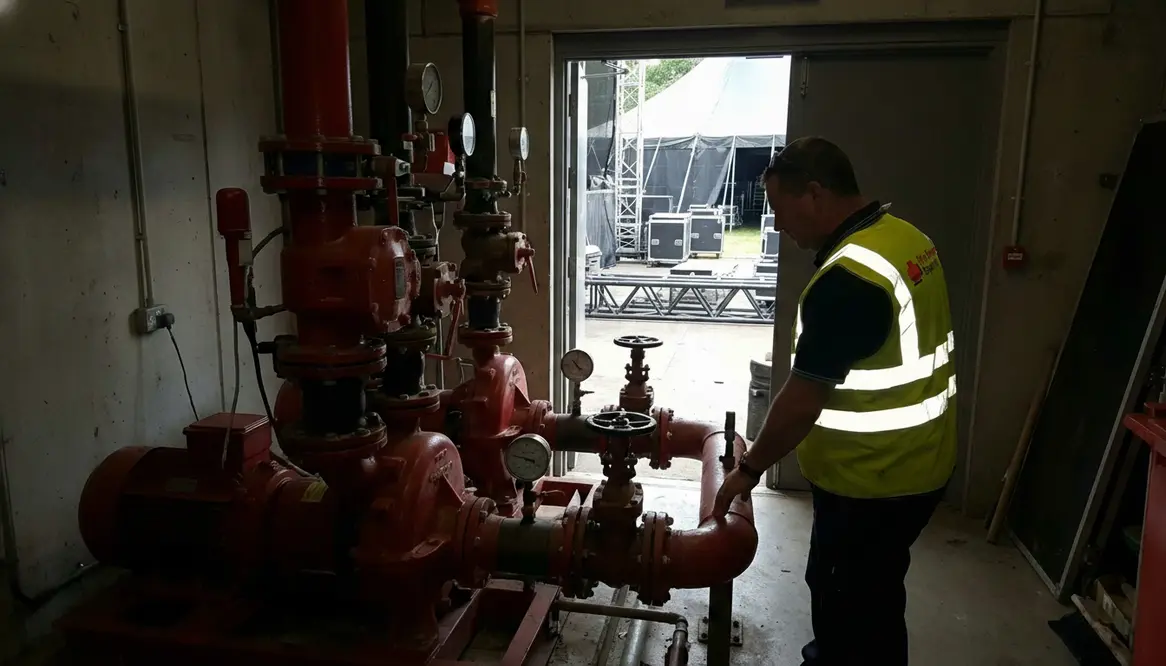
Fire Pump Systems for Event Venues Planning Guide
I have spent enough time around large properties to know one thing for certain. Fire does not care about your event schedule, your grand opening, or your VIP guest list. It shows up uninvited and unapologetic. That is why I take Fire Pump Systems for Event Venues seriously, whether we are dealing with a temporary installation or a permanent facility. In both cases, the goal remains the same. Deliver water, deliver pressure, and do it without hesitation. And yes, while it may not sound as thrilling as a blockbuster movie, a properly planned fire pump system is the quiet hero that never misses its cue.
What do I consider first when planning fire pump systems for event venues?
I start with demand. Always. Before I think about equipment, layout, or budget, I ask how much water the system needs and how quickly it must deliver it. Then I look at the building profile. Is this a temporary structure hosting thousands for a weekend, or a permanent arena with year round operations?
Next, I evaluate the water supply. Municipal sources can be reliable, but not always sufficient. Therefore, I often plan for supplemental storage or booster systems. After that, I assess redundancy. Because when it comes to fire protection, one system is good, but a backup is better.
And yes, I also think about access. If a technician cannot reach the system quickly, then even the best design becomes a liability. As I like to say, a fire pump hidden behind three locked doors is about as useful as a superhero stuck in traffic.
Temporary venues demand speed, flexibility, and precision
Temporary event spaces move fast. One day it is an empty lot. The next day it is hosting thousands of people and at least one person asking where the nearest exit is. So I plan systems that can be installed quickly without sacrificing performance.
I typically rely on modular pump units and above ground piping. This allows rapid deployment and easy removal once the event ends. However, speed does not mean cutting corners. I still ensure compliance with fire codes and pressure requirements.
Additionally, I factor in variable demand. A concert crowd behaves differently than a trade show audience. Therefore, I design systems that can handle peak loads without strain. It is a bit like preparing for a surprise encore. You may not need it, but you better be ready.
Permanent venues require long term reliability
Permanent facilities tell a different story. Here, I focus on durability, integration, and lifecycle performance. These systems are not going anywhere, so they must withstand years of operation without losing efficiency.
I design with future expansion in mind. Because if there is one thing I have learned, it is that buildings grow. And when they do, the fire protection system must keep up. I also integrate monitoring technology, allowing facility managers to track performance in real time.
Moreover, I pay close attention to maintenance access and component quality. A system that is easy to maintain will last longer and perform better. It is not glamorous, but it is essential. Kind of like flossing. Nobody brags about it, but everyone benefits.
Key components I never overlook in fire pump planning
Water Supply
I ensure a consistent and adequate source, often combining municipal feeds with on site storage.
Pump Type
Electric, diesel, or both. The choice depends on reliability needs and site conditions.
Controller Systems
I select controllers that respond instantly and provide clear diagnostics.
Pressure Maintenance
Jockey pumps help maintain system pressure without overworking the main pump.
Redundancy
Backup systems are not optional in large venues. They are essential.
Testing Access
I always plan for easy testing because performance must be proven, not assumed.
How I balance compliance with real world performance
Codes and standards guide every decision I make. However, I do not treat them as the finish line. Instead, I treat them as the starting point. Because real world conditions can push systems beyond minimum requirements.
For example, I consider crowd density, event type, and emergency response times. Then I adjust the design accordingly. In many cases, this means increasing capacity or adding redundancy.
Furthermore, I collaborate with engineers, facility managers, and safety teams. This ensures the system works as part of a larger safety strategy. After all, a fire pump system does not operate in isolation. It is part of a coordinated response.
Fire Pump Systems for Event Venues must evolve with risk
Risks change. Technology evolves. And expectations rise. So I make sure my designs can adapt. Whether that means integrating smart monitoring or preparing for higher occupancy loads, flexibility remains key.
Additionally, I stay informed about emerging standards and innovations. Because standing still in this field is not an option. Fire protection is one of those areas where being outdated is not charming. It is dangerous.
And yes, while I appreciate a good classic film, I do not design fire systems like it is 1995. We have better tools now. It would be a shame not to use them. If you want to understand more about how Fire Pump Systems for Event Venues fit into broader safety strategies, resources like https://firepumps.org can offer helpful technical background while your venue plan stays focused on people and performance.
FAQ about fire pump planning
Planning Fire Pump Systems for Event Venues is never a one-size-fits-all exercise, so I field the same core questions from planners, owners, and safety teams every season. A few of the most common are worth addressing directly before anyone signs off on a layout or a budget.
Conclusion
When I plan fire pump systems, I do not just think about equipment. I think about people, property, and the moments that matter inside those spaces. If you are managing a commercial or industrial venue, now is the time to evaluate your system. Make it stronger, smarter, and ready for anything. Because when the unexpected happens, preparation is not just helpful. It is everything. Let us make sure your system shows up when it counts and that your Fire Pump Systems for Event Venues are built to perform on their biggest night, not just on paper.