Fire Pump Testing Requirements New York City Guide
I have spent enough time around high rise mechanical rooms to know one simple truth. When the alarm sounds and the sprinkler system calls for water, a fire pump either performs… or it embarrasses everyone in the room. In New York City, where buildings stretch into the clouds and the stakes are very real, reliability is not optional. That is exactly why fire pump testing requirements new york city exist.
These rules are not paperwork theater. They are practical safeguards designed to make sure that when a fire protection system demands pressure, the pump delivers without hesitation. Over the years I have seen beautifully maintained systems hum like a jazz saxophone. I have also seen neglected pumps sputter like an old car in a 90s action movie. Spoiler alert. The hero building does not survive that scene.
So today I want to walk through how these testing requirements actually work inside large commercial and industrial properties. Because once you understand the rhythm behind the rules, compliance stops feeling like a chore and starts feeling like smart building management.
If you have ever stood in a pump room during a test, you know that hum, vibration, and pressure gauge needle all tell a story. The better you understand that story, the easier it becomes to keep your building ready for the worst while hoping for the best.
Understanding Fire Pump Testing Requirements New York City for High Rise Buildings
New York City treats fire protection seriously. After all, dense skylines demand strong safety systems. Because of that, the Fire Department of New York and national standards such as NFPA 25 guide how pumps must be inspected, tested, and documented.
In practical terms, the fire pump testing requirements new york city follow a layered schedule. Each layer confirms that the pump can start, run, and deliver pressure when the building needs it most.
Here is how that schedule usually plays out inside major commercial properties.
Weekly churn test
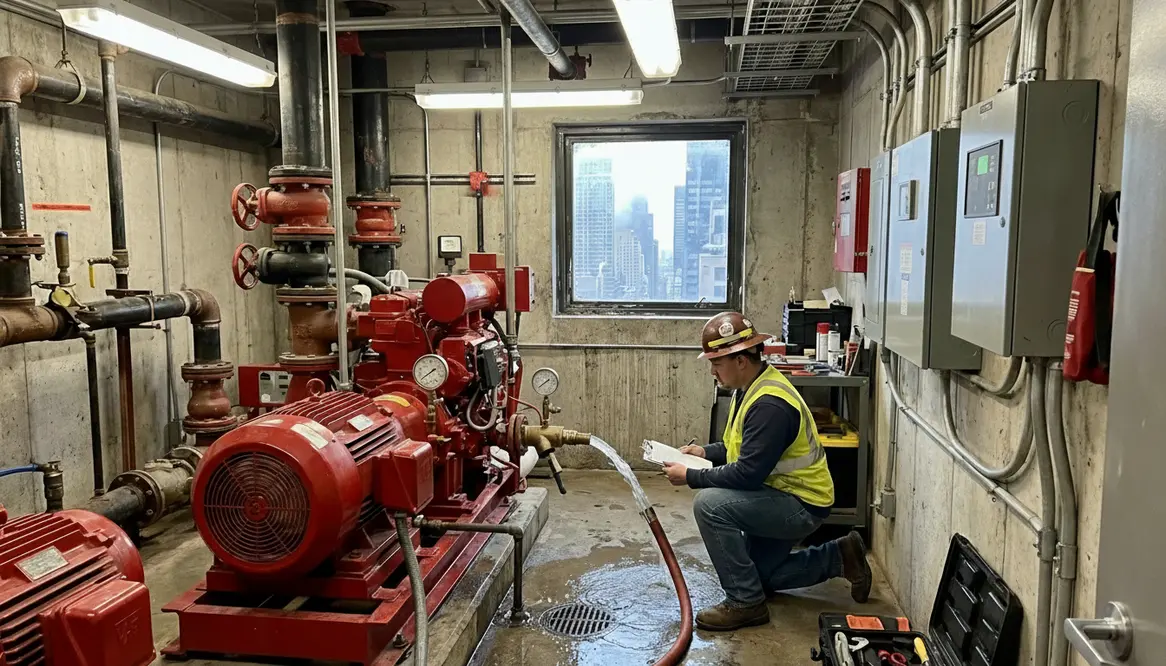
First, operators run the pump with no water flowing through the system. This is called a churn test. The goal is simple. Start the pump, let it run, and verify that pressure holds steady. Think of it like warming up an engine. The test confirms the controller starts correctly, the motor spins freely, and nothing sounds like a washing machine filled with loose bolts.
Monthly visual inspections
Next comes a close inspection of valves, gauges, controllers, and fuel supply if the system uses a diesel engine. Technicians verify that valves remain open, pressure gauges read properly, and alarms communicate with the building system.
Annual flow testing
Then we reach the big moment. During a full flow test, technicians push water through the system at multiple demand levels. This confirms that the pump can meet design pressure and flow. In a high rise building, that pressure must move water dozens of floors upward without hesitation.
Consequently, annual testing provides the real proof that the system can perform under stress. It is essentially the fire pump equivalent of a physical exam. When done correctly, you walk away knowing exactly how healthy your pump really is.
Why High Rise Fire Pumps Demand Precision
A fire pump in a warehouse already carries responsibility. However, inside a 60 story tower the pressure requirements become a different beast entirely.
Water must travel vertically against gravity. Meanwhile, sprinkler systems on upper floors require stable pressure to control fires quickly. Therefore, engineers design pump systems with exact pressure curves.
If testing falls behind schedule, small issues grow quietly. A partially closed valve might restrict flow. A worn controller contact might delay startup. And suddenly the system that once performed like a superhero now acts like a background extra.
That is why strict adherence to fire pump testing requirements new york city protects not just buildings but the people inside them.
Additionally, inspectors from FDNY expect clear documentation. Test logs must show pressures, flow readings, and equipment condition. When records look sloppy or incomplete, inspections slow down quickly. And no building owner enjoys explaining missing paperwork to a fire marshal. Trust me. That conversation rarely ends with a handshake and a smile.
What inspectors want to see
- Consistent weekly churn test records
- Monthly inspection sheets with signatures
- Annual flow test data with pressures and flows
- Notes on deficiencies and repairs
What you want to avoid
- Handwritten logs nobody can read
- Missing dates on critical tests
- No proof of corrected issues
- Pump rooms that look like storage closets
If you want a deeper look at how testing ties into long term reliability, resources like this guide to fire pump servicing break down how regular inspection and testing keep systems ready for real emergencies.
How Do I Stay Compliant With NYC Fire Pump Testing Rules?
I hear this question constantly from property managers who oversee large commercial towers. The answer comes down to structure and consistency.
Build a calendar that never slips
First, create a testing calendar that aligns with FDNY expectations and NFPA guidelines. Weekly churn tests should happen like clockwork. Meanwhile, annual flow tests must involve qualified technicians who understand pump curves and system hydraulics.
Treat documentation like gold
Second, treat documentation like gold. Every test should record pressures, voltages, and controller behavior. Because when inspectors review your system, they are really reviewing your records.
Partner with the right specialists
Third, partner with specialists who understand large scale fire protection systems. Commercial campuses, manufacturing facilities, and high rise buildings require deeper expertise than a typical small property. Experienced technicians catch problems early, which saves time, money, and a lot of stress later.
Think prevention, not miracles
Finally, remember that prevention beats emergency repairs every single time. A fire pump should never surprise you. If it does, something in the testing program already failed. The whole point of fire pump testing requirements new york city is to make sure there are no dramatic plot twists when the alarm goes off.
A Practical Testing Checklist for Large Commercial Properties
When you translate the rules into a simple checklist, daily operations get much easier. The following structure keeps teams focused and inspections predictable.
Operational Checks
|
Performance Testing
|
When teams follow this structure, compliance with fire pump testing requirements new york city becomes far more manageable. Instead of scrambling before inspections, building managers operate from a predictable routine.
And frankly, routines keep equipment healthy. Pumps appreciate attention the way classic cars appreciate regular maintenance. Ignore them long enough and they will absolutely complain.
Common Mistakes I See During Fire Pump Testing Requirements New York City Inspections
Over the years I have seen a few patterns repeat themselves. Not because owners do not care, but because large facilities have a thousand priorities competing for attention.
The first mistake is incomplete flow testing. Some teams run the pump but never verify multiple flow points. However, a true performance test measures pressure at several levels to confirm the pump curve still matches its design.
Another common issue involves controller settings. Small electrical adjustments can affect startup timing or alarms. Therefore, technicians must confirm that controllers respond exactly as designed.
Documentation also trips people up. The fire pump testing requirements new york city expect organized records that show each inspection clearly. If test sheets look scattered or missing, inspectors assume the testing itself may have gaps.
Finally, I sometimes find pump rooms treated like storage closets. Boxes, paint cans, spare furniture. It is almost like the pump room becomes the building’s forgotten attic.
Let me say this gently. A fire pump room is not a storage unit. It is a life safety system. If Indiana Jones walked into some of these rooms he might discover ancient artifacts and three broken office chairs.
Clean rooms, clear access, and visible gauges make inspections smoother and safer.
FAQ About NYC Fire Pump Testing
A few common questions always come up when people first map out their program for fire pump testing requirements new york city. Here are straightforward answers that keep everyone on the same page.
Conclusion
High rise buildings rely on quiet systems that stand ready behind the walls. Fire pumps are one of those silent guardians. When testing follows the proper schedule, building owners gain confidence, inspectors stay satisfied, and tenants remain protected. If you manage a major commercial or industrial property, now is the time to review your pump program. The right specialists can keep your system aligned with fire pump testing requirements new york city and ready when it matters most.