Fire Pumps for Light Industrial Buildings Guide
I have walked through enough mechanical rooms to know this truth: when things go wrong, they go wrong fast. And in light industrial properties, fire risk does not politely knock first. It kicks the door in. That is why I always bring up large retail fire pumps early in the conversation. They are not just for big box stores or massive warehouses. In fact, they quietly set the standard for how we think about fire protection in commercial and industrial spaces. And yes, they hum like a well tuned engine, which is oddly comforting. Like a calm voice narrating your safety plan.
What fire pump system do light industrial buildings actually need
Let me answer this plainly. Most light industrial properties need a system that balances pressure, reliability, and scalability. Not flashy. Not overbuilt. Just right. However, “just right” in fire protection is a lot more precise than Goldilocks ever dealt with.
Typically, I recommend systems that can handle moderate hazard classifications. These buildings often include storage areas, light manufacturing zones, and distribution spaces. Therefore, water demand can vary quickly. One moment it is calm, and the next it is a scene straight out of an action movie, minus the slow motion.
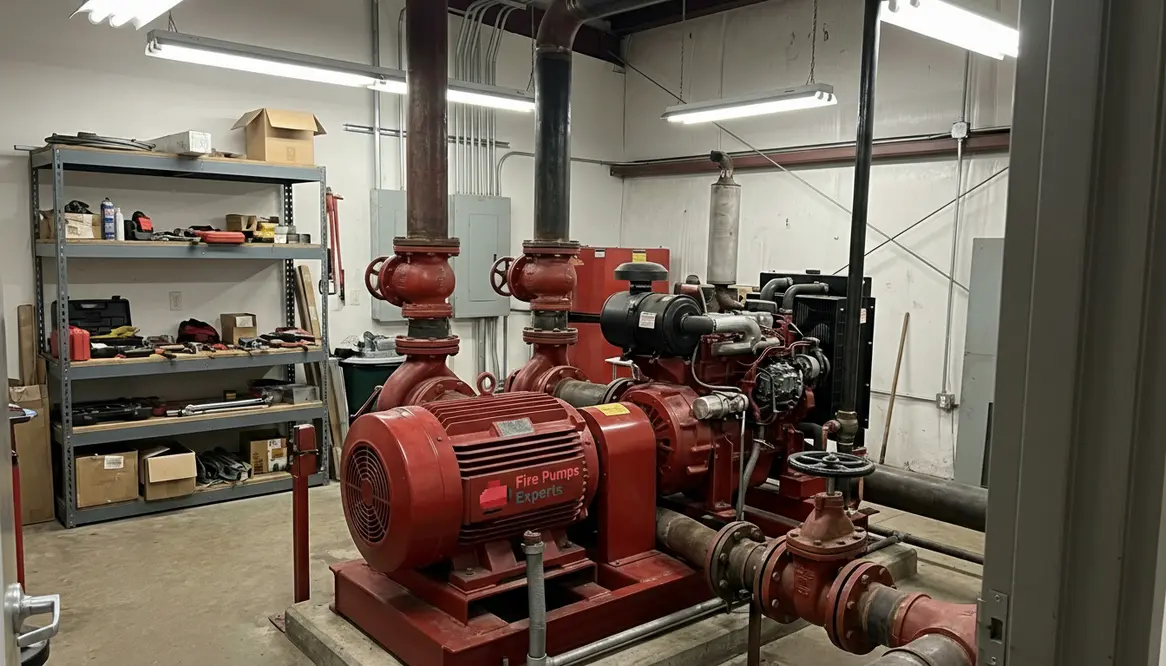
So, the pump must maintain steady pressure across multiple zones. Electric driven pumps often fit well when power reliability is strong. Meanwhile, diesel options step in when backup independence is critical. And yes, redundancy matters. Because hoping nothing fails is not a strategy. It is a wish.
In many light industrial projects, I pull design principles straight from how we configure large retail fire pumps. Those setups are engineered to handle fluctuating demand, multiple zones, and serious reliability expectations, which makes them a strong reference point for smaller but still critical operations.
How I size fire pumps without overbuilding the system
Sizing a fire pump is where experience speaks louder than spreadsheets. Although calculations matter, context matters more. I always start with hazard classification and required flow rates. Then I layer in building layout, pipe design, and future expansion.
For example, a small fabrication facility may not need the same output as a regional distribution hub. However, both still require consistent pressure at peak demand. That is where systems inspired by large retail fire pumps come into play. They are built for reliability under pressure, literally.
Additionally, I look at water supply conditions. If municipal supply is weak, the pump carries more responsibility. If it is strong, the system can be more efficient. Either way, I avoid oversizing. Because an oversized pump cycles poorly and wears down faster. Think of it like revving a sports car in traffic. Impressive, but pointless.
The sweet spot is a pump that meets demand curves without constantly running at the extreme edges of its performance. That balance, borrowed from the way large retail fire pumps are specified, keeps systems efficient, durable, and far less dramatic during real emergencies.
Common mistakes I see in light industrial fire pump planning
I have seen some things. And not all of them inspire confidence.
- Ignoring future growth: Businesses expand. Systems should too. Planning only for today leads to expensive upgrades tomorrow.
- Underestimating pressure loss: Long pipe runs and elevation changes eat pressure for breakfast. If you ignore that, the system will fall short when it matters most.
- Poor maintenance access: If your pump is harder to reach than a hidden level in a video game, it will not get serviced properly.
- Assuming all pumps are equal: They are not. Build quality, controls, and reliability vary widely.
However, the biggest mistake is treating fire protection like a checkbox. It is not paperwork. It is performance.
Choosing between electric and diesel fire pumps
This is where things get interesting. And by interesting, I mean critical.
Electric Fire Pumps
- Clean and efficient operation
- Lower maintenance needs
- Depend on stable power supply
- Ideal for urban industrial sites
Diesel Fire Pumps
- Operate independently of grid power
- Reliable during outages
- Require more maintenance
- Best for remote or high risk facilities
In many cases, I suggest a combination approach. One handles daily reliability, while the other stands ready for worst case scenarios. Because when the lights go out, you do not want your fire protection taking a coffee break.
This hybrid thinking came straight from looking at how large retail fire pumps are arranged to protect sprawling floor areas with high inventory value. Applying that same mindset to light industrial sites keeps operations protected when everything else is having a bad day.
Why system integration matters more than the pump itself
Here is something people often overlook. The pump is only one part of the system. A strong heart does not help if the arteries are blocked. Yes, that got dramatic, but it is accurate.
Control panels, alarms, pressure sensors, and sprinkler systems must all work together. Therefore, integration is everything. I always ensure the system communicates clearly and reacts instantly. Delays are not acceptable. Not in fire protection.
Moreover, compliance with NFPA standards is not optional. It is the baseline. And while that may sound rigid, it actually provides flexibility within a safe framework. Like jazz, but with fewer saxophones and more valves.
Well integrated systems, often modeled after the discipline used in designing large retail fire pumps and their controls, make inspections smoother, troubleshooting faster, and emergency response far more predictable.
FAQ: Fire Pump Needs for Light Industrial Properties
Instead of burying answers in code books and spec sheets, here are direct responses to the questions that come up on nearly every light industrial project.
Final thoughts and next steps
Fire protection is not where I cut corners, and neither should you. The right system protects more than property. It protects uptime, people, and peace of mind. If you are planning or upgrading a light industrial facility, now is the time to act. Work with experts who understand performance, not just specs. Because when the pressure rises, your system should not flinch. And neither should you.
If you want a deeper technical starting point, resources like https://firepumps.org can help frame the standards and expectations before you sit down with your design team.