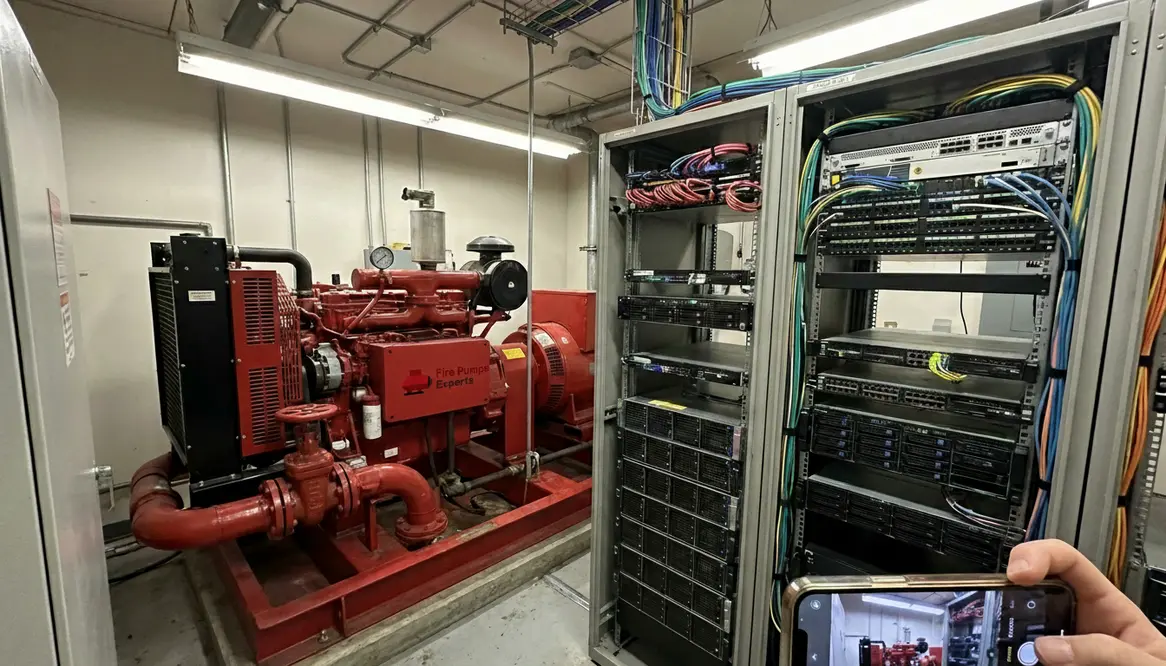
Fire Pump Requirements for Telecommunication Facilities
Designing fire pump systems for modern telecom infrastructure demands the same level of rigor we expect from high performance mission critical environments, where failure is never just an inconvenience.
I have spent years around critical infrastructure, and I can tell you this with a calm certainty: when fire protection fails, everything else becomes a gamble. That includes the same disciplined approach we apply to healthcare campus fire pumps, where uptime is sacred and risk is never casual. Telecommunication facilities live in that same high stakes world. They may not have operating rooms, but they carry something just as vital in a modern sense: uninterrupted connection. And yes, when things go wrong, people notice faster than you can say “no signal.”
So let’s walk through what really matters when designing and maintaining fire pump systems for these facilities. I’ll keep it grounded, practical, and maybe even a little entertaining. After all, fire pumps deserve better than being the most ignored hero in the room.
Why Telecommunication Facilities Demand Serious Fire Protection
Telecom buildings house dense electronic equipment, backup batteries, and fuel sources. Consequently, the fire load is higher than many expect. Unlike office spaces, these environments cannot simply shut down and reopen Monday morning.
Moreover, downtime costs stack quickly. A single outage can ripple across cities. Therefore, fire protection must not only suppress flames but also preserve continuity. That is where a properly designed fire pump system becomes essential.
I often compare it to the quiet bodyguard in a movie. You barely notice them until something goes wrong, and then suddenly they are the most important person in the scene.
In telecom, as with healthcare campus fire pumps, the mission is simple: stay ready, stay reliable, and make absolutely sure no one has to think about fire protection on the worst possible day.
The hidden risk profile inside telecom spaces
Unlike traditional commercial buildings, telecom facilities pack enormous amounts of energized equipment into compact rooms. Batteries, switchgear, power supplies, cable bundles, and on site fuel create a cocktail of continuous ignition sources and combustible load. Fire pumps are not just there to comply with a code requirement; they exist to protect a nonstop operation that the outside world assumes will never blink.
How Fire Pump Requirements Differ in Telecom Environments
Telecommunication facilities follow strict standards, often guided by NFPA 20 and NFPA 75. However, the real difference lies in how those standards are applied.
First, redundancy is not optional. Just as with healthcare campus fire pumps, telecom sites often require backup power and secondary pump capacity. If one system fails, another must step in immediately.
Second, water supply reliability becomes critical. Facilities frequently include on site storage or dual water feeds. This ensures that even if municipal supply falters, the system continues to perform.
Third, integration with clean agent systems is common. While water based suppression handles structural risk, sensitive electronics often rely on gas systems. The fire pump must support a coordinated response, not compete with it.
Redundancy, selectivity, and coordinated response
Telecom operators think in terms of “five nines” availability, and that mindset must carry over into fire protection. Pump controllers, transfer switches, and power feeds should be arranged so that a single failure cannot take the entire protection strategy offline. Clean agents may protect racks while sprinklers or water mist protect the building itself, and the fire pump must deliver the pressure and flow that keeps that layered approach credible.
Designing for Reliability and Continuous Operation
When I approach a telecom fire pump design, I think in terms of endurance. This is not a sprint. It is a marathon where failure is not an option.
Therefore, I prioritize:
- Dedicated power sources that remain stable during outages
- Diesel driven pumps for independence from electrical failure
- Advanced monitoring systems that alert teams before problems escalate
- Regular testing schedules that go beyond minimum compliance
Additionally, placement matters. Pumps must sit in protected environments, shielded from flooding, heat, and physical damage. It sounds obvious, yet you would be surprised how often “out of sight, out of mind” becomes a design flaw.
Good layouts mirror the attitude we bring to healthcare campus fire pumps: route critical systems away from single points of failure, minimize exposure to environmental hazards, and give technicians safe, clear access for testing and maintenance even while the facility hums along at full load.
Monitoring, data, and early warning
Telecom networks are obsessed with telemetry, and the fire pump should be part of that same story. Flow tests, pressure readings, controller events, and power anomalies can all be fed into building management systems or network operations centers. The earlier a team sees a problem, the more boring the outcome becomes, and boring is a very good word when discussing fire protection.
Comparing Key System Priorities
| Telecom Facility Focus | Fire Pump Strategy |
| Continuous uptime | Redundant pump systems with automatic switchover |
| High value equipment | Balanced water and clean agent integration |
| Remote monitoring needs | Smart diagnostics and real time alerts |
| Limited staffing | Automation and low maintenance design |
This alignment ensures the system supports the mission instead of complicating it. And trust me, no one wants to troubleshoot a pump failure while also explaining to a city why their internet vanished.
Telecom priorities mapped to real world design choices
If a facility’s brand promise is “always on,” the fire pump has to reflect that posture. That means carefully chosen pump drivers, fault tolerant controls, and water supplies that do not vanish during the same emergency that threatens the grid. When those pieces line up, the fire protection strategy starts to look a lot like the best designs for healthcare campus fire pumps: layered, resilient, and unapologetically serious about staying online.
What Are the Most Common Compliance Mistakes?
I see a pattern, and it repeats more often than a catchy pop song.
First, facilities underestimate testing. They install a compliant system, then treat it like a museum piece. However, fire pumps need exercise. Weekly or monthly testing keeps components functional and reveals hidden issues.
Second, teams overlook fuel maintenance for diesel pumps. Fuel degrades over time, and that quiet tank can become a liability. Regular inspection is not optional.
Third, documentation gaps create problems during inspections. Clear records prove that systems are ready. Without them, even a perfect setup raises questions.
Finally, some designs ignore future expansion. Telecom facilities grow. If your fire pump system cannot scale, you will face costly upgrades later.
Turning compliance into a living process
The best run telecom sites treat compliance as an ongoing practice, not a once and done design event. Scheduled tests are logged, trends are reviewed, and anomalies are chased down before they become headlines. In that respect, the smartest teams behave very much like those responsible for healthcare campus fire pumps: relentlessly curious about what might fail next, and determined to fix it before it tries.
Lessons Borrowed from Healthcare Campus Fire Pumps
I often borrow strategies from healthcare environments because the stakes feel similar. In both cases, failure is not just inconvenient. It is unacceptable.
For example, layered redundancy works beautifully. Also, predictive maintenance tools help identify issues before they become emergencies. And perhaps most importantly, staff training ensures that when alarms sound, no one freezes like a character in a horror movie.
These lessons translate well into telecom settings, where preparedness defines success.
Cross pollinating best practices between sectors
When you compare top tier telecom facilities with leading healthcare campuses, a pattern emerges: intense focus on uptime, conservative design margins, and unapologetic investment in reliability. Applying that mindset to telecommunications fire protection elevates the role of the fire pump from “equipment in a back room” to a central pillar of business continuity. Resources like https://firepumps.org can help teams deepen their understanding as they refine specifications and maintenance programs.
FAQ: Fire Pump Requirements for Telecommunication Facilities
Conclusion: Building Systems That Never Blink
In the end, fire pump systems for telecommunication facilities must deliver quiet strength and constant readiness. I encourage you to approach design and maintenance with intention, drawing from proven strategies used in healthcare campus fire pumps and other mission critical environments. When you invest in reliability, you protect more than equipment. You protect connectivity itself. And in today’s world, that might just be the closest thing we have to keeping the lights on everywhere.