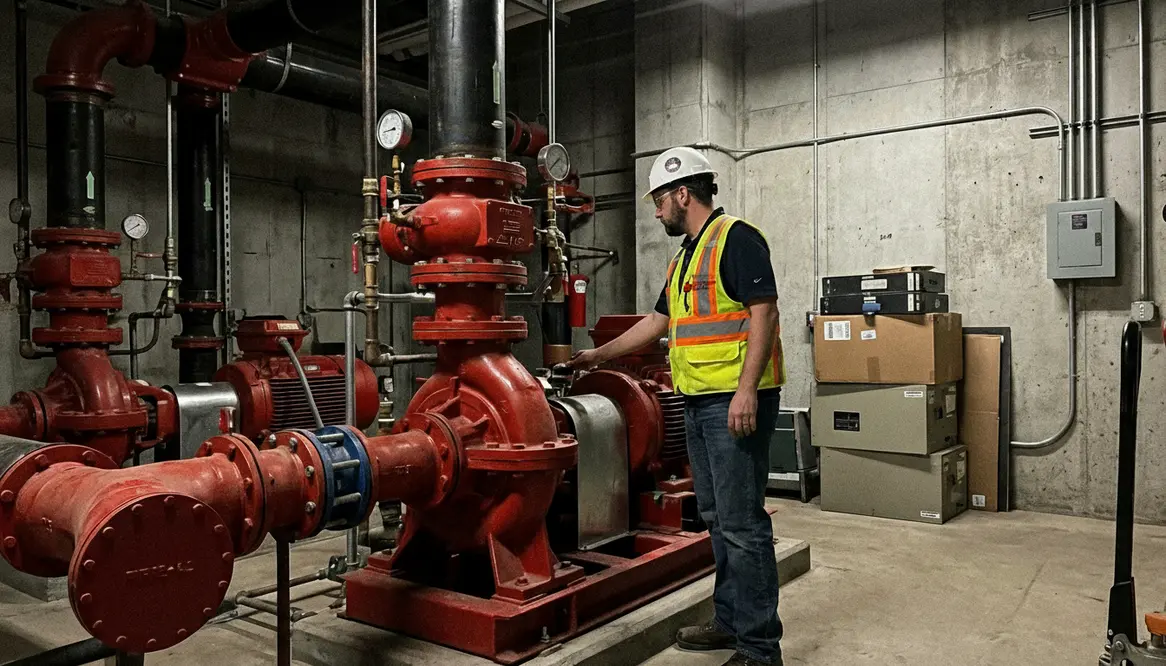
Fire Pumps in Colleges and Universities Protection
How Fire Pumps Support Fire Protection in Colleges and Universities
I have always believed that a college campus is a small city in disguise. You have housing, dining, labs, libraries, and the occasional late night pizza debate that somehow turns philosophical. But beneath all that life, there is a quiet system working with steady confidence. Fire pumps sit at the heart of that system, ready to act when everything else goes sideways.
Now, before any system earns that kind of trust, it goes through acceptance testing planning. I treat this as the dress rehearsal before opening night. Every valve, every controller, every surge of pressure gets checked. Because when a real emergency hits, there are no second takes. And yes, while it may not sound thrilling, I promise it is more important than your favorite action movie explosion scene.
Campus Safety Starts With Reliable Water Pressure
On a campus, fire protection is not just about sprinklers or alarms. Without the right water pressure, even the best layouts underperform. That is where well designed fire pump systems, backed by solid acceptance testing planning, quietly keep everyone safe while lectures, labs, and late night study sessions carry on.
What Role Do Fire Pumps Play in Campus Fire Protection Systems?
I like to think of fire pumps as the quiet bodyguards of a campus. You do not notice them until you need them, and when you do, they had better show up strong. Their job is simple in theory. They boost water pressure so sprinkler systems and standpipes can actually do their job in large buildings.
However, college and university properties are not small. We are talking about multi story dormitories, research facilities packed with expensive equipment, and auditoriums filled with people. Municipal water pressure alone often cannot keep up. That is where fire pumps step in.
Why Pressure Matters When Everything Else Is Busy
These pumps ensure consistent water flow during peak demand. So while hundreds of students are taking showers or someone is running a lab experiment, the fire protection system still performs at full strength. It is not glamorous work, but it is essential, especially when campus life places constant demand on shared utilities.
Why Large Campus Buildings Depend on Properly Planned Fire Pump Systems
I have walked through enough campuses to know one thing. No two buildings behave the same in a fire scenario. A laboratory reacts differently than a dorm, and a sports arena has its own set of challenges. Therefore, fire pump systems must be designed with precision.
In addition, planning takes into account building height, layout, and hazard level. A high rise dorm requires different pressure demands than a sprawling lecture hall. This is not guesswork. It is calculated engineering backed by real data and supported by thoughtful acceptance testing planning that proves the math holds up in real conditions.
Design Mistakes That Quietly Undermine Safety
And here is where things get interesting. A poorly designed system might still pass a basic inspection, but it can fail under real stress. That is like bringing a butter knife to a sword fight. Technically, you showed up, but you are not winning anything. Under fire conditions, the shortcuts taken during design and acceptance testing planning do not stay hidden for long.
On many campuses, a mix of old and new construction creates uneven demands on the fire pump system. Without a clear strategy tying building needs to pump performance, even a powerful pump can be mismatched to reality. The fix is rarely a bigger pump. It is a smarter plan, tuned to the actual risks and verified before students ever move in.
Acceptance Testing Planning for Fire Pumps in Higher Education Facilities
Treating Testing Like a Campus-Scale Dress Rehearsal
When I approach acceptance testing planning for a campus, I focus on performance under pressure. Literally. This phase confirms that the fire pump delivers the required flow and pressure across all connected systems.
First, we simulate real demand conditions. Then we monitor how quickly the pump starts, how stable the pressure remains, and whether backup systems respond correctly. In addition, we verify alarms and control panels, because a silent failure is the worst kind.
Furthermore, campuses often operate year round, so downtime is not an option. Testing plans must be efficient and thorough without disrupting daily operations. Think of it as conducting a full orchestra rehearsal while classes are still in session. Challenging, yes. Impossible, no.
Solid acceptance testing planning is where engineering, operations, and safety come together. It is the point where theory meets the sound of pumps spinning up, valves opening, and gauges proving that the system is ready for the kind of emergency everyone hopes never arrives.
Key Components I Always Evaluate
- Pump capacity and pressure output
- Controller response time
- Backup power integration
- Water supply reliability
- Alarm and monitoring systems
Common Risks I Watch For
- Pressure drops in tall structures
- Delayed pump startup
- Inconsistent water supply
- Electrical failures
- Undersized system design
Each of these risks is a small warning light for deeper problems with design, maintenance, or acceptance testing planning. Catching them in a controlled test, instead of in the middle of a real fire, is the difference between an inconvenience and a catastrophe.
How Modern Fire Pump Systems Adapt to Complex Campus Layouts
Campuses evolve. New buildings go up, old ones get renovated, and suddenly the original fire protection plan looks like it belongs in a museum. So, modern fire pump systems must adapt.
For example, variable speed pumps adjust output based on demand. This improves efficiency and reduces wear. Additionally, advanced controllers provide real time data, allowing facility managers to monitor system health without guessing.
Smart Integration Across the Campus
I have seen campuses integrate these systems into centralized building management platforms. It is like giving your fire protection system a brain. And unlike some group projects, this one actually pulls its weight.
Moreover, redundancy plays a big role. Backup pumps and power sources ensure the system keeps running even if one component fails. Because in fire protection, hope is not a strategy.
The Long Term Value of Investing in Reliable Fire Pump Infrastructure
Why Cutting Corners Is a Losing Strategy
Let me be direct. Cutting corners on fire pump systems is a gamble no institution should take. The upfront investment might seem high, but the long term value is undeniable.
Reliable systems reduce maintenance costs, minimize downtime, and most importantly, protect lives and property. In addition, they help institutions meet strict safety regulations, which is no small feat in large commercial properties.
Furthermore, a well maintained system extends its operational lifespan. That means fewer replacements and more predictable budgeting. And if you have ever dealt with emergency repairs, you know they tend to show up at the worst possible time. Usually when everyone is already stressed.
For colleges and universities that treat safety planning as seriously as academic planning, robust fire pump infrastructure and disciplined acceptance testing planning become part of the campus culture, not just another line item on a compliance checklist.
FAQ: Fire Pumps in Colleges and Universities
Conclusion
If you manage or oversee a college or university facility, now is the time to take a closer look at your fire pump systems. A well planned and properly tested setup is not just a requirement. It is peace of mind. Work with experts who understand large scale commercial properties and know how to get it right the first time. Because when it comes to fire protection, good enough is never enough.