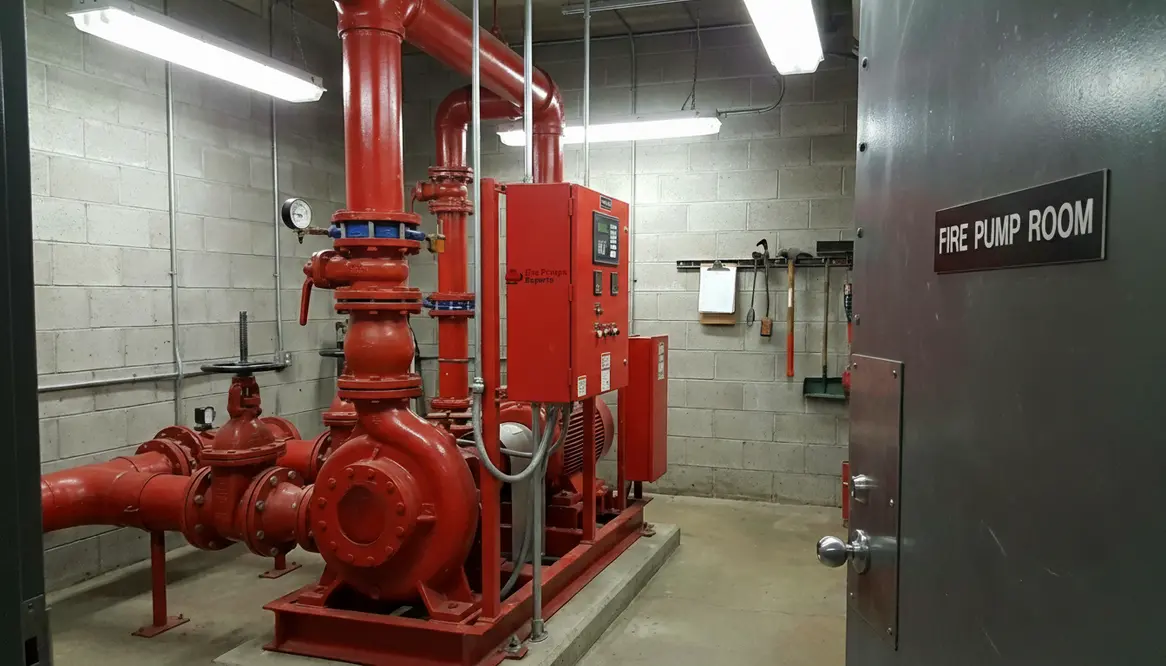
Fire Rated Fire Pump Room Requirements Explained
I have walked through a lot of mechanical rooms in my career. Some are quiet, tidy, and humming with purpose. Others look like a scene from an action movie where something important is about to explode. Yet in both cases, one space carries more responsibility than most people realize. The fire pump room.
When we talk about fire rated fire pump room requirements, we are really talking about protecting the one system that stands between a small incident and a catastrophic loss. In large commercial and industrial buildings, the fire pump is the heart of the entire fire protection system. If that heart stops beating during a fire, everything else becomes decoration.
So building codes demand something simple but powerful. The pump room itself must survive a fire long enough for the system to do its job. In other words, we build a protective shell around the machine that protects the building. Think of it as giving the hero of the story a very sturdy suit of armor.
And honestly, that armor matters more than people think.
Why This Room Deserves More Respect
In big-box warehouses, hospitals, data centers, and high rises, the fire pump room is the quiet backbone of life safety. It rarely gets tours. It almost never shows up on glossy brochures. Yet when sprinklers open and standpipes charge, everything depends on that pump room staying alive.
That is the heart of modern fire rated fire pump room requirements: keep the most important system in the building running long enough to save the day.
Think of it this way. If the pump quits early, the sprinklers and standpipes do not retire heroically. They just quietly fail to matter.
What Happens If a Fire Pump Room Is Not Fire Rated
Let me paint a picture.
A fire breaks out in a large distribution facility. Flames spread through storage racks, heat rises, and smoke builds fast. The sprinklers activate and call for help from the fire pump. The pump starts exactly as designed.
But the pump room sits next to a storage area filled with packaging materials. Within minutes, fire reaches the room itself. Heat damages the controls. Smoke chokes the engine. Suddenly the pump fails.
The sprinklers still exist, technically speaking. However, without pressure behind them, they might as well be fancy ceiling decorations.
This is exactly why building codes insist on a fire resistant enclosure around pump equipment. The goal is simple. Keep the fire pump operating even while the rest of the building is under attack.
In large commercial facilities such as warehouses, hospitals, manufacturing plants, and high rise structures, this protection becomes even more critical. These buildings carry higher life safety risks, larger fire loads, and more complex suppression systems.
Therefore the pump room must stand its ground.
Fire Rated Fire Pump Room Requirements for Commercial and Industrial Buildings
When people ask me about fire rated fire pump room requirements, I usually say this. Codes are not trying to make construction harder. They are trying to keep the most important life safety equipment alive during the worst possible day.
Most modern fire codes and NFPA standards require pump rooms to be separated from the rest of the structure with fire rated construction. Typically this means walls, ceilings, and doors designed to resist fire for a specific duration.
Common code expectations for pump rooms
Minimum fire resistance rating
Most pump rooms require a two hour fire resistance rating. This rating ensures the structure can withstand intense heat long enough for suppression systems and responding firefighters to control the situation.
Protected openings
Doors entering the pump room must match the rating of the surrounding walls. These doors are self closing and fire rated. In other words, the doorway cannot become the weak link.
Structural separation
The room must be separated from hazardous spaces such as storage areas, boiler rooms, or manufacturing processes that could introduce higher fire risks.
Reliable access
Firefighters must reach the pump room quickly. Codes often require direct exterior access or protected interior routes.
All of this might sound strict. However, when you think about the role of the pump during an emergency, the logic becomes obvious.
If the pump fails, the building loses its strongest firefighting tool.
Why the Pump Room Must Survive the Fire
I like to think of the fire pump as the quiet bodyguard of a building. Most days it does nothing. It waits patiently, like a retired superhero enjoying a cup of coffee.
Then one day the alarm sounds.
Sprinklers open. Water demand spikes. Suddenly the pump leaps into action and delivers the pressure needed to control the fire.
However, if flames reach the pump equipment too early, the system loses its strength. That is why the enclosure around the pump must delay fire exposure.
What a properly rated pump room actually buys you
Operational continuity
The fire pump continues running even when nearby areas burn.
Protection of electrical controls
Controllers, transfer switches, and wiring remain functional longer.
Temperature stability
Fire rated assemblies slow heat transfer and protect mechanical components.
Reliable water delivery
Sprinklers and standpipes maintain pressure during critical early stages.
Improved firefighter operations
Responders can rely on the system instead of bringing additional pumping equipment.
Reduced property loss
Fires controlled earlier cause far less structural damage.
Basically, a fire rated pump room buys time. And in a fire emergency, time is the most valuable currency in the world.
Design Mistakes I Still See in Major Facilities
You might think large commercial buildings always get this right. After all, they have engineers, architects, contractors, inspectors, and about twelve meetings per week.
Yet I still walk into facilities where the pump room design feels like it was decided during a coffee break.
Common issues that work against fire rated fire pump room requirements
Shared walls with high hazard storage
Sometimes pump rooms sit next to flammable storage areas. This arrangement increases the risk that intense fire exposure reaches the room too quickly.
Unprotected penetrations
Pipes, cables, and ventilation openings pass through walls without proper fire stopping. These gaps allow heat and smoke to enter the room earlier than expected.
Improper door ratings
A strong wall means very little if the door behaves like cardboard during a fire.
Inadequate room size
Technicians need space to service equipment. Tight spaces often lead to compromised layouts that affect ventilation, maintenance, and long term reliability.
None of these mistakes happen because people do not care. Usually they happen because the pump room becomes an afterthought during design.
And honestly, that is a bit like buying a luxury car but forgetting the brakes.
How Proper Fire Rated Construction Protects Large Properties
In major commercial and industrial facilities, the stakes are enormous. Warehouses store millions of dollars in goods. Hospitals protect patients who cannot easily evacuate. Manufacturing plants house complex machinery that cannot simply be replaced overnight.
Therefore the fire protection system must perform under extreme conditions.
A properly built pump room enclosure acts as a shield around the system that drives the entire suppression network. Thick fire rated assemblies delay heat transfer. Fire rated doors maintain separation. Sealed penetrations block smoke and flames.
As a result, the fire pump continues operating when the building needs it most.
And let me tell you something firefighters appreciate. When they connect to a standpipe or hydrant and strong pressure pushes back through the hose, they know the building systems are working with them, not against them.
That cooperation between design and emergency response saves structures, protects operations, and most importantly protects lives.
Not bad for a room most people never notice.
If you want a real-world look at how fire pump systems are serviced, tested, and kept reliable in demanding facilities, take a look at Kord Fire’s fire pump services. Seeing how professionals evaluate performance and maintain reliability will quickly reinforce why strong fire rated fire pump room requirements make such a difference when it counts.
FAQ
Below are some quick answers to common questions that come up when people start reviewing their own fire rated fire pump room requirements and realizing just how much rides on that one quiet room.
Conclusion
Fire pumps protect the largest and most complex buildings in the world. However, that protection only works when the pump itself remains safe from fire exposure. Properly designed fire rated pump rooms give this critical system the time it needs to perform.
If you manage or design major commercial or industrial facilities, now is the moment to review your fire rated fire pump room requirements and make sure reality matches what is on paper. The pump room is not just another mechanical space. It is the protective shell around the machine that protects everything else.
When that room is properly rated, detailed, and maintained, it quietly stands its ground on the worst day your building will ever face. When it is not, even the best fire protection system can turn into a very expensive collection of plumbing with no real muscle behind it.