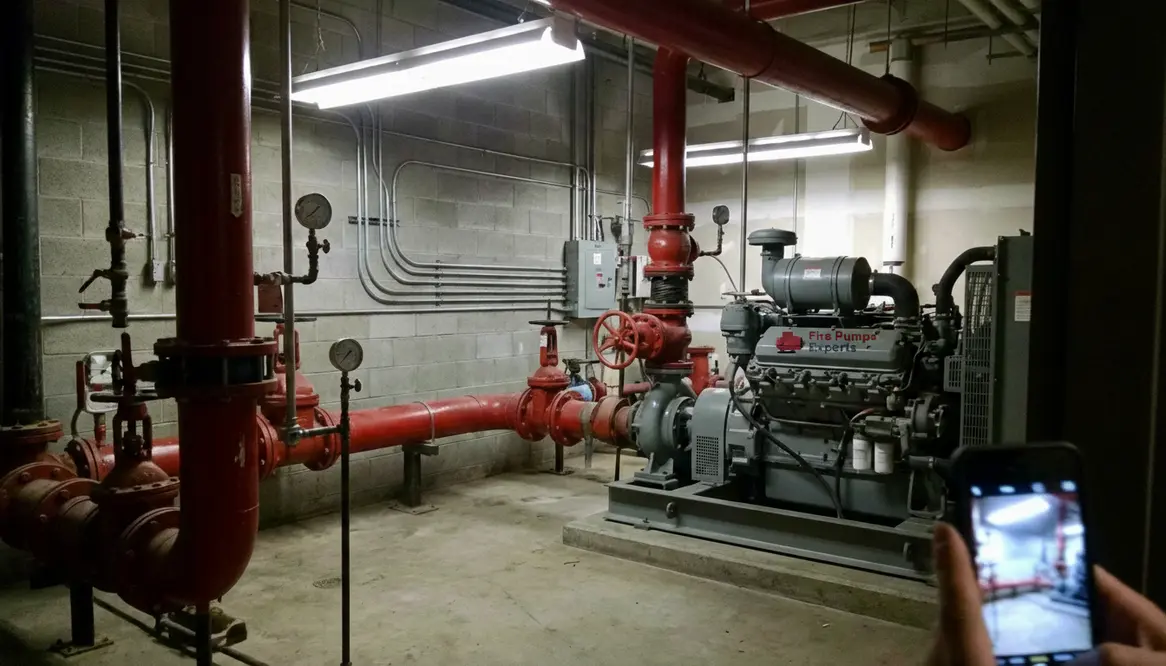
Hospital Fire Pump Requirements for Healthcare Facilities
I have spent years around commercial fire protection systems, and if there is one place where every detail truly matters, it is a hospital. In healthcare facilities, seconds matter. Equipment matters. Reliability matters. That is why hospital fire pump requirements are not just technical guidelines buried in a manual somewhere. They are the backbone of fire protection for facilities that never sleep.
Hospitals operate like small cities. They contain operating rooms, labs, pharmacies, power systems, and hundreds or thousands of people who may not be able to evacuate quickly. Therefore, the fire pump system must perform flawlessly the moment a sprinkler activates. I like to think of it as the quiet bodyguard of the building. You may never notice it. However, when trouble arrives, it moves faster than a Hollywood action hero. Well, maybe without the explosions and slow motion walk away.
In this article, I will walk through how fire pump systems support healthcare environments, how codes shape design, and what facility managers should know to keep their buildings compliant and protected. Along the way, we will connect those big picture ideas to real-world hospital fire pump requirements and what they look like on the ground.
At a Glance: Why Hospital Fire Pumps Matter
- Patients often cannot self-evacuate or move quickly.
- Hospitals are packed with oxygen, medical gases, and energized equipment.
- Buildings grow over time, stretching sprinkler and standpipe systems.
- Strong, reliable water pressure is non-negotiable for life safety.
Why Fire Pump Systems Matter in Hospitals
Hospitals present a unique challenge for fire protection engineers. Unlike many commercial buildings, evacuation is often slow or partial. Patients in intensive care, surgical recovery, or neonatal units cannot simply grab their coats and head for the stairs.
Because of that reality, hospitals rely heavily on suppression systems. Sprinklers must activate quickly and deliver strong, consistent water pressure. However, municipal water pressure is not always enough to meet that demand. This is where a properly designed fire pump becomes essential.
A fire pump increases water pressure so sprinkler systems and standpipes can operate at the level required by code. Without that boost, upper floors or remote wings of a facility may not receive adequate flow.
Additionally, healthcare buildings tend to grow over time. A new surgical wing here. A diagnostic tower there. Over the years, the hydraulic demand of the sprinkler system increases. Consequently, many hospitals depend on high performance fire pumps to maintain reliable protection across expanding infrastructure.
And frankly, if there is any building where you want extra pressure on your side, it is one filled with oxygen lines, electrical equipment, and enough technology to launch a small satellite.
Key Outcomes of Reliable Hospital Fire Pumps
- Consistent sprinkler and standpipe pressure on all floors
- Coverage for remote wings, basements, and rooftop levels
- Resilience during public water supply drops or outages
- Confidence that your hospital fire pump requirements are actually met in the real world
Hospital Fire Pump Requirements for Code Compliance
Now let us talk about the rules of the road. Fire protection in healthcare facilities follows strict guidance from standards such as NFPA 20, NFPA 13, and healthcare specific life safety codes.
These codes define the hospital fire pump requirements that ensure consistent protection across large medical campuses.
Several key design elements come into play.
Reliable power sources
Hospitals cannot rely on a single power feed. Therefore, fire pumps often connect to emergency generators or diesel engines so the system continues running even during a power outage.
Dedicated fire pump rooms
Codes require protected rooms with proper ventilation, drainage, and fire rated construction. This keeps the pump safe from flooding or heat damage.
Automatic start capability
The system must start instantly when pressure drops. No human intervention required. Because in a fire emergency, nobody should be running downstairs flipping switches.
Flow testing and performance verification
Hospitals must regularly confirm that pumps deliver the rated flow and pressure needed to supply the building.
These standards exist for a reason. In a healthcare environment, the cost of failure is simply too high, and hospital fire pump requirements translate directly into patient safety, staff safety, and the survival of critical equipment.
Designing Fire Pump Systems for Large Healthcare Facilities
Designing fire protection for hospitals is not a one size fits all situation. Every facility has its own layout, risk profile, and expansion history.
However, I approach hospital fire pump system design with a few consistent priorities.
- Redundancy matters. Many hospitals install multiple pumps or backup drivers to ensure the system never depends on a single component.
- Hydraulic calculations must consider future growth. Hospitals rarely shrink. They expand. Therefore, engineers often size systems to support additional wings or floors that may appear years later.
- System integration plays a major role. Fire pumps connect with alarm panels, building management systems, emergency power, and monitoring networks. When these systems communicate clearly, response times improve and maintenance becomes easier.
- Accessibility is critical. Maintenance teams need clear access to controllers, valves, and testing connections. If reaching the pump requires crawling through a maze of pipes like an action scene from Mission Impossible, something went wrong during design.
When these design principles come together, the result is a system that quietly protects patients, staff, and infrastructure around the clock while aligning with both present and future hospital fire pump requirements.
How Fire Pumps Support Sprinkler Performance in Medical Buildings
Sprinkler systems receive most of the attention during a fire event. After all, they are the ones actually spraying water. However, the fire pump is the muscle behind the operation.
When a sprinkler head opens, system pressure drops. The fire pump controller senses that drop and starts the pump almost instantly. As a result, water pressure rises and flow moves through the piping network toward the activated sprinklers.
In large hospitals, this boost becomes critical for several reasons.
- Upper floors require higher pressure due to elevation loss.
- Long pipe runs across sprawling campuses reduce available pressure.
- Special hazard areas such as laboratories may require higher density water flow.
Therefore, the pump ensures every sprinkler head receives enough water to control or suppress the fire.
I often explain it this way. Think of the sprinkler system as a network of firefighters stationed in the ceiling. The fire pump is the dispatcher giving them the water pressure they need to do their job. Without it, those firefighters show up with garden hoses. And nobody wants that.
Common Fire Pump Configurations Used in Hospitals
Electric motor driven pumps
These pumps are common in large commercial facilities. When paired with emergency generators, they provide reliable and efficient operation.
Diesel engine pumps
Diesel pumps operate independently of building power. Consequently, many hospitals use them as a backup layer of protection.
Split case pumps
These pumps handle large volumes of water and are frequently used in major healthcare campuses.
Vertical turbine pumps
Facilities with underground tanks or lakes often use these pumps to pull water from deep sources.
Jockey pumps
These small pumps maintain system pressure and prevent the main pump from cycling unnecessarily.
Multiple pump arrangements
Large hospitals may install staged pump systems that activate progressively as demand increases.
Each configuration supports the same goal. Deliver dependable water pressure across complex healthcare environments where fire protection cannot afford weak links. If you need a reference point for what a robust fire pump program looks like outside of healthcare, Kord Fire’s fire pump service offers a useful example of how inspection, testing, and maintenance come together.
Maintaining Hospital Fire Pump Requirements Through Testing
Installing a fire pump is only the beginning. Regular testing keeps the system ready for real world emergencies.
Healthcare facilities follow strict inspection and testing schedules to confirm compliance with hospital fire pump requirements and national fire protection standards.
Routine maintenance activities usually include the following.
- Weekly or monthly visual inspections to confirm controllers, valves, and gauges remain in proper condition.
- Churn tests to verify the pump starts automatically and maintains pressure.
- Annual flow testing where technicians measure actual pump performance against design ratings.
- Fuel and battery checks for diesel driven systems.
In large commercial healthcare properties, these tests often involve coordinated efforts between facility managers, fire protection contractors, and compliance teams.
Testing Days: The Water Show
And yes, flow tests can be dramatic. When thousands of gallons of water per minute rush through test headers, it looks like someone turned the parking lot into a temporary water park. Sadly, nobody brings floaties.
FAQ About Fire Pump Systems in Hospitals
Facility managers and clinical leaders often ask similar questions when they first start digging into hospital fire pump requirements and how they shape daily operations. Here are a few of the most common.
Keeping Healthcare Facilities Protected and Compliant
Hospitals protect lives every day. Therefore, their fire protection systems must operate with the same reliability as the medical equipment inside their walls. Proper fire pump design, installation, and testing ensure that sprinkler systems deliver the pressure needed when emergencies strike.
For facility managers, that means understanding how hospital fire pump requirements translate into real tasks: maintaining redundant power, planning for future growth, documenting inspections, and making sure that every pump start, every test header, and every gauge reading tells a consistent story of readiness.
If you manage a large healthcare property or commercial medical campus, now is the time to evaluate your system. Work with experienced specialists who understand complex facility demands and code compliance. The right fire pump strategy keeps your building protected, your staff confident, and your patients safe.
Your Next Step
Whether your pumps are brand new or old enough to have seen more renovations than you can count, treating hospital fire pump requirements as an ongoing program instead of a one-time project is what keeps real people safe when alarms sound at 3 a.m.