How Fire Pumps Increase Sprinkler Pressure in Buildings
A practical tour through the unseen equipment room muscle that turns ceiling sprinklers into a serious fire protection system.
I have spent many years around large mechanical rooms where the quiet hum of equipment keeps entire buildings safe. In commercial towers, hospitals, warehouses, and data centers, one piece of equipment stands quietly on standby like a bodyguard in a tuxedo. The fire pump. Many people ask me about how fire pumps increase sprinkler pressure, especially when a building rises dozens of floors above the street. The answer is both simple and fascinating. A fire pump gives the sprinkler system the muscle it needs when the city water supply alone cannot deliver enough pressure. And when flames show up uninvited, that extra muscle turns a sprinkler system from helpful to heroic.
So let me walk you through the mechanics, the strategy, and the quiet brilliance behind these machines. Think of it as a backstage tour of the system that protects major commercial and industrial properties every single day. Once you see how fire pumps increase sprinkler pressure in practice, you will never look at a mechanical room the same way again.
The Hidden Engine Behind Commercial Fire Protection
Most people imagine fire protection as a line of sprinklers sitting patiently in the ceiling. Fair enough. However, sprinklers only perform as well as the water pushing through them. In many large facilities, city water pressure simply cannot move enough water through hundreds or thousands of sprinkler heads.
This is where the fire pump steps in.
A fire pump connects directly to the building fire protection system and boosts water pressure the moment demand rises. As soon as sprinkler heads open during a fire event, pressure in the system drops. Sensors detect that drop instantly. The pump then activates and begins driving water through the pipes with the force required to control the fire.
In a smaller building, gravity and city pressure might handle the job. But in a forty story office tower or a million square foot distribution center, gravity is not your friend. Water needs serious help climbing upward or traveling long distances.
And that help comes from a pump that is engineered for reliability above all else. In commercial facilities, redundancy and performance matter more than convenience. Nobody wants a system that shrugs and says, “Eh, I tried.”
How Fire Pumps Increase Sprinkler Pressure in Large Buildings
Let us answer the question directly because it comes up often in facility planning meetings and online searches alike. How fire pumps increase sprinkler pressure comes down to controlled energy transfer.
From City Main to Sprinkler Head: The Energy Story
A fire pump takes incoming water and accelerates it using a rotating impeller or similar mechanism. As the impeller spins, it adds kinetic energy to the water. That movement converts into higher pressure as the water moves through the discharge side of the pump and into the fire protection piping.
However, the real magic in how fire pumps increase sprinkler pressure is not just the spinning hardware. It is the system design surrounding it.
Engineering the Right “Muscle” for the Job
Engineers size the pump to meet the building’s most demanding fire scenario. That means calculating the required gallons per minute and the pressure needed at the highest or most remote sprinkler head. Once those numbers are known, the pump is selected to deliver exactly that performance when needed.
Additionally, controllers monitor system pressure continuously. When pressure falls below a set threshold, the controller signals the motor to start. Within seconds, water pressure climbs back to the level needed to feed the sprinklers properly.
It is a bit like turning on a turbocharger for your sprinkler system. Suddenly the water moves with authority. And unlike a sports car, the pump does not care about speed limits.
Inside the Pump Room: The Components That Do the Heavy Lifting
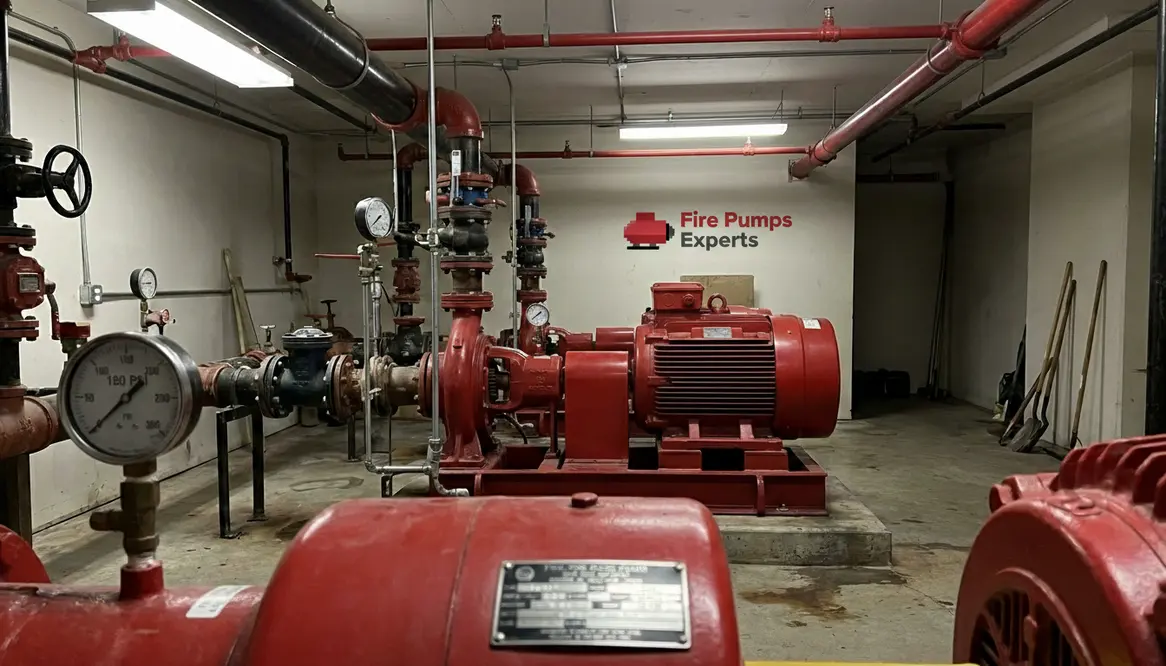
When I walk into a properly designed pump room in a large facility, I see a coordinated team of components working together. Each part plays a specific role in delivering reliable pressure during a fire event.
Fire Pump
The main pump generates the pressure boost. It is usually centrifugal and powered by an electric motor or diesel engine.
Controller
The controller acts as the brain. It monitors pressure and starts the pump automatically when system pressure drops.
Jockey Pump
This smaller pump maintains system pressure during minor fluctuations. It prevents the main pump from cycling unnecessarily.
Test Header
This outlet allows technicians to test pump performance and verify flow without triggering the entire sprinkler system.
Relief Valves
These valves prevent excessive pressure that could damage pipes or components.
Dedicated Power Source
Many facilities install diesel engines or backup electrical feeds to ensure the pump runs even during a power failure.
Together, these components form a dependable pressure delivery system designed specifically for large scale buildings. It is not flashy equipment. However, in the world of fire protection, boring reliability is exactly what you want.
Why High Rise and Industrial Facilities Depend on Pump Boosting
In commercial environments, distance is the enemy of water pressure. Every foot of vertical rise and every length of pipe reduces the force pushing water forward. That loss adds up quickly in large properties.
High Rise Challenges
For example, imagine a high rise hospital where sprinklers must operate thirty floors above the pump room. Without pressure boosting, water would arrive at the top floor more like a lazy garden hose than a fire fighting system.
Industrial & Warehouse Hurdles
Industrial facilities face a different challenge. Warehouses and manufacturing plants often cover enormous floor areas. Long pipe runs create friction loss that weakens water pressure before it reaches distant sprinklers.
This is exactly where the principles behind how fire pumps increase sprinkler pressure become critical. The pump compensates for elevation changes and pipe friction so that every sprinkler receives the required flow.
As a result, facility managers gain consistent fire protection across the entire structure. Whether the fire starts near the pump room or at the far corner of a distribution center, the system responds with equal strength.
And frankly, consistency is everything in fire protection. Fires do not politely start near your strongest equipment.
If you want a real-world example of how fire pumps support sprinkler performance, take a look at the fire pump service overview from Kord Fire Protection at this detailed fire pump systems page. It brings the theory of how fire pumps increase sprinkler pressure into practical inspection, testing, and maintenance steps.
What Happens the Moment a Sprinkler Activates
A Step-by-Step View of the Fire Pump in Action
- A fire begins and heat rises toward the ceiling. Once temperatures reach the activation point of a sprinkler head, the thermal element releases. Water begins to flow from that sprinkler.
- Immediately, pressure inside the piping network drops. The system senses that change almost instantly.
- Then the controller sends the start signal to the pump motor. Within seconds the pump spins to full operating speed. Water surges through the system at the pressure needed to meet the building’s design demand.
- Meanwhile, the activated sprinklers discharge water directly onto the fire. Because the pump maintains pressure, additional sprinklers can open without starving the system.
This rapid response illustrates perfectly how fire pumps increase sprinkler pressure during real emergencies. The system does not hesitate. It simply responds.
And while the process sounds dramatic, the equipment itself operates with calm efficiency. If the building had a soundtrack, it would sound less like an action movie and more like a slow, steady documentary score. Quiet confidence doing its thing.
FAQ: Fire Pumps and Sprinkler Pressure
Conclusion: Pressure That Protects What Matters
When you understand how fire pumps increase sprinkler pressure, you begin to see them as the quiet guardians of modern commercial buildings. These machines ensure that every sprinkler head receives the strength it needs to fight fire the moment danger appears. They overcome elevation, friction loss, and weak municipal water pressure with engineered, on-demand muscle.
If you manage a large facility, distribution center, or high rise property, a properly designed fire pump system is not just equipment. It is peace of mind. With a clear grasp of how fire pumps increase sprinkler pressure and keep that pressure steady under stress, you can make smarter decisions about design, testing, and maintenance for every building you are responsible for.
Explore expert guidance and engineered solutions at firepumps.org and make sure your building is ready when it matters most.