How Fire Pumps Power and Protect Sprinkler Systems
It’s the middle of the night in a 30-story commercial high-rise somewhere downtown. Everyone’s asleep except the night shift janitor. Suddenly, a spark from an overloaded socket decides it wants to try out for a role in Backdraft. Within seconds, alarms blare, sprinklers kick into action — and behind those tiny ceiling nozzles, a fire pump roars quietly to life, delivering pressure like it pays rent in PSI.
That, my friend, is the unsung hero at work — welcome to the world of fire pumps. Specifically, the fire pump role in sprinkler systems is as important as Sam to Frodo; it’s the muscle behind the mission. Without it, your sprinkler system is just a bunch of pipes with a dream. Especially in commercial or industrial settings, where water pressure can’t rely on goodwill alone, fire pumps ensure the system performs during critical fire emergencies. It’s not flashy. It doesn’t want a medal. But it’s always ready to throw hands with fire. In this article, I’ll walk you through everything worth knowing — and I promise to make it more fun than a fire safety manual written by an accountant.

Understanding the Brains & Brawn: What Exactly Is a Fire Pump?
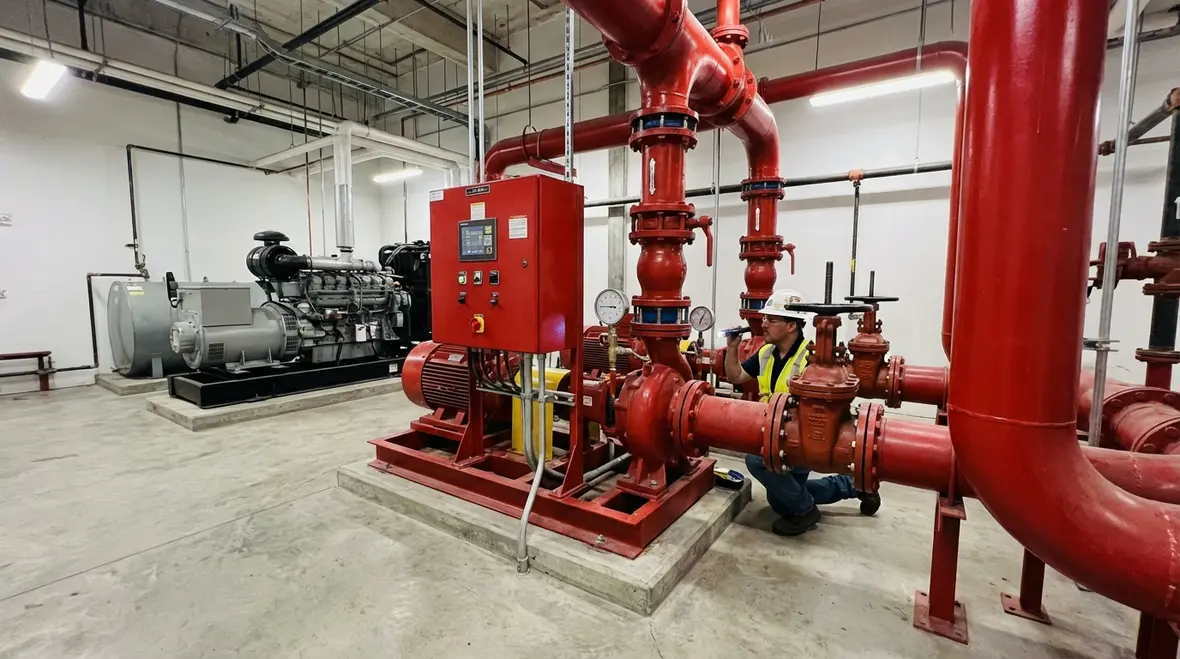
Picture a fire pump as the John Wick of a fire protection system. It shows up when all hell breaks loose, handles the situation with precision, and doesn’t wait for applause. In technical terms, a fire pump is a part of a water-based fire protection system. It increases the water pressure from a water source — whether that’s a municipal supply, storage tank, or reservoir — and sends it charging through the sprinkler system.
These pumps aren’t optional features like leather heated seats; they’re code-mandated workhorses in buildings where normal water pressure isn’t enough to meet demand, such as warehouses, high-rise hotels, data centers, and major industrial production zones. The pump kicks in when the sprinkler system calls for backup by detecting a drop in pressure, usually following an open sprinkler head activated by heat.
Think of it like this: fire sprinklers know how to throw the first punch, but without fire pumps, they run out of steam faster than a dial-up modem in 2026.
Why High-Rise and Industrial Buildings Absolutely Need Fire Pumps
If you’re working with a four-story strip mall, you might be able to get by with municipal pressure. But put that same logic in a 20-story building, and you’re basically telling your fire sprinklers to defy gravity. Spoiler: they won’t. Fires start fast and rise even faster. In taller or larger structures, gravity, friction, and water column height conspire against you like a villainous trio from an Avengers film.
Fire pumps save the day by compensating for pressure loss. In fact, the higher you go or the further your water has to travel, the more vital the fire pump becomes. This is why they’re installed in nearly every commercial and industrial facility that isn’t one story tall and holding a garage band’s equipment.
Picture a giant warehouse with storage racks spanning the ceiling. That’s a nightmare without fire pumps. You need sustained pressure to reach high or distant heads efficiently—and seconds matter.

Where Sprinkler Systems Meet the Real World: Pressure, Flow, and Real-Life Scenarios
“Okay,” you say, “but can’t high water pressure from the city do the trick?” Nice try. Municipal systems are designed with domestic water supply in mind. Sprinklers need more than your average shower pressure unless you want a trickle trying to extinguish a five-alarm blaze.
Enter flow rate. A fire sprinkler system isn’t performing at a spa — it’s in combat mode. High-volume flow is non-negotiable. Fire pumps deliver the gallons-per-minute rate necessary to activate multiple zones across a facility simultaneously. In layman’s terms, your building’s plumbing is about to participate in a cardio event, and it needs training — not tap water.
Beyond simply pushing out water faster, fire pumps regulate consistency. A system without a fire pump risks pressure loss during the most crucial moments. That millisecond delay could cost diagnostic labs, server banks, or manufacturing zones millions in damage, due to a mere “meh” level of water pressure.
In large or critical facilities, that consistent pressure is the difference between “we’re back in operation by morning” and “we’re explaining this to insurance for the next eighteen months.”
Types of Fire Pumps and When to Use Them
Contrary to what some folks think, not all fire pumps are created equal. You’ve got a few different types to choose from — because one size does not fit all (unless you’re a villain’s henchman in a spy flick).
Electric vs. Diesel-Driven Fire Pumps
Electric-Driven Fire Pumps
- Powered by utility power or backup generators
- Typically lower maintenance
- Lower operating costs
- Best suited for locations with reliable electric power
Diesel-Driven Fire Pumps
- Self-contained power source
- Critical for locations with unreliable electrical grids
- Requires fuel storage and regular inspections
- Typically used in remote or high-risk locations
Vertical Turbine and Jockey Pumps
There are also vertical turbine pumps for water sourced from below-ground tanks and jockey pumps that maintain constant pressure (without them, your fire pump might be pumping every time someone flushes a toilet). Knowing what’s best? That depends entirely on your building specs, occupancy hazards, and code requirements.
If you want a deeper dive into options and service details, exploring a dedicated fire pump service and inspection page can help you see how design, testing, and maintenance all connect.
Fire Pump Role in Sprinkler Systems Explained Through Performance
This is the part where we get detailed, but not dull. Let’s consider that a fire has just triggered three sprinkler heads in a distribution center. Each head lets out around 25 gallons per minute. That adds up fast. Without your fire pump picking up the slack, the system pressure would drop like a DJ mic at 2 AM, and then what? You’re under-delivering water when it counts most.
Fire pumps balance that moment. Whether it’s centrifugal, split-case, or vertical in-line style, they keep the water moving and the heads active. Automated detection systems trigger pump controllers, ensuring immediate response. It’s all synced to work faster than your favorite streaming service’s load time (well, unless you’re on hotel WiFi).
What Happens Behind the Scenes
- Heat from the fire activates one or more sprinkler heads.
- Water starts flowing, causing a drop in system pressure.
- Pressure sensors and controllers detect the change almost instantly.
- The fire pump starts, boosting pressure and sustaining the flow rate.
- Sprinklers keep attacking the fire until it’s controlled or fully extinguished.
Installation and Routine Maintenance: Don’t Skimp Where It Matters
Here’s where too many building managers drop the metaphorical ball. You can have a top-tier pump and still be in trouble if it’s poorly maintained or installed incorrectly. Just because it turns on during monthly tests doesn’t mean it’s ready for battle.
Installation must follow NFPA 20 standards — because ignoring those is like playing Minecraft without saving. Proper placement, ventilation, drainage, and alignment with your water supply determine everything from pump longevity to performance under pressure (literally). Then comes maintenance, including annual flow tests, weekly no-load runs, and lubrication checks. Yes, it’s a calendar-event kind of responsibility.
Why Routine Inspections Are Non-Negotiable
Ignoring regular checks is like assuming the batteries in your smoke detectors replace themselves. Spoiler: they don’t. Fire pumps must be reliable 24/7 because fires don’t call ahead and schedule.
- Weekly: basic visual checks and no-load runs (depending on pump type)
- Monthly: more detailed observations, especially on electric pumps
- Annually: full flow testing to verify performance under real demand
Do Fire Pumps Run All the Time?
Nope. Fire pumps are like your introverted cousin. They’re quiet, stay in the background, and only show up when duty calls. They remain off under normal conditions. Once a pressure drop occurs (usually thanks to a sprinkler head opening), they’re automatically activated via pressure switches or controllers.
This energy-efficient model also ensures the system isn’t worn out from operating needlessly. You wouldn’t run your blender if no smoothie was needed, right?
FAQ: Quick Answers about Fire Pumps and Sprinkler Systems
Conclusion: Protect Your Building Like You Mean It
Look, fires don’t discriminate. Whether your commercial property is a humming factory or a buzzing business complex, installing and maintaining a reliable fire pump is not just smart — it’s essential. These systems protect your people, assets, and uptime. Don’t wait for a near-miss to get serious.
Treat your fire pump like what it is: the backbone of your sprinkler system’s performance when everything is on the line. Invest in proper design, regular testing, and routine service so that when those sprinkler heads open, the water behind them hits with the pressure and consistency your building deserves.