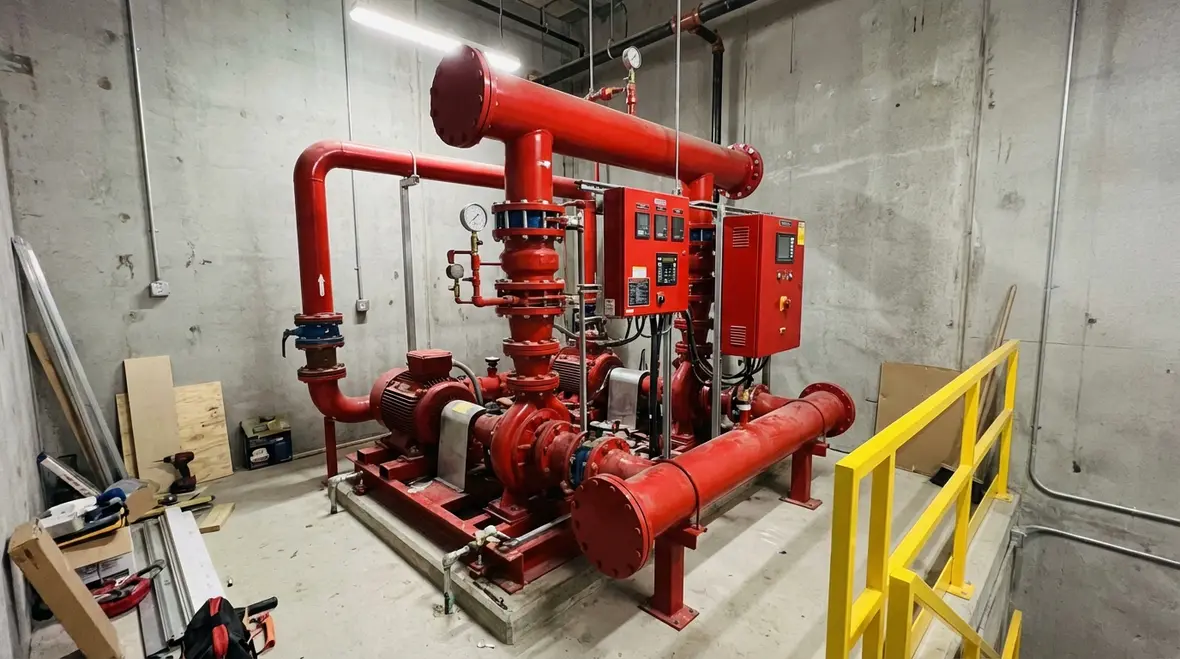
Top Fire Pump Installation Mistakes in Commercial Sites
Fire Pump Installation Mistakes to Avoid: A Guide for Commercial and Industrial Facilities
Picture this: You’re strolling through a penthouse in a towering commercial complex, sipping an espresso, admiring architecture like you’re in a Christopher Nolan film—then BAM. Someone didn’t install the fire pump correctly. Oops. That million-dollar oasis now doubles as a giant, smoky regret. That’s why our fire pump installation errors commercial isn’t just dramatic cinema—it’s real life for property managers when corners are cut, or worse, when instructions are treated like IKEA manuals (ignored altogether).
Let’s talk straight: fire pump install errors can tank building safety and rack up insurance nightmares. And in industrial or commercial settings? Well, those mistakes get a lot more expensive, a lot faster.
We owe it to our buildings—and our insurance rates—to avoid the rookie mistakes. Grab a coffee, kick back, and follow me as we unpack the fire-safety equivalent of “don’t cross the streams.”
Why Precise Installation Truly Matters for Fire Pumps
Now, before you roll your eyes thinking, “a pump’s a pump,” let me stop you right there like a mentor offering the red pill. A fire pump isn’t like your gym’s water fountain. It’s the heart of your fire suppression system. If it flatlines under pressure, it’s not just a standalone fail—it pulls the whole system down with it.
For commercial and industrial buildings, everything from layout and water demand to seismic concerns comes into play. Location, pressure, suction. Yes, even suction. Every piece has to work like synchronized swimmers—graceful and lethal. Skipping a detail in your fire pump installation? That’s not a “math error.” That’s what lawyers refer to as “evidence.”
The Chain Reaction of a Bad Install
A poorly installed fire pump doesn’t just underperform—it drags down sprinklers, standpipes, and hose valves with it. That means compromised coverage on upper floors, unreliable pressure at remote locations, and a system that looks good on paper but fails when the heat hits (literally).
Common Fire Pump Installation Mistakes to Avoid
If fire pump installation were a reality show, we’ve seen every cringe-worthy moment. Let’s tour through my “greatest misses” collection. Trust me, you don’t want to add your building to this blooper reel.
- Poor Placement: Installing a fire pump in a flood-prone area is like parking a Ferrari under a waterfall. Water and electronics have been sworn enemies since forever.
- Improper Sizing: Using a pump too small or too mighty? Either you drown the circuit or you starve the sprinklers—it’s binary, and both options are terrible.
- Skipping Flow Testing: You wouldn’t run a marathon without stretching, right? So why install a pump without a flow test? That’s straight to failure-town.
- Missing Seismic Bracing: Especially in areas where earthquakes love to crash parties. If your fire pump can’t ride the wave, don’t expect it to survive the impact.
- Ignoring Clearances: Adequate spacing for maintenance and ventilation is not a luxury—it’s essential. Unless you enjoy playing Twister with piping during repairs.
And yes, these mistakes are all featured in our cinematic masterpiece: the fire pump installation errors commercial. It’s not just for drama. It’s a mirror held up to prepared property managers—okay, and a little bit of fire-safety soap opera too.
How to Properly Size a Fire Pump—Without Over or Under Shooting
Now let’s address a big one: sizing. We treat this like Goldilocks—too much or too little, and the mission fails. You want a fire pump that’s just right. But half the time, someone pulls a number from thin air or worse, from “what we used next door.” No offense to neighbors, but their dry cleaner warehouse is not your 12-story data center.
Proper sizing involves hydraulic calculations, water supply analysis, and knowledge of your hazard classification. Yawn? Maybe. But would you rather nap through a seminar or snooze through a lawsuit?
Too Small
- Inadequate pressure during fire
- System fails NFPA 20 compliance
- Puts the whole facility at risk
Too Large
- Wasted energy and operating cost
- Increased wear and tear
- Over-designed systems complicate testing
A specialized engineer (read: someone who looks at PSI charts with glee) should always run that calc sheet. Data doesn’t guess—it calculates.

Installation Codes and NFPA 20: Don’t Play Fast and Loose Here
There’s an art to jazz, not to interpreting fire codes. NFPA 20 isn’t just a thick PDF collecting virtual dust—it’s the soul of correct fire pump installation. Working outside of it is like filming a Marvel reboot without acknowledging the existence of gravity. Bold, but also stupid.
Your install must meet NFPA 20 requirements—no exceptions. That means one dedicated room, adequate ventilation, correct clearance for maintenance, and compliance with your local Authority Having Jurisdiction (AHJ). And yes, they will pop in. Imagine a dark-clad inspector with a clipboard and hard hat.
What Non-Compliance Really Costs
Skip a required test or mislabel a system? That won’t fly. It’ll sink under paperwork faster than you can say “variance denied.” Failed inspections, delayed occupancy, insurance complications, and retrofit costs all start stacking up long before a fire ever breaks out.
If you want a deeper dive into how NFPA 20 shapes compliant design and installs, check out this detailed guide on how NFPA 20 regulates fire pump systems from Kord Fire Protection.
Start-Up Testing and Startup Commissioning Is Not Optional
You’d be amazed how often professionals treat commissioning like it’s the end-credit scene after the real movie. But if you skip it, your building is essentially holding its breath when the fire alarm goes off.
What a Full Start-Up Test Should Prove
A full start-up test ensures:
- The pump runs at rated speed and pressure
- Controller functions under loss of power
- Alarm and shutdown sequences behave as designed
- Emergency power kicks in on cue
You can’t rely on “should work fine” when people’s lives and multi-million dollar assets hang in the balance. Thorough testing is your early victory lap. Celebrate it. Or at least stop sweating every fire inspection like it’s prom night.
The Role of Professional Installers (aka, Don’t DIY in a Million-Dollar Building)
I love a good DIY video. Teach me to make a pizza oven with bricks and confidence? Sure. Teach me to install a diesel-driven fire pump for a downtown data center? Stop right there, TikTok guru.
Fire pump installation demands licensed professionals trained in NFPA compliance, system pressure balancing, and municipal water dynamics. This is literal life-saving infrastructure. Not the place to play MacGyver.
Think of it like hiring a Hollywood stunt double—you want the job done so well that no one notices. Smooth, safe, and invisible until the one time it matters.
FAQ: Straightforward Fire Pump Answers
What’s the most common fire pump installation mistake?
Improper sizing—either too large or too small for the building’s fire suppression needs.
Should I install a fire pump room below ground level?
No. Flooding risk makes it a bad choice. Always install above flood level zones with proper drainage.
How often should fire pumps be tested?
Weekly for diesel engines, monthly for electric. And annually, a certified flow test is required.
Are fire pumps required in all buildings?
Only buildings where the local system pressure can’t meet code-required sprinkler demand, typically high-rises or large industrial plants.
Can I skip flow testing if the pump is brand new?
Absolutely not. Start-up flow testing verifies installation integrity and performance matches design.
What code covers fire pump requirements?
NFPA 20 sets the standards for fire pump installation, design, and maintenance.
Let’s Get It Right the First Time
If you’re managing a commercial high-rise or helming safety in an industrial warehouse, your fire pump isn’t a fancy add-on—it’s the foundation of your fire defense. Installing it wrong isn’t just risky, it’s reckless. So, don’t gamble with safety. Partner with experts who treat fire protection as gospel, not fiction.
Contact us at firepumps.org today. Because your building doesn’t need an action movie moment. It needs a flawless script and no drama when the sprinklers kick in.
Quick Fire Pump Checklist
- Is the pump room above flood level?
- Are clearances and ventilation adequate?
- Was hydraulic sizing done by an engineer?
- Have start-up and flow tests been documented?
- Is seismic bracing installed where required?
Avoid These “Blooper Reel” Moments
If your fire pump room looks more like a storage closet than a mission-critical space, it’s time for a re-think. Shovels, ladders, and paint cans are not part of a compliant installation.