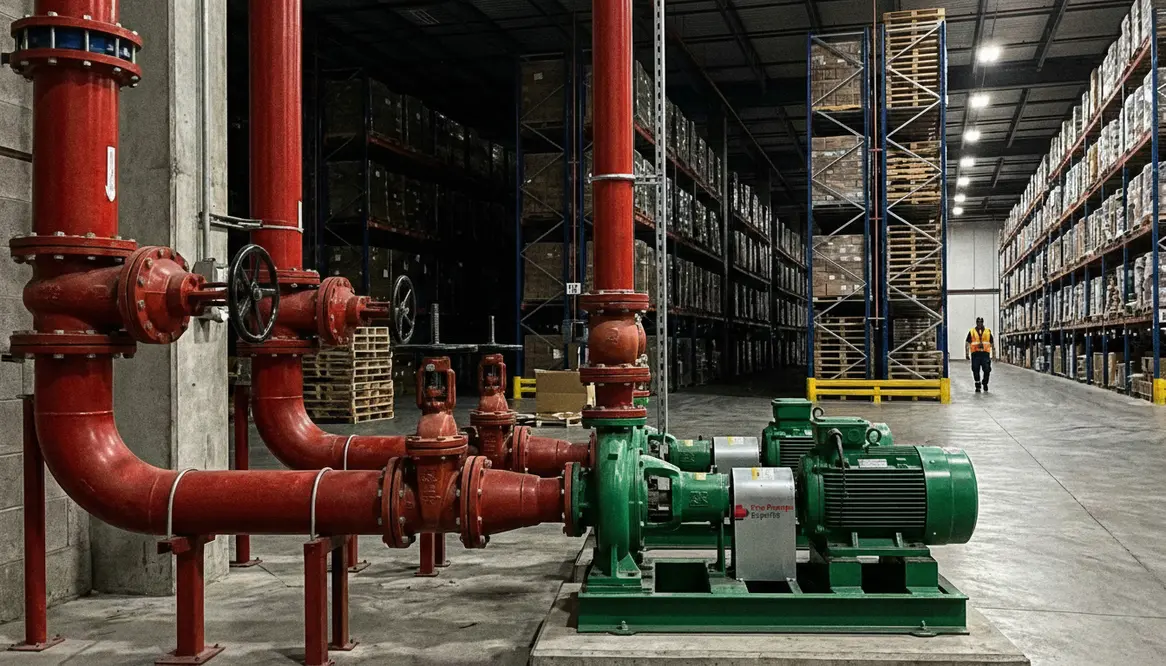
Industrial Logistics Hub Fire Suppression Water Flow
How high-performance water flow, smart design, and disciplined maintenance protect the heartbeat of modern supply chains.
I have spent years walking the cavernous floors of distribution centers and industrial campuses, the kind where forklifts hum like background music and conveyor belts move with quiet confidence. These facilities move the goods that keep modern life running. Yet behind the scenes, another system stands ready for a far less glamorous job. It waits silently for the moment it may need to act.
That quiet guardian is the network behind industrial logistics hub fire suppression water flow systems. In massive warehouses and freight complexes, water must move fast, with unwavering pressure, across thousands of square feet. When fire protection fails, the cost is not just inventory or equipment. It can halt entire supply chains. Therefore, engineers design these systems with the same seriousness one might reserve for a rocket launch. Except instead of reaching space, the mission is simple. Deliver water immediately, reliably, and with force.
And yes, sometimes I imagine these systems like the unsung heroes in a superhero movie. No cape. No theme music. Just pipes, pumps, and valves quietly saving the day.
Inside industrial logistics hub fire suppression water flow systems
Across today’s industrial logistics hub fire suppression water flow systems, performance comes down to three non-negotiables: reliable pressure, rapid water delivery, and code-compliant redundancy. When those elements align, a quiet network of pumps, tanks, and valves becomes the difference between a controlled incident and a full-scale disaster.
These systems rarely get the spotlight, but every sprinkler head, fire pump, and control valve is part of a bigger story. It is the story of keeping people safe, protecting high-value inventory, and ensuring that trucks keep rolling and orders keep shipping, even after a worst-case event.
Why Water Flow Reliability Matters Inside Massive Logistics Facilities
Step into a modern industrial logistics hub and you will quickly notice something. Everything is large. Pallet racks stretch toward the ceiling. Storage density climbs higher each year. Automation increases the value of every square foot.
Because of that scale, fire protection cannot rely on simple plumbing. Instead, it requires engineered water delivery that reaches every sprinkler head at the exact pressure required.
When I review these facilities, three factors always drive system design.
High commodity loads
Warehouses store dense packaging, plastics, electronics, and sometimes chemicals. These materials burn hotter and faster than older storage goods. Therefore the water supply must support aggressive sprinkler discharge rates.
Massive floor areas
Many logistics hubs exceed one million square feet. That means water must travel long distances without losing pressure. Strategic pump placement and pipe sizing become essential.
Insurance and compliance demands
Property owners must meet strict codes from organizations such as NFPA and FM Global. These guidelines define minimum water flow, duration, and redundancy.
In other words, the system cannot just work. It must work under worst case conditions. And as I like to joke with facility managers, fire protection is the one building system you truly hope never proves itself.
How Industrial Logistics Hub Fire Suppression Water Flow Systems Keep Pressure Consistent
Maintaining water flow inside large industrial properties is less about a single pump and more about orchestration. Each component plays a role in delivering the right volume of water at the right moment.
The backbone of the system is the fire pump assembly. However, several supporting elements ensure that flow remains stable even during demanding scenarios.
Fire pumps that boost municipal supply
City water systems often cannot provide the pressure needed for massive logistics campuses. Fire pumps increase that pressure dramatically, ensuring sprinkler systems operate at full capacity.
Large diameter piping networks
Engineers size pipes carefully to prevent friction loss. The larger the pipe, the less pressure disappears along the journey.
Dedicated water storage tanks
Some facilities rely on tanks that hold hundreds of thousands of gallons. These tanks act as insurance when municipal supply drops or demand spikes.
Pressure regulating valves
These valves balance the system. They ensure that upper levels and distant zones receive adequate water without overloading nearby sprinklers.
Because these components work together, the system behaves less like plumbing and more like a coordinated engine. If Hollywood ever made a movie about fire pumps, it would probably be called “Fast and the Flow Control.” I would absolutely buy a ticket.
What Engineers Monitor to Protect Water Delivery in High Value Warehouses
Flow testing
Technicians measure real water output to confirm the system delivers required gallons per minute.
Pump performance curves
Each pump must operate within its designed pressure and flow range.
Valve supervision
Control valves remain electronically monitored to prevent accidental shutdown.
Water supply stability
Engineers verify that municipal feeds or storage tanks can sustain flow for required durations.
System pressure levels
Continuous monitoring detects leaks, obstructions, or pump issues early.
Alarm integration
Control panels instantly notify facility teams when performance drops below acceptable levels.
Additionally, industrial properties rely heavily on automation and digital monitoring. Sensors constantly track system pressure and pump activity. Therefore, facility teams can detect problems long before an emergency arrives.
It reminds me a little of a spacecraft control room. Lights blink. Data streams across screens. Except instead of watching astronauts orbit Earth, we are making sure water moves through pipes. Still pretty heroic if you ask me.
Design Strategies That Prevent Water Flow Failures in Large Distribution Centers
Smart design prevents most fire protection problems long before construction finishes. When I review system layouts for industrial campuses, several strategies appear again and again.
Redundant pumping capacity
Many major logistics properties install backup fire pumps. If the primary unit fails, the secondary pump activates automatically.
Looped piping networks
Rather than relying on a single feed direction, looped systems allow water to approach sprinklers from multiple paths.
Strategic zoning
Large facilities divide sprinkler networks into zones. This allows water to concentrate in the area of a fire rather than spreading pressure across the entire building.
Dedicated fire water lines
Separating fire protection water from domestic plumbing prevents competing demands from reducing flow.
These design principles keep industrial logistics hub fire suppression water flow systems resilient. Even if one component struggles, the rest of the network compensates.
And that redundancy matters. When millions of dollars in inventory sit beneath a roof, the difference between adequate flow and weak pressure can decide whether a sprinkler controls a fire or simply watches it grow.
How Maintenance Keeps Water Moving When It Matters Most
A well designed system still requires routine care. Pumps, valves, and controllers must operate flawlessly after months or years of inactivity.
Maintenance teams follow strict schedules that include weekly, monthly, and annual inspections.
Weekly pump churn tests
Technicians briefly run the fire pump to confirm proper startup and pressure.
Annual flow testing
These tests simulate real fire conditions to verify the system delivers full capacity.
Valve inspections
Supervised valves must remain open and functional at all times.
Controller diagnostics
Modern digital controllers monitor pump health and electrical systems.
Regular testing also protects property owners from unpleasant surprises during inspections. Insurance auditors and fire marshals expect documented performance data. When those reports show consistent flow and pressure, compliance becomes much easier.
And frankly, facility managers sleep better. Nothing ruins a morning coffee like discovering the fire pump decided to retire early.
Connecting High-Performance Pumps To Industrial Logistics Hub Fire Suppression Water Flow Systems
Behind every reliable sprinkler discharge curve in industrial logistics hub fire suppression water flow systems, there is usually a well-chosen fire pump, tuned to the building’s demands and local code requirements. For many facilities, partnering with a specialized fire pump provider becomes the fastest path to confident performance and clean inspection reports.
Service partners like dedicated fire pump specialists bring deep experience in selecting, testing, and maintaining pumps that can sustain required flow and pressure throughout an event. That expertise pays for itself the moment sprinklers open over a high-rack storage area filled with combustible packaging and electronics.
FAQ
Keeping Your Facility Ready When It Counts
Fire protection should never be an afterthought inside large commercial or industrial properties. When water flow performs exactly as designed, sprinklers gain the power to control fires before they spread across valuable operations. At FirePumps.org, we help facility owners ensure their systems operate with the pressure, reliability, and compliance that major logistics environments demand. If your building relies on high performance fire pumps, now is the time to verify they are ready.