Jockey Pump vs Fire Pump Differences and Why Both Matter
Jockey Pump vs Fire Pump Explained Simply: Why They Both Matter
Alright, let’s lay it out on the table. If you manage a commercial or industrial property—or one of those skyscrapers that goes so high your ears pop in the elevators—there’s a high chance your facility has a fire protection system somewhere behind the drywall. Now within this system, there are two unsung heroes that rarely get credit but work harder than the coffee machine in a 24/7 data center: the fire pump and the jockey pump.
The difference between a jockey pump and a fire pump is kinda like comparing Batman and Alfred. One kicks into action when the chaos starts (hi, Mr. Fire Pump), and the other quietly keeps things in check in the background so the system doesn’t freak out over minor stuff (thanks, Jockey). You need ‘em both, and knowing how they work—individually and as a team—can mean the difference between contained damage and total disaster.
So let’s put on our hard hats and take a walk through the fire room, shall we?
How Commercial Fire Protection Systems Work (Yes, Even the Boring Bits)
Before we start handing out trophies, let’s quickly understand what the fire protection system is doing.
Every major property, especially commercial and industrial bigwigs—think airports, hospitals, high-rise buildings, warehouses—has a fire protection system. This system often operates under pressure so that water is immediately available if a fire breaks out. But here’s the catch: pressure changes all the time due to temperature or small leaks. And that’s where these two MVPs come into play.
The fire pump is the beast. It kicks in during emergencies to deliver a high volume of water at high pressure to the sprinkler system. The jockey pump, on the other hand, is the maintenance guy. It keeps the pressure steady during normal wear and tear—no need to call in the calvary for a leaky pipe fitting, you know?
Together, they ensure your system doesn’t wake up in a panic… or worse, snooze through a disaster.
What a Jockey Pump Actually Does (a.k.a. The Chill One)
If the fire pump is Liam Neeson in ‘Taken’—ready to bring serious pressure when things go south—then the jockey pump is the guy who keeps things from ever going south in the first place.
Here’s how:
- It maintains the system pressure to a designated level by topping off minor losses
- It prevents the fire pump from starting unnecessarily
- It operates efficiently and runs frequently under low load
It’s designed to run quietly in the background, kind of like a script supervisor in a Christopher Nolan film: If it does its job right, you’ll never notice it. But oh boy, would you miss it if it were gone.
And yes, it’s much smaller. Try not to hold that against it—it’s still doing critical work 24/7 while you’re out grabbing lattes.
The Role of the Fire Pump: The Muscle of the System
Now introduce the fire pump, and suddenly the vibe shifts. This thing’s like Mjölnir in the world of water pressure. It lives for the moment someone pulls the alarm or a sprinkler head pops off due to a real fire scenario. That “whoooosh” of water pouring into your sprinklers at full force? That’s the fire pump flexing.
It only comes online when there’s a significant drop in pressure—like during a full-scale fire suppression event. It must meet strict performance standards (shoutout to NFPA 20) and deliver water fast and strong enough to douse those flames before they turn your building into a YouTube video you don’t wanna watch.

Big. Loud. Certified. And every bit necessary for protecting lives and property.
Jockey Pump vs Fire Pump: Side-by-Side Look
Jockey Pump
- Maintains pressure under normal conditions
- Small capacity & operates frequently
- Prevents fire pump from working too hard
- Not intended for emergencies
Fire Pump
- Activates during actual fire events
- High capacity & rarely runs
- Meets critical fire code regulations
- Required in large-scale systems
Still stuck? Think of it like this: The jockey pump is the daily vitamin, and the fire pump is emergency-room-level penicillin. They both care about your health, but one hopes to never be needed.
Typical Setup in Commercial Facilities
Let’s talk reality. In the average industrial or commercial building, neither of these guys stands alone.
You’ll usually have:
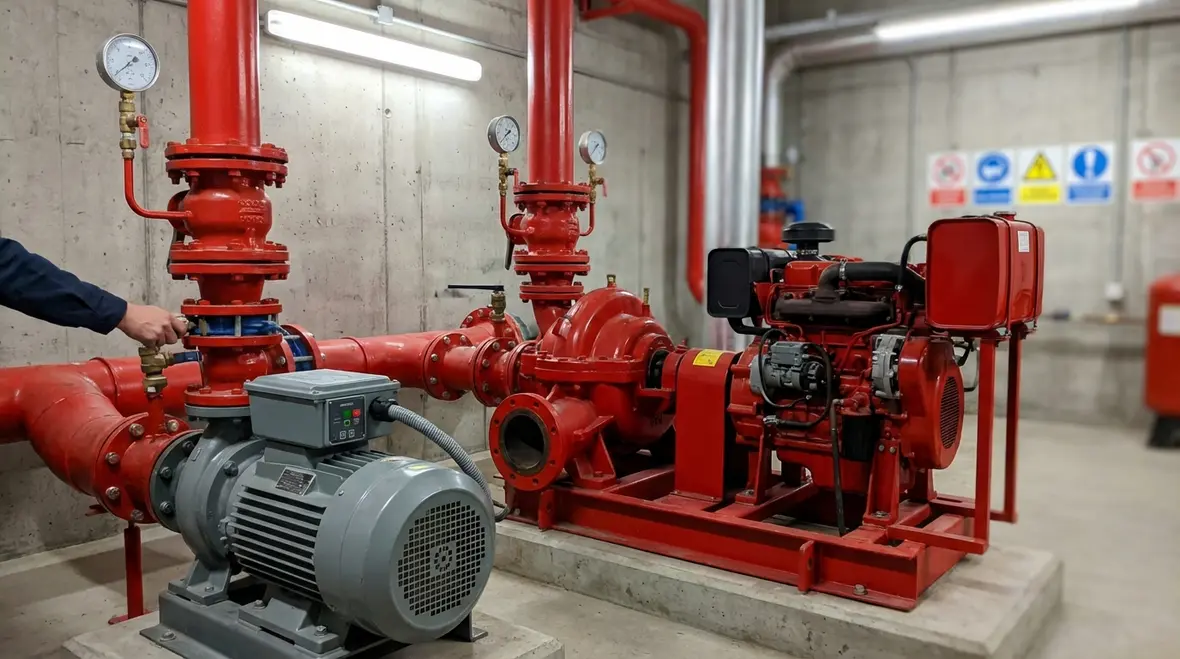
- One or more fire pumps (diesel or electric)
- A jockey pump connected to the same system
- Controllers that manage their operations
- Alarm connections that squeal when something isn’t right

And they all hang out in a dedicated pump room, probably right next to where your facilities guy swears he saw a ghost that one time during night shift.
Codes vary by state, but the National Fire Protection Association (NFPA) requires this arrangement on most large buildings. If you’ve got more floors than a gossip magazine, you’re on the list.
How Do I Know If Mine’s Working?
I get it. This is one of those things property managers assume “just works”—until it doesn’t. Like trusting your printer to never jam before a board meeting.
But trust me: regular inspections and preventative maintenance aren’t optional luxuries. Jockey pumps can fall out of calibration, sensors might trip, or the controller decides now is a good time for midlife crisis. Check at least:
- Weekly system pressure logs
- Controller settings and response times
- Maintenance tags on motor seals and backups
- KPI dashboards (if your building is fancy tech-integrated)
With the right programming, your system should alert you before anything fails. If it’s not, get someone to look into your controllers right after you finish this article—seriously.
Want to Sound Smart in the Next Vendor Meeting?
Here’s your crash course so you can nod wisely while sipping coffee in that next fire safety briefing:
- “Is the jockey pump pressure set 10 PSI above the fire pump start point?”
- “Can we confirm the fire pump meets NFPA 20 requirements for electric motor-driven setups?”
- “How often are test runs being performed with isolation valves closed?”
Say those out loud and watch the respect roll in. And no, we won’t tell anyone you got them from the internet. Our secret’s safe.
FAQ: Quick Answers for Fast Thinkers
Wrap-Up: Choose Your Team Wisely
Whether you’re managing a bustling warehouse, a massive hospital, or the next architectural wonder downtown, understanding how the jockey pump and fire pump work—and more importantly, the difference between a jockey pump and a fire pump—gives you the power to act, not react. These pumps are the quiet defenders of your property assets, your tenants, and your reputation. Respect them, maintain them, and they’ll have your back when it counts.
Need help with fire pumps that won’t let you down? Let the experts at Kord Fire Protection handle your fire pump systems—they’ve got the muscle, the brains, and just the right amount of charm. Let’s make your building fireproof in all the right ways.