Fire Pump Testing for Commercial Buildings Explained
Picture this: You’re the owner of a solid piece of commercial real estate. Everything looks sleek, shiny, and secure. But here’s the kicker—none of that matters if your fire protection system doesn’t show up to work on doomsday. That’s where fire pump testing requirements commercial buildings come into play. Whether you manage a towering glass skyscraper or an industrial mega-warehouse, your fire pump isn’t just a piece of flashy plumbing; it’s the unsung hero of your building’s life support system.
Now, while “fire pump” may not scream intrigue, trust me, once we peel back the layers, you’ll realize this piece of machinery deserves a standing ovation. Let’s explore this topic with me walking you through fire pump testing like it’s story time by the fireplace. With some laughs, nods to pop culture, and just the right sprinkle of technical know-how, let’s keep your building ready for whatever may come.
The Soul of Your Sprinkler System: Understanding the Fire Pump
Let’s start with the basics. If sprinkler heads are the foot soldiers of your fire protection army, the fire pump is the beating drum that keeps them marching. When a fire starts and the water pressure drops (because, physics), that pump kicks into gear, unleashing a torrent of water that makes it rain harder than a DJ Khaled set.
The thing is, without regular testing, your fire pump might not know it’s showtime when it matters. And trust me, you don’t want a shy fire pump when flames are crawling up your drywall. Testing is how you make sure it’s not just posing like The Rock but actually has the muscle to back up the look.
Fire Pump Testing Requirements Commercial Buildings: What’s the Agenda?
Let’s dive into that chunky checklist titled fire pump testing requirements commercial buildings. You don’t need a magnifying glass and 12 hours of free time to make sense of it; you just need to know what matters most.
According to NFPA 25—which, by the way, is the Beyoncé of fire code regulations—fire pumps in commercial and industrial facilities must be:
- Visually inspected weekly: You’re basically making sure everything still looks like it came from the factory, without leaks, rust, or a family of raccoons moving in.
- Operated weekly (Electric) or Monthly (Diesel): Let ’em run. Just like revving your car engine at a red light, minus the annoyed looks from other drivers.
- Flow tested annually: This one’s the big show. You’ll simulate fire conditions to make sure that pump still passes the fitness test.
This isn’t busywork. It’s life-saving work. And honestly, if a machine exists to save lives, giving it a once-a-week glance and an annual jog through the system seems like a good trade-off, right?
What I See When I Walk Into a Fire Pump Room
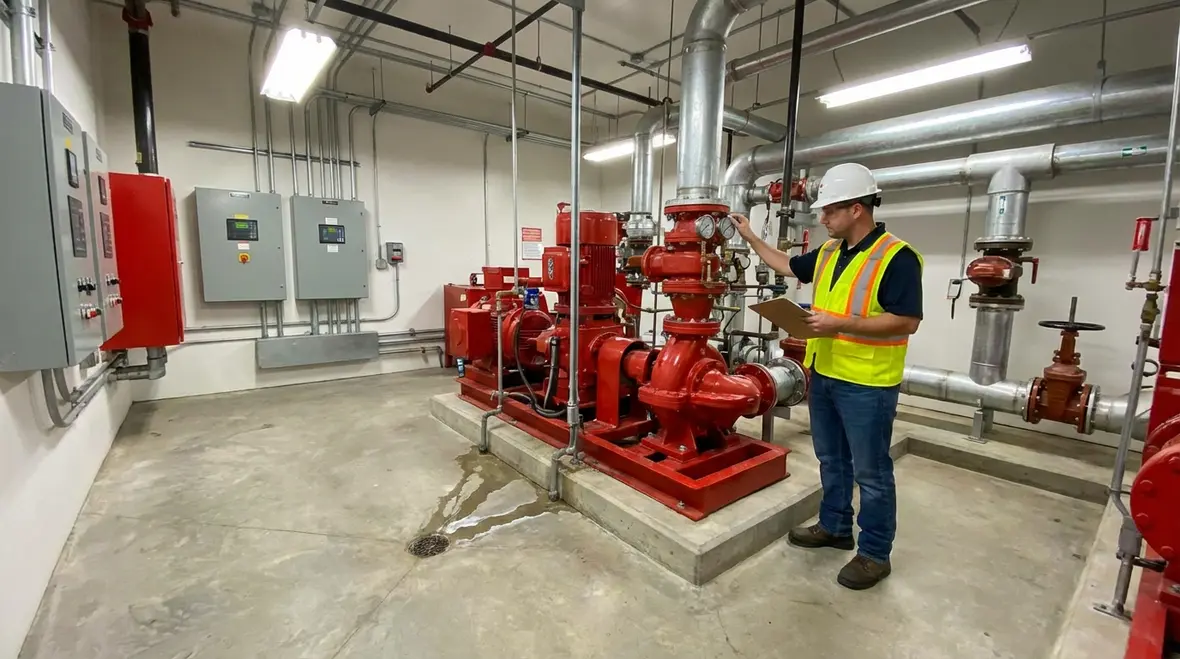
Every time I enter a pump room, it’s a little like stepping onto the Starship Enterprise—neatly arranged gauges, shiny valve wheels, blinking control panels. But rather than navigating an alien galaxy, we’re tracking water flow and system pressure like fire-fighting jedis. Or at least, we should be.
Here’s what I usually check faster than you can say “better safe than sorry”:
- Pressure gauges: Shouldn’t be twitching like they’ve had too much espresso.
- Churn test: That’s the pump running while the discharge valve is closed. It confirms it’s humming properly. Or not.
- Flow test: This means opening valves and measuring actual output. Wear boots. Possibly goggles. Maybe bring a towel.
Every part of the test plays a role in something I call “the trust equation.” That’s when the system proves it’ll fire up in your moment of need. You know, kind of like your most reliable friend—but hopefully less dramatic than your group chat.
Why This Isn’t Just a “Check the Box” Exercise
Let’s cut to the truth, shall we? A lot of owners see annual testing as a compliance chore. Yeah, it might sound like your least favorite DMV experience. But you know what’s worse? A system that fails during an actual emergency. And unlike a slow clerk at the DMV, a fire won’t apologize or hand you a new number.
Testing identifies weak systems before they fail. Pumps degrade over time. Pipes corrode. Valves stick. Just like the batteries in your remote die right when you settle in for a Netflix binge, pumps can quit right when they’re needed most.
So consider this: regular fire pump testing is your building’s six-month dentist visit. Not always thrilling, but very necessary. Plus, unlike dental work, fire pump testing doesn’t involve Novocain or soul-crushing bills. Win-win.
Real Problems That Testing Actually Uncovers
Common Issues Found
- Low pressure output from pump
- Clogged suction pipes
- Stuck or non-responsive controllers
- Diesel engine not starting
- Unbalanced wear on impellers
What That Means for You
- Sprinklers won’t reach flames in time
- Reduced water flow = major fire spread
- No alarms when failure occurs
- Expensive emergency replacements
- Insurance claims denied due to neglect
This is why scheduling those tests isn’t just ticking a box—it’s playing offense with your building’s safety. It keeps everyone from tenants to maintenance staff sleep-better-at-night safe. And hey, isn’t that what it’s all about?

Can We Automate This? Asking for a Friend
Short answer: Yes… to a point. Technology has come a long way. Some control systems offer remote monitoring. They’ll send an alert if anything goes wonky. But let me tell you something—I’ve never seen a sensor reach over and tighten a loose valve.
There’s no substitute for human inspection. Smart systems can help streamline reporting and diagnostics, which is great. But you still want a trained technician who knows the difference between a minor hiss and a potential geyser of trouble. Think of automation as your Siri, not your surgeon.
The Actual Cost of NOT Getting It Done
Let’s flip this around. What if you skip testing? What could possibly go wrong?
- Your local fire marshal slaps you with violations
- Your insurance carrier denies coverage
- Your pump fails right when the barbecue on the 12th floor gets out of hand
- Your tenants start asking a lot of, ahem, legal questions
We’ve seen massive commercial losses directly tied to neglected fire pump systems. It’s like rolling the dice in Vegas and betting against your own safety. And I don’t know about you, but when it comes to multi-million-dollar assets, I prefer guarantees over gambles.
FAQ: Fire Pump Testing Requirements Commercial Buildings (Quick Hits)
- How often should my fire pump be tested? Electric pumps weekly, diesel monthly. Full flow test annually.
- What standards do commercial buildings follow? NFPA 25 sets the gold standard for inspection, testing, and maintenance.
- Can fire pump testing be done during business hours? Yes, but it’s best planned to avoid disruption. Let tenants know ahead of time.
- Does testing cause water damage? Not when done right. Professional testers manage flow routes safely.
- Who should perform the test? Certified technicians who specialize in commercial and industrial fire protection systems.
Final Thoughts: Don’t Let Your Building Down
If you’ve made it this far, you now know more than 90% of building owners do about fire pump testing. That’s the kind of insider knowledge that keeps your property protected, your insurance happy, and your tenants blissfully unaware of the fiery chaos that could have been. So don’t treat these tests like a boring obligation. Treat them like your building’s yearly physical—with fewer awkward questions and a lot more horsepower.
Ready to schedule a reliable and compliant fire pump test for your property? Reach out to FirePumps.org for expert support tailored to your commercial or industrial facility. You can also explore specialized fire pump service options designed for commercial buildings that need dependable inspections, repairs, and testing. Let’s keep your systems strong, your people safe, and your call from the fire marshal short and sweet.