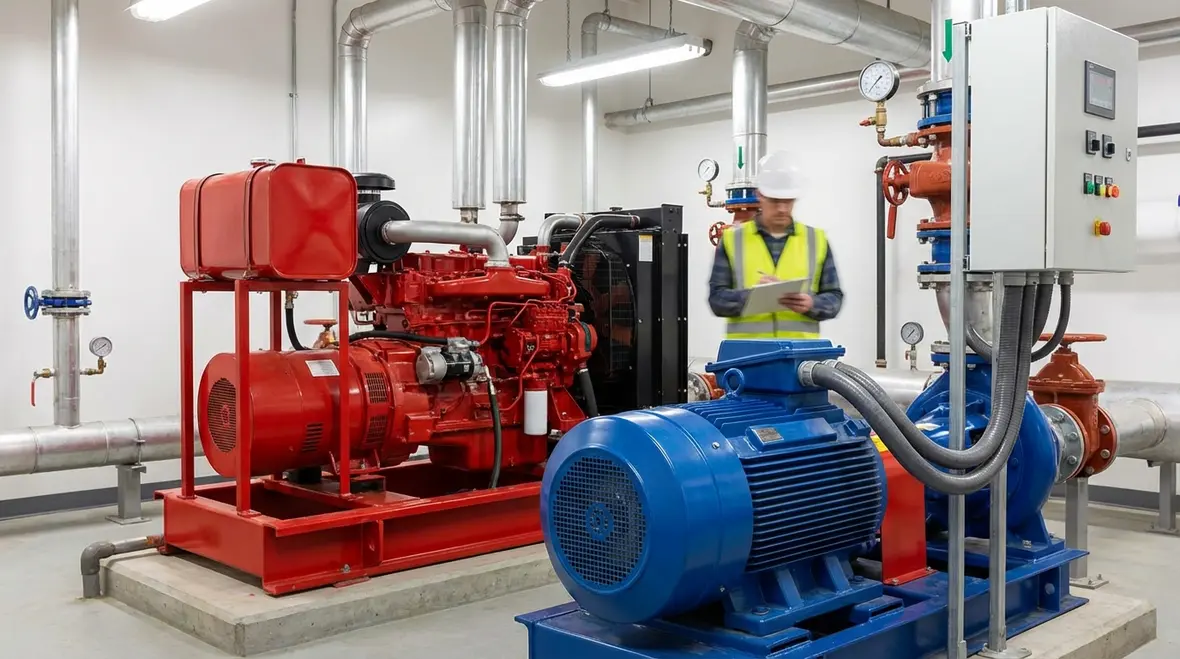

Diesel vs Electric Fire Pumps for Commercial Safety
How to choose the right fire pump driver for high-rises, campuses, warehouses, and everything in between.
Diesel vs Electric Fire Pumps in Commercial Facilities: Which One Keeps the Sprinklers Singing?
Picture this: You’re standing in a sleek, 30-story commercial high-rise. It’s an architectural marvel—glass, steel, and status. Suddenly, the fire alarm roars to life. Your heart races. And in that instant, you’re not thinking about aesthetics. You’re thinking about survival. This is where the unsung heroes—the fire pumps—step up to carry the weight of safety. Specifically: do you trust a diesel-powered beast or an electric workhorse?
The diesel vs electric fire pump advantages debate isn’t just a trendy industry toss-up. It’s a vital choice that impacts installation logistics, system reliability, emergency preparedness, and regulatory compliance. Buckle up. We’re about to explore this battlefield of brawn versus brains—diesel versus electric. And yes, I promise to keep the fire jokes to a minimum… well, maybe just smoldering a little.
Understanding Fire Pumps in Commercial Giants
Before diving headfirst into the diesel vs electric pool, let’s make sure we understand why these pumps matter so much. Fire pumps are part of a building’s fire protection system that helps maintain water pressure for sprinklers or standpipe systems. Forget the garden hose metaphor—these things aren’t just flow boosters; they’re full-blown water-launching legends.
Commercial, industrial, and mega-structure properties need fire pumps to deliver high-pressure water over multiple floors and complex layouts. Without them, your multi-million-dollar commercial campus might just have a very expensive marshmallow roast going on.
NFPA 20 (that’s fire code for the cool kids) lays down the law on design and installation of fire pump systems across the U.S. So when choosing between diesel and electric fire pumps, compliance isn’t optional—it’s dessert before dinner. It has to come first.

Running the Numbers: Cost of Ownership
Ah yes, money. The sweet nectar of executive attention spans. When it comes to the initial cost, electric fire pumps are usually the wallet-friendly favorites. They’re like that reliable Prius you bought during a gas crisis—easy to maintain, lower installation cost, and zero fuel required. But don’t be fooled. Cheaper today doesn’t always mean cheaper tomorrow.
Diesel-powered fire pumps, while typically more expensive up front, offer a level of independence from the grid that makes them extremely valuable during power outages. Maintenance costs? A bit higher. Fuel? You’ll need a storage tank, additional inspections, and someone who knows their way around a diesel engine.
Electric Fire Pump: Pros
- Lower upfront equipment cost
- Minimal emissions
- No onsite fuel storage needed
- Quieter operation
Diesel Fire Pump: Pros
- Operates during power outage
- No need for backup power supply
- High torque and reliability
- Ideal for remote locations
If you’re headquartered in a city with unstable power or high-security needs (like a data center or hospital), the diesel route pays for itself fast. Think of it like Batman’s utility belt: a little bulky, but gets the job done when Gotham needs saving.
“Why Not Both?” – Hybrid Systems and NFPA Compliance
Some modern commercial properties, particularly sensitive facilities, opt for what’s essentially the Reese’s Peanut Butter Cup of fire safety: dual fire pumps. One electric. One diesel. Fire protection redundancy in case one fails or becomes inoperable due to environmental or power factors. It’s like having Thor and Iron Man on speed dial.
NFPA 20 allows and even encourages redundancy in some scenarios. For mission-critical operations—think airports, military installations, and certain industrial sites—this is more standard than exception.
Keep in mind, this “two-is-better-than-one” approach comes with extra installation demands, maintenance schedules, and regulatory oversight. If you’re the kind of property owner who prefers a 5-star experience, this could be your signature safety move.
What Kind of Facility Are You Running Here?
Location matters. A tall, downtown tower with stable utilities may not need the off-grid muscle of diesel. But the same can’t be said for warehouse zones or sprawling factories in the less-loved corners of the city where one power outage can send your operations to the Dark Ages.
Ask yourself:
- Is my property in a high-risk outage zone?
- Do local codes prefer or mandate backup power setups?
- Will electrical loads be shared with other demand-heavy systems?
- Can I afford fuel delivery services and storage maintenance?
Keep in mind—diesel engines require ventilation, fuel turnover checks, emissions inspections, and space. A warehouse facility? No problem. A boutique hotel in the middle of Manhattan? Good luck finding a utility room big enough for diesel’s ego.

Diesel vs Electric Fire Pump Advantages: Unfiltered and On Point
Alright, let’s level with each other. In pure performance terms:
- Diesel fire pumps shine during power grid failures. They’re self-reliant machines built with redundancy in mind. They have high starting torque, solid performance under pressure, and can handle unexpected situations like a champ in an 80s action movie.
- Electric fire pumps bring quiet efficiency, low maintenance, and simpler compliance headaches. They’re eco-friendly, ideal for metropolitan properties, and generally don’t need as much babying…unless there’s a power outage, of course.
The diesel vs electric fire pump advantages aren’t just pros and cons. They’re lifestyle choices for your building. Your fire strategy needs to be tuned to your unique building usage, risk profile, and continuity planning. You wouldn’t wear flip-flops to a boardroom, so don’t expect the same pump to suit every facility.
The Silent Partnership: Utility Dependence and Standby Systems
Here’s a comedy nobody wants to attend: relying on an electric pump during a blackout—only to find your backup generator takes a coffee break. Without a guaranteed standby system, an electric fire pump’s Achilles’ heel is exposed. So, most facilities using electric pumps that want to remain code-compliant and safe pair them with natural gas or diesel generators.
Which leads us back to… diesel. You either go full diesel mode, or you bring generators into the picture. It’s like dating an electric fire pump, but keeping diesel on the contact list, just in case it ghosts you during an emergency.
Whichever solution you lean into, ensure your standby power source is up to code: reliable, load-tested, and maintained like it’s your most prized vintage Mustang. Because when the lights go out, the sprinklers still need to dance.
FAQs: The Quick & Dirty on Diesel vs Electric Fire Pumps
What’s the major difference between diesel and electric fire pumps?
Diesel fire pumps run on fuel and don’t need external power. Electric fire pumps rely on grid or generator power to operate.
Are diesel fire pumps better for high-rise commercial buildings?
Only if backup power supplies are limited. Otherwise, electric pumps often handle the job just fine.
Do electric fire pumps need a generator?
Yes, unless your building has extremely reliable power. Running without backup isn’t code-compliant in most areas.
Is maintenance easier with electric fire pumps?
Absolutely. Fewer moving parts and no fuel means a simpler maintenance routine.
Which one lasts longer—diesel or electric fire pump?
Both can last decades with proper care. Diesel pumps may need more maintenance, but they’re built to handle tough conditions.
Wrapping It Up: The Real Power Lies in Preparation
In the battle of diesel vs electric fire pumps, there’s no one-size-fits-all winner. There’s only the right fit for your specific commercial or industrial facility—and your long-term risk strategy. Whether you’re outfitting a 100,000-square-foot factory or a gleaming corporate skyscraper, your fire pump decision could be the single most critical thing people never notice… until they need it.
Ready to determine what your space needs? Consult with our fire protection engineers at Firepumps.org. We’ll help you navigate choices with clarity, code compliance, and confidence. Your fire pump journey starts here.
Want to see how real-world systems are designed and maintained? Explore this in-depth guide on how NFPA 20 regulates fire pump systems to better understand the standards behind your next diesel or electric fire pump decision.
At-a-Glance: Diesel vs Electric
- Best for reliability during outages: Diesel
- Best for low maintenance: Electric
- Best for tight urban spaces: Electric
- Best for remote or unstable grids: Diesel
Need a Fire Pump Checkup?
Whichever driver you choose, routine testing and inspection keep your system ready for game day. Build annual and post-event inspections into your budget, not just your wish list.