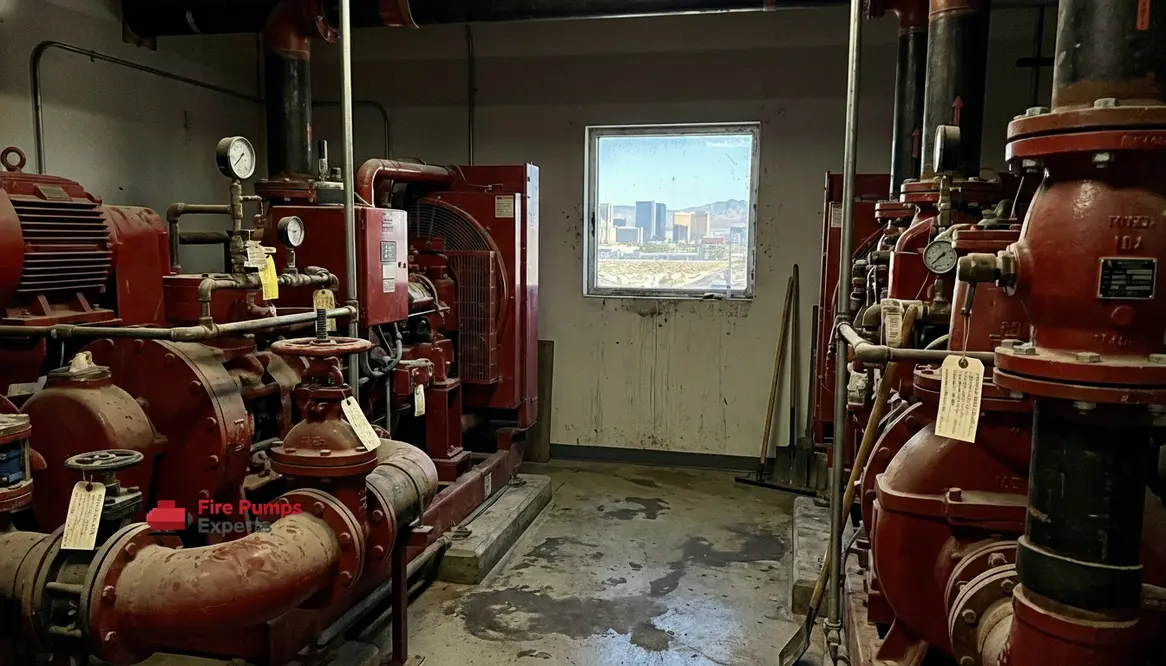
Las Vegas Fire Code Impact on Fire Pump Design
The Quiet Power Behind Compliance
I have spent enough time around commercial fire protection systems to know this truth. Codes are not paperwork. They are living rules that shape every bolt, valve, and gallon per minute. And when we talk about the Las Vegas fire code impact, we are talking about a region where heat, density, and high occupancy demand precision. In those first design meetings, I can already feel how local rules begin to steer fire pump specifications. Not gently, either. More like a firm hand on the wheel saying, “We are not cutting corners today.”
So yes, while fire pumps may not have the star power of a Vegas headline act, they are doing the real life saving work backstage.
How Do Local Fire Codes Shape Commercial Fire Pump Design?
Local fire codes dictate performance requirements, and I mean down to the fine print. They define minimum flow rates, pressure thresholds, redundancy needs, and even how systems respond during power loss. As a result, when I design or evaluate a system, I am not starting from a blank page. I am working within a framework that has already decided what “acceptable” looks like.
For example, in dense commercial environments, codes often require higher pressure margins. Therefore, I select pumps that can maintain consistent output even under peak demand. Additionally, local amendments can require backup pumps or specific controller features. This is not just compliance theater. It ensures that when something goes wrong, the system does not hesitate.
And honestly, hesitation is great in dating. Not so much in fire suppression.
Why the Las Vegas Fire Code Impact Changes Everything
Las Vegas brings a unique mix of high rise hotels, sprawling commercial complexes, and facilities that operate around the clock. Because of this, the Las Vegas fire code impact pushes fire pump specifications into a more demanding category. I often see requirements for higher reliability standards and stricter testing protocols.
Moreover, water supply conditions in the region can vary. So I account for that by selecting pumps that can compensate for pressure fluctuations. In addition, redundancy becomes less of a luxury and more of a baseline expectation. If one pump fails, another must step in without missing a beat.
It reminds me of a heist movie crew. Everyone has a role, and if one person slips, the whole plan collapses. Except here, the stakes are not diamonds. They are lives and infrastructure.
Key Code Driven Factors I Always Evaluate
- Required flow and pressure levels
- Backup power integration
- System redundancy expectations
- Controller and alarm standards
- Testing and maintenance intervals
How I Translate That Into Specifications
- Select higher capacity pump models
- Include diesel or dual power options
- Design parallel pump configurations
- Specify advanced control panels
- Plan accessible testing layouts
Matching Pump Performance to Real World Risk
Fire codes are not written in a vacuum. They reflect real world incidents and evolving risks. Therefore, when I align pump specifications with local requirements, I am also aligning with lessons learned from past failures.
For large commercial and industrial buildings, this means designing systems that can handle worst case scenarios. I look at building height, occupancy load, and hazard classification. Then I match those factors to pump curves and system capacity.
Additionally, I consider how quickly the system must respond. In many jurisdictions, response time is just as critical as output. So I ensure the pump reaches full performance without delay. Because in an emergency, seconds stretch longer than a movie trilogy.
How Regional Enforcement Shapes Long Term Reliability
Enforcement is where theory meets reality. Some regions take inspections very seriously, and that directly affects how I approach system design. The Las Vegas fire code impact, for instance, includes rigorous inspection and testing expectations. So I build systems that are not only compliant on day one but also easy to maintain over time.
Accessible components, clear monitoring systems, and durable materials all play a role. Furthermore, I think about the technicians who will service the system years from now. If maintenance is difficult, compliance will slip. And that is when problems start to stack up.
In other words, a good design does not just pass inspection. It keeps passing inspection.
Avoiding Costly Missteps in Commercial Projects
I have seen projects where teams underestimated local code influence. The result is usually the same. Redesigns, delays, and a budget that starts to look like it needs its own rescue plan.
To avoid that, I integrate code requirements early. I coordinate with local authorities, review amendments, and confirm expectations before finalizing specifications. This proactive approach saves time and prevents expensive changes later.
And yes, it may feel like extra effort upfront. However, it is far better than explaining to stakeholders why the “final” design was not actually final. Nobody enjoys that conversation.
Connecting Local Codes To Broader Fire Pump Standards
When I look at how the Las Vegas fire code impact shapes real projects, I also keep an eye on the national standards that sit behind those local requirements. Documents like NFPA 20 define how fire pumps must be built, installed, and tested, while local amendments add another layer of expectations based on regional risk profiles. If you want a deeper technical breakdown of how standards regulate fire pump systems, Kord Fire’s overview of NFPA 20 at this NFPA 20 fire pump systems guide is a solid technical companion.
In practice, that means the Las Vegas fire code impact does not exist in isolation. It builds on well established fire pump testing, installation, and maintenance principles, then tightens the screws where high rise density, 24/7 operations, and complex occupancies demand even more reliability from every pump in the room.
FAQ
Conclusion
When I approach fire pump specifications, I do not treat local codes as a checklist. I treat them as a blueprint for performance and safety. The Las Vegas fire code impact proves that regional demands can elevate every aspect of design. If you are planning a commercial or industrial project, now is the time to align your system with those standards. Work with experts who understand these nuances and build a system that performs when it matters most.