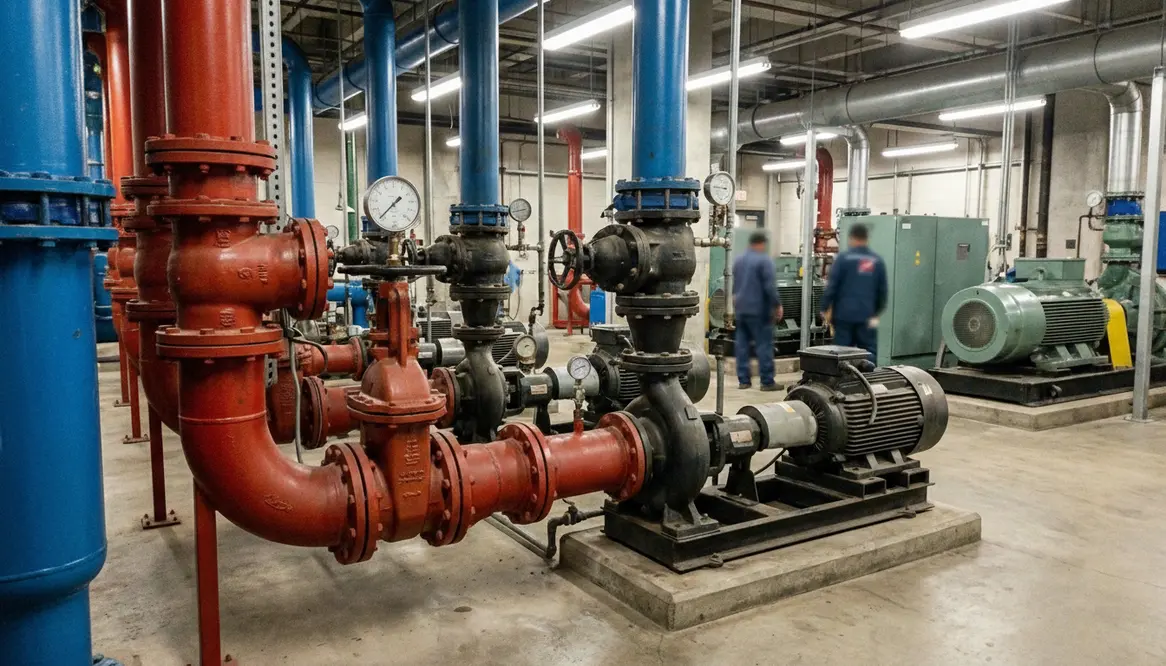
LAX Airport Fire Suppression Water Supply Systems
Inside the Quiet Power Behind Airport Safety
I spend a lot of time around large facilities. Warehouses the size of small cities. Industrial campuses with miles of pipe hidden behind walls. Yet few places command respect quite like a major airport. Los Angeles International Airport moves hundreds of thousands of people a day. Behind that motion sits a quiet system most travelers never notice. The lax airport facility fire suppression water supply is one of those unseen guardians.
Within airport support buildings such as maintenance hangars, logistics centers, cargo terminals, and fueling operations, water pressure must remain constant and ready at a moment’s notice. When an emergency hits, there is no time for hesitation. So I have learned that maintaining pressure is less about one pump or one pipe. Instead, it is a carefully orchestrated network of engineering, redundancy, and a little bit of stubborn reliability.
And honestly, if infrastructure had personalities, this system would be the calm professional in the room. The one who quietly handles everything while the rest of us panic like characters in an action movie.
How Airport Support Facilities Keep Emergency Water Pressure Stable
When people imagine fire protection systems, they often picture sprinklers and hoses. However, the real hero sits deeper in the system. Emergency pressure comes from carefully engineered pump systems paired with dedicated water storage and reinforced distribution lines.
I usually explain it this way. Fire protection in large aviation support buildings works like a relay team. Each component passes responsibility smoothly to the next.
The Relay of Pressure and Flow
First, dedicated fire pumps provide the muscle. These pumps activate automatically when pressure drops in the system. Therefore, the moment sprinklers open or hydrants engage, water flow increases instantly.
Second, facilities near LAX often rely on large onsite water reserves. Because municipal supply alone may not deliver enough pressure during peak demand, storage tanks act as a backup reservoir.
Third, pressure monitoring technology constantly watches the system. Sensors measure flow rates, pressure levels, and pump performance in real time. If something drifts out of range, operators know immediately.
Consequently, the lax airport facility fire suppression water supply stays stable even when massive hangars or cargo buildings activate dozens of sprinkler heads at once.
Think of it like a stadium concert. The crowd expects perfect sound. Behind the scenes, technicians balance mixers, amps, and speakers so the music never skips. Fire protection works the same way. Except the stakes are much higher than a missed guitar solo.
The Infrastructure That Keeps Industrial Airport Facilities Ready
Airport support properties operate differently than typical commercial buildings. Cargo terminals store high value goods. Aircraft maintenance hangars house specialized equipment and fuel systems. Meanwhile, logistics centers operate around the clock.
Because of that, their water supply infrastructure is built with layered reliability.
Layers of Reliability in High-Stakes Facilities
First comes pump redundancy. Many airport support facilities install multiple fire pumps working in sequence. If one pump fails, another takes over instantly. As a result, pressure never drops below operational levels.
Next comes power reliability. Fire pumps typically connect to emergency generators or diesel engines. Even if the electrical grid fails, the pumps keep running.
Then there is pipe design. Large diameter mains distribute water across sprawling industrial structures. Engineers size these pipes carefully so friction loss does not steal pressure during high demand.
Finally, system zoning divides massive facilities into separate fire protection zones. Therefore, when one area activates sprinklers, the rest of the network remains balanced.
This layered approach supports the lax airport facility fire suppression water supply across the entire network of operational buildings surrounding the airport.
And yes, the system runs constant testing. Because nothing ruins a fire pump’s day faster than being ignored for six months.
Key Systems That Strengthen Fire Protection Water Pressure
Primary Pressure Drivers
- High capacity fire pumps sized for aircraft hangars and cargo facilities
- Dedicated water storage tanks designed for emergency draw
- Large diameter underground distribution mains
- Automatic pressure controllers that activate pumps instantly
- Diesel driven backup pumping systems
Operational Safeguards
- Continuous pressure monitoring sensors
- Weekly pump performance tests
- Redundant valve assemblies
- Emergency generator connections
- Remote building management system alerts
Together these elements support the performance of the lax airport facility fire suppression water supply across large scale aviation infrastructure.
I like to think of it as a well rehearsed orchestra. Every instrument plays its part. Pumps deliver force, sensors provide awareness, and storage tanks bring stamina. When everything works together, the result is smooth, controlled pressure exactly when it matters most.
Why High Demand Properties Near Airports Need Specialized Systems
Facilities near major airports face a unique challenge. Their buildings tend to be enormous. Aircraft maintenance hangars alone can stretch hundreds of feet across with high ceilings and specialized fire suppression zones.
Additionally, many airport support operations contain combustible materials. Aviation fuel handling areas, industrial equipment storage, and cargo processing centers all increase fire risk.
Designing for Extreme Flow and Distance
Because of this, engineers design fire water systems for extremely high flow demand. A single hangar suppression event can require thousands of gallons per minute.
Therefore, the lax airport facility fire suppression water supply must deliver both volume and pressure simultaneously. Achieving that balance takes precise pump sizing, carefully calculated pipe networks, and dedicated emergency reserves.
Another challenge comes from distance. Airport property spans huge areas. Water may travel long distances from storage tanks to remote buildings. Engineers compensate by installing booster pumps or pressure zones across the distribution network.
And although this sounds complex, the goal remains simple. When a sprinkler activates, water must arrive immediately and powerfully.
In other words, the system cannot behave like your apartment shower when someone flushes a toilet. Airports demand far better manners.
How Engineers Protect Long Term Reliability
Designing the system is only the beginning. Maintaining reliability requires consistent testing and inspection.
Testing, Data, and Preventative Care
First, technicians perform weekly pump churn tests. These tests confirm the pump can start, run, and maintain pressure without delay.
Next, flow tests simulate real fire demand. Operators measure gallons per minute, pressure curves, and valve performance.
Meanwhile, control systems log pressure data continuously. If pressure drops or pump activity changes, maintenance teams investigate immediately.
Furthermore, large industrial facilities often coordinate inspections with local fire authorities and insurance engineers. These inspections confirm that the lax airport facility fire suppression water supply meets both fire code and property risk standards.
Over time, components such as valves, pump seals, and controllers receive preventative replacement. This proactive approach avoids surprises during emergencies.
After all, emergency systems should never introduce drama. Hollywood already handles that job pretty well.
FAQ About Airport Facility Fire Water Systems
Conclusion
Major airport support buildings rely on powerful, carefully engineered water systems to stay ready for emergencies. From pump redundancy to pressure monitoring and storage reserves, every layer protects lives, equipment, and operations.
If your industrial facility or large commercial property needs expert guidance on designing or maintaining high performance fire pump systems, connect with specialists who live in this world every day. Teams like full-service fire pump system experts understand how to translate complex risk profiles into practical, code compliant protection.
The right system does not just meet code. It stands ready when seconds matter most.