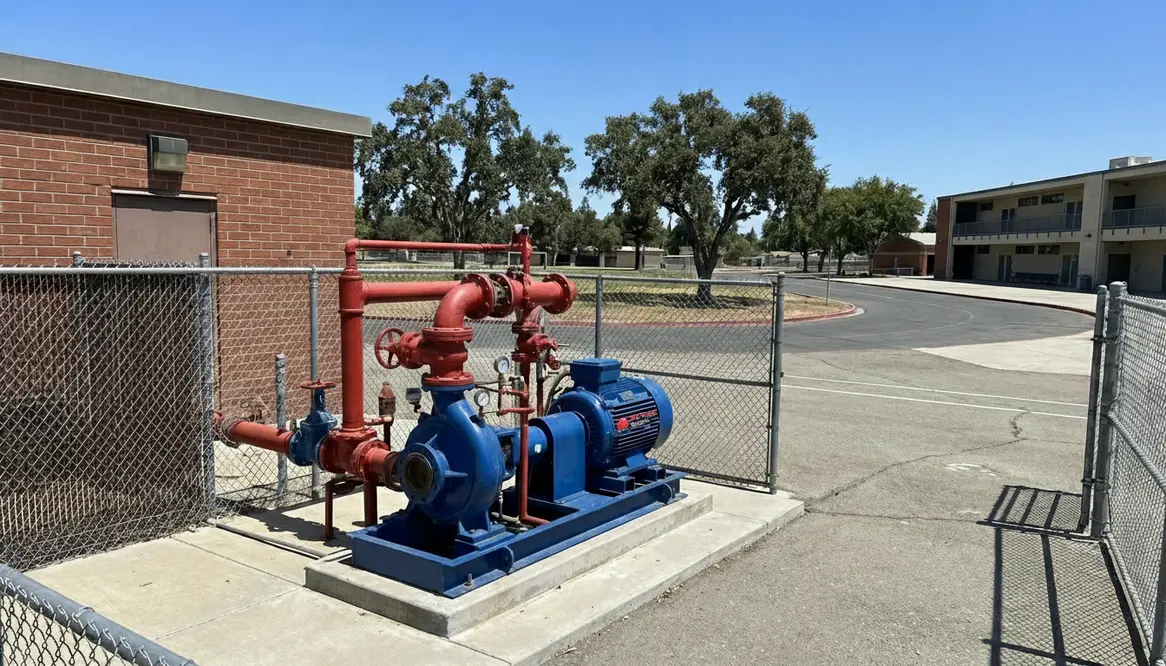
Los Angeles School Campus Fire Protection Water Systems
Water Supply Infrastructure for Schools and Campuses Across Los Angeles County
I have spent years around pumps, valves, pipes, and the quiet machinery that keeps large properties safe. And if there is one place where water infrastructure must perform like a calm professional under pressure, it is a school campus. Across Los Angeles County, campuses are more like small cities than simple buildings. They contain labs, theaters, dorms, sports arenas, and dense student populations. Because of that, the los angeles school campus fire protection water infrastructure that supports these properties is not just plumbing. It is a carefully engineered system designed to protect thousands of people while meeting strict commercial building standards.
However, the real story sits beneath the sidewalks and mechanical rooms. Large scale water supply systems, high capacity pumps, and specialized distribution networks quietly stand ready every second of the day. They do not ask for applause. They just do their job. And when designed properly, they do it so smoothly that most people never notice them. Which, honestly, is exactly how safety systems should behave.
The Hidden Network Beneath Major Campus Properties
When people picture water on a campus, they imagine drinking fountains, irrigation sprinklers, or maybe the occasional dramatic fountain sculpture that somehow always attracts pigeons with excellent aim. Yet the real backbone of campus water systems sits underground.
Large institutional properties across Los Angeles rely on layered infrastructure. First comes municipal supply lines that deliver water from city mains. Next come dedicated campus distribution networks that move water across large properties. Finally, specialized systems feed fire protection equipment, mechanical cooling, laboratories, and emergency reserves.
Because many Los Angeles campuses occupy dozens or even hundreds of acres, engineers design water systems that behave more like municipal grids than simple building connections. Pressure zones must stay balanced. Storage must account for peak demand. Fire flow must remain available even when several buildings draw water at the same time.
Additionally, seismic considerations shape nearly every decision. Southern California lives with the constant reminder that the ground occasionally decides to dance. Therefore, pipelines, pump connections, and mechanical assemblies must remain flexible and resilient. A rigid system may work perfectly on paper, but earthquakes tend to treat rigid designs like overconfident action movie villains.
How Large Educational Facilities Maintain Reliable Fire Protection Water Systems
Fire protection on a major campus demands far more than a few sprinklers and a hopeful attitude. Instead, commercial properties rely on layered engineering that ensures water reaches any building quickly and with the required pressure.
Core elements of campus fire water infrastructure
- Dedicated fire service mains separate from domestic water supply
- High capacity fire pumps designed for commercial demand
- Large diameter underground piping networks
- Emergency water storage tanks
- Pressure regulating systems for large campuses
Because Los Angeles County contains many multi building campuses with laboratories, theaters, hospitals, and research facilities, the demand for reliable fire water supply becomes significant. One structure alone may require thousands of gallons per minute during an emergency event.
Therefore engineers design systems with redundancy. If one pump goes offline, another stands ready. If one section of pipe loses pressure, alternate routes continue delivering water. The goal is simple. When alarms activate, water must arrive instantly and consistently.
And yes, those pumps are serious machines. Some of them look like they belong in a submarine movie. The difference is that instead of chasing giant squids, they quietly move thousands of gallons of water every minute.
Designing the Los Angeles School Campus Fire Protection Water Infrastructure for Large Properties
Designing systems for large campuses across Los Angeles County requires a balance between engineering precision and practical site realities. Every property presents unique challenges.
Some campuses sit on steep hillsides. Others stretch across flat urban blocks. Meanwhile, many older campuses have expanded for decades, adding new buildings that must connect to infrastructure installed long before smartphones existed.
As a result, planning the los angeles school campus fire protection water infrastructure for these properties requires detailed hydraulic analysis. Engineers evaluate flow demand, pipe friction losses, elevation changes, and pump capacity. They simulate emergency scenarios to ensure the system delivers adequate pressure across every building.
Codes, standards, and integration challenges
Furthermore, Los Angeles codes and national fire standards guide system design. Fire departments require specific flow rates, hydrant placement, and redundancy measures. Meeting these standards ensures emergency responders can operate effectively without worrying about water supply limitations.
Another factor involves integration with large mechanical systems. Major campuses often include cooling plants, research labs, and industrial equipment. These facilities already consume large volumes of water. Consequently, engineers must isolate fire protection systems so emergency demand never competes with daily operations.
In other words, it is like running a city utility network inside a property boundary. Except the stakes are higher and the margins for error are much smaller.
What people usually ask about campus water supply systems in Los Angeles
I see the same questions appear repeatedly when people search for infrastructure guidance. So let me answer them directly in the calm voice of experience and several decades around mechanical rooms.
Left Column: Common Infrastructure Questions
- How do large campuses maintain stable fire water pressure
- What size pumps serve multi building properties
- How do campuses maintain water during municipal outages
- Why are underground loops used in campus piping
Right Column: Straightforward Answers
- Fire pumps boost pressure to meet code required flow rates
- Commercial fire pumps often exceed 1500 gallons per minute capacity
- Water storage tanks provide emergency reserves
- Looped piping allows water to reach buildings from multiple directions
These systems exist because large campuses cannot depend on a single pipe or single pump. Redundancy protects the property, the buildings, and most importantly the people inside them.
Why Reliability Matters for Large Commercial Campuses
Educational campuses across Los Angeles County function as high density environments. Thousands of occupants move through classrooms, laboratories, lecture halls, and residential buildings every day. Because of this concentration of people, infrastructure reliability becomes critical.
Emergency response, assets, and compliance
First, emergency response depends on predictable water supply. Fire departments plan tactics around available hydrants and known flow rates. If water pressure suddenly drops, response operations slow down. In emergency situations, seconds matter.
Second, modern campus buildings contain expensive equipment. Research labs, server rooms, medical facilities, and performing arts venues all represent major investments. A well designed water infrastructure protects these assets through rapid fire suppression capability.
Third, large property owners must meet strict compliance requirements. Authorities enforce building codes, fire standards, and insurance expectations. A properly engineered campus water network demonstrates that the property operator takes safety seriously.
And finally, reliability supports peace of mind. Students focus on learning. Faculty focus on teaching. Facility managers sleep better at night knowing the pumps and pipelines beneath their campus will perform when needed.
Modernizing the Los Angeles School Campus Fire Protection Water Infrastructure
Many campuses across Los Angeles were built decades ago. While the architecture may age gracefully, infrastructure often requires modernization. Upgrading the los angeles school campus fire protection water infrastructure ensures older systems continue meeting modern safety standards.
Modernization often includes replacing aging pumps, installing advanced controllers, upgrading underground mains, and improving monitoring systems. Today, facility teams can track pump performance, pressure levels, and flow data in real time.
Seismic resilience, efficiency, and smarter control
Additionally, engineers now integrate seismic protections, flexible couplings, and improved anchoring systems. These upgrades help the infrastructure withstand the kind of ground movement that Southern California occasionally delivers without warning.
Energy efficiency also plays a role. New pump systems operate more efficiently while still delivering the large flow rates required for commercial fire protection systems.
Think of it like upgrading from an old pickup truck to a modern heavy duty engine. Both move water. However, one does it with better control, better reliability, and fewer surprises.
Choosing the right partner for campus fire water systems
Schools and universities benefit from specialists who understand the scale and complexity of campus systems. From pump sizing to hydrant layout, campus projects require more than residential experience. Working with a team that designs and maintains full-service fire protection systems for complex properties helps ensure that the los angeles school campus fire protection water infrastructure remains compliant, resilient, and ready for the next few decades of operation.
FAQ About Campus Fire Protection Water Systems
Below are straightforward answers to questions that come up constantly when facilities teams start evaluating or upgrading los angeles school campus fire protection water infrastructure.
Conclusion
The safety of large campuses across Los Angeles County depends on water systems that operate quietly, reliably, and instantly when called upon. The right los angeles school campus fire protection water infrastructure shields students, staff, and visitors from risk while also protecting buildings, equipment, and long term investments. If your commercial property or institutional campus requires expert planning, upgrades, or pump system support, the right infrastructure partner makes all the difference. Connect with professionals who specialize in large scale fire protection water systems and keep your property prepared, compliant, and ready for whatever the unexpected brings.