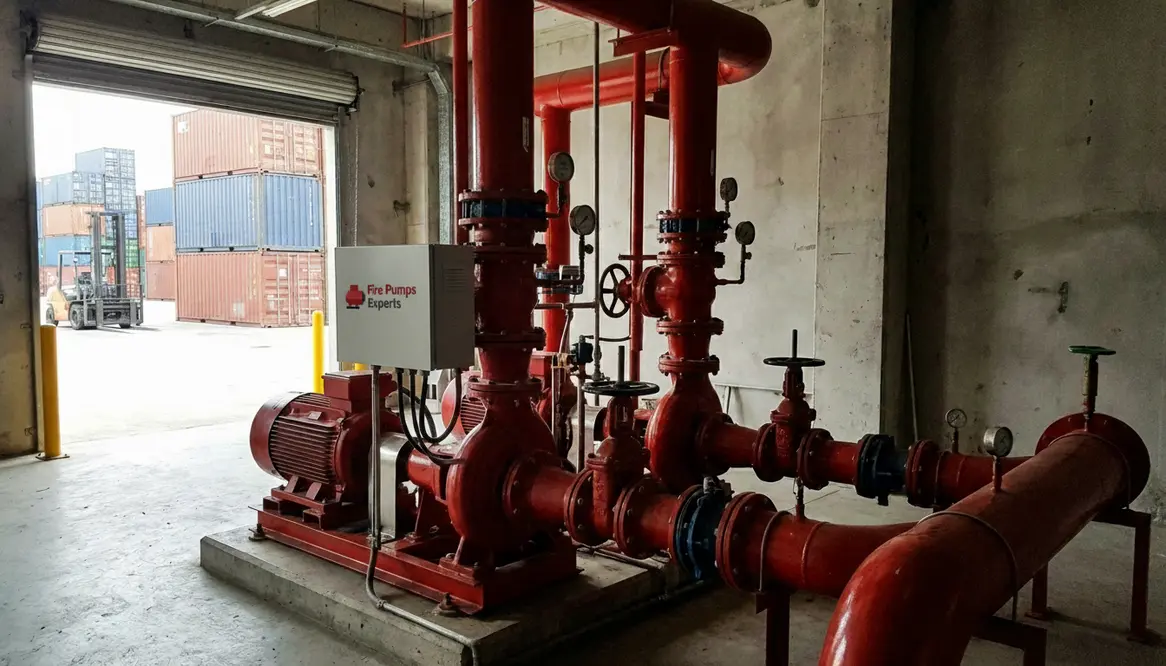
Los Angeles Warehouse Fire Pump Systems Guide
I have spent a fair amount of time walking through large industrial buildings near the Port of Los Angeles. Warehouses here move everything from electronics to frozen seafood, and they do it at a pace that would make a Formula 1 pit crew proud. However, behind the forklifts, container stacks, and towering racks sits a system that rarely gets applause but absolutely deserves it. I am talking about los angeles warehouse fire pump systems. These systems quietly stand guard, ready to deliver massive water flow the moment a fire alarm sounds. In a port environment packed with inventory, machinery, and high value logistics, that reliability is not optional. It is the backbone of serious fire protection.
And honestly, if fire protection systems had movie roles, the sprinkler heads might be the visible action stars, but the fire pump would be the steady narrator in the control room. Calm. Powerful. Always in control.
How I Think About Fire Pump Protection in Port District Warehouses
When I step into a large logistics warehouse near the harbor, the first thing I notice is scale. Thirty foot racks. Miles of sprinkler piping. Massive storage volumes. Therefore, water pressure from the municipal supply alone rarely meets the demand required for modern fire suppression systems.
This is where industrial fire pump assemblies come in.
A fire pump boosts water pressure so sprinklers and standpipes deliver the correct flow rate across a large facility. Without it, water may reach the building but fail to reach the fire with enough force to stop it.
Additionally, port warehouses often present special challenges.
Port Warehouse Fire Load Challenges
High storage density
Products stacked high create intense fire loads.
Large building footprints
Water must travel long distances through piping.
Mixed commodities
Electronics, plastics, chemicals, and packaging burn differently.
Continuous operations
Facilities often run around the clock.
Because of these factors, a properly designed pump system ensures pressure stability across the entire building. In other words, when the sprinkler system activates on the far corner of a football field sized warehouse, it still delivers the punch needed to control the fire.
And in a port city where goods move fast, downtime from fire damage can ripple through supply chains like a plot twist in a disaster movie.
Los Angeles Warehouse Fire Pump Systems and the Demands of Port Logistics
The Port of Los Angeles sits at the center of global trade. Thousands of containers pass through daily. As a result, surrounding warehouse facilities handle enormous inventory volumes.
Fire protection here cannot be generic.
Facilities near the port often require systems designed around:
Key Design Drivers Around the Port
High hazard commodity storage
Many goods contain plastics or flammable materials.
ESFR sprinkler systems
These require specific pressure and flow conditions.
Redundant reliability
Operations cannot pause because of equipment failure.
Compliance with NFPA and California codes
Regulations here are strict for good reason.
Because of these demands, engineers often select pump types such as electric motor driven pumps or diesel driven pumps depending on facility risk tolerance and emergency power plans.
Electric pumps run clean and quiet. Diesel pumps add independence from the electrical grid. Many large industrial sites install both for redundancy. Think of it as the buddy system for fire protection. One pump watches the other’s back.
Consequently, the entire system becomes far more resilient during emergencies. If you want a deeper look at specialized services that keep pumps inspection-ready, resources like the fire pump systems page at Kord Fire Protection show how design and testing come together in the field.
If I Were Designing Fire Pump Protection for a Los Angeles Port Warehouse
Let me walk you through how I typically think about designing a system for a large industrial warehouse near the harbor.
The process always begins with the hazard analysis.
I ask a few key questions.
- What commodities fill the racks?
- How high does storage reach?
- What sprinkler system type protects the building?
- How reliable is the municipal water supply?
Once those answers come in, the pump system design starts to take shape. At that point, it truly becomes one of those tailored los angeles warehouse fire pump systems built around the building instead of forcing the building to fit the system.
System Design Priorities
- Required gallons per minute flow
- Pressure demand at remote sprinkler heads
- Water supply reliability
- Backup power considerations
- Pump room location and flood protection
Operational Factors
- Testing access for maintenance teams
- Clear monitoring through fire alarm systems
- Vibration and noise management
- Compliance with NFPA 20 pump standards
- Safe access for emergency crews
Design is only half the story though. A perfectly engineered pump that nobody maintains is about as useful as a smoke detector with no batteries. And yes, we have all heard that chirping sound at three in the morning.
Industrial facilities avoid that mistake through regular inspection and testing programs that keep los angeles warehouse fire pump systems ready for the worst day, not just the next inspection report.
Maintenance Keeps Fire Pump Systems Ready for the Worst Day
Warehouses operate every day, yet fires rarely happen. That sounds like good news, but it creates a hidden risk. Equipment that sits idle for long periods can fail at the worst possible moment.
Therefore routine testing becomes critical.
Core Maintenance Tasks
Weekly churn tests
Pumps run briefly to confirm operation.
Monthly controller inspections
Control panels and alarms must function correctly.
Annual flow testing
Technicians verify the pump delivers its rated performance.
Fuel system inspections for diesel units
Reliability during power outages is essential.
Furthermore, facilities near the Port of Los Angeles face environmental conditions that make maintenance even more important. Salt air can accelerate corrosion. Heavy truck traffic creates vibration. High humidity inside refrigerated logistics spaces can also impact mechanical components.
Because of these factors, professional service teams treat industrial fire pump systems like mission critical infrastructure. In many ways, they are.
What Makes Los Angeles Warehouse Fire Pump Systems Different From Typical Buildings
Not every building needs the same level of fire protection. A small office space obviously carries different risks than a 500000 square foot logistics hub filled with stacked goods.
Port warehouses stand apart for several reasons.
Why Port Warehouses Stand Apart
Scale
Large footprints require higher flow capacity.
Supply chain value
A single building may hold millions of dollars in goods.
Operational continuity
Delays affect international shipping schedules.
Complex sprinkler layouts
High rack storage increases hydraulic demand.
Because of these conditions, engineers often design fire pump rooms as dedicated infrastructure spaces. They include reinforced piping, vibration isolation, and advanced monitoring tied into building management systems.
In other words, these systems do far more than sit quietly in a corner. They serve as the beating heart of the facility’s fire protection network. When los angeles warehouse fire pump systems are sized and maintained correctly, they turn an invisible risk into a controlled one.
And if that heart stops pumping when needed, the consequences move fast. Fire spreads quickly through stored goods, and even a small incident can shut down operations for weeks.
FAQ About Warehouse Fire Pump Systems Near the Port of Los Angeles
Keeping Industrial Facilities Protected Where Global Trade Moves Fast
Warehouses near the Port of Los Angeles keep global commerce flowing day and night. However, the speed of logistics demands equally strong protection behind the scenes. A properly designed fire pump system ensures that when a sprinkler activates, water arrives with the pressure and flow needed to control a fire before it grows.
If you manage or develop a large commercial or industrial facility, investing in professional design, testing, and maintenance for los angeles warehouse fire pump systems protects both operations and assets. In a port city built on movement, reliable fire protection keeps business moving forward and keeps that quiet, unseen infrastructure ready for the one day you hope never comes.