Low Pressure Fire Pump System Troubleshooting Signs
How to spot the quiet warning signs before your fire pump system takes an unscheduled coffee break.
I have spent enough time around commercial pump rooms to know one thing. When a fire pump system begins losing pressure, it rarely sends a polite invitation first. Instead, it whispers. A gauge dips. A valve vibrates a little longer than it should. Then one day the system that protects your building decides to take an unscheduled coffee break. Not ideal when you are responsible for a hospital, manufacturing plant, or a high rise full of tenants.
That is why I often begin conversations with facility teams about low pressure fire pump system troubleshooting. In large commercial and industrial properties, pressure problems do not simply appear out of nowhere. They leave clues. And once you know where to look, those clues become impossible to ignore. Today, I will walk through the most common signs that a fire pump system is quietly losing pressure and what they usually mean.
Why these subtle signs matter
Most low pressure problems start small. A little drift on the gauge or a few extra pump starts can feel harmless. But those “small” signs are often your first opportunity to fix an issue while it is still inexpensive and easy to control.
Treat these early clues as your system’s way of tapping you on the shoulder long before it fails a test or, worse, underperforms during an actual emergency.
When the pressure gauge starts telling a different story
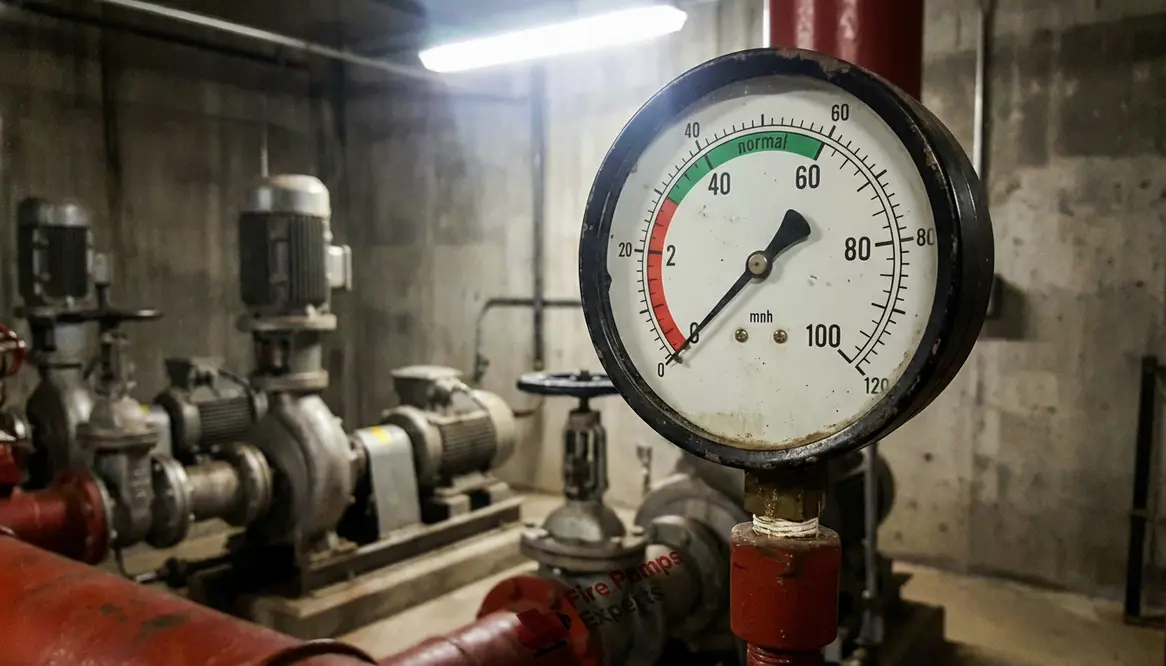
The pressure gauge is the storyteller of your fire pump system. It never exaggerates. It simply reports the truth. However, many facility teams overlook subtle changes because the numbers move slowly.
For example, a system that normally holds steady pressure might begin drifting lower during idle periods. At first the drop looks harmless. Maybe a few PSI. Yet over time that drop grows. Eventually the pump cycles more often just to maintain baseline pressure.
In my experience, this is often the earliest indicator that something inside the system is no longer sealed the way it should be.
Common culprits behind slow pressure loss
- Minor leaks in underground or overhead piping
- Pressure relief valves that no longer close tightly
- Aging check valves allowing backflow
- Air trapped within sections of the system
Meanwhile, the system keeps trying to compensate. The pump starts more frequently, which adds wear. It is a bit like your car engine revving every few seconds while parked. Eventually something complains loudly.
Therefore, when I see a pressure gauge trending downward across several inspections, I treat it as the opening chapter of a larger story and a clear signal that low pressure fire pump system troubleshooting needs to move up the priority list.
Why is my fire pump cycling too often?
If your pump starts kicking on more frequently than usual, your system may be losing pressure somewhere along the line.
In large facilities such as warehouses or manufacturing plants, the jockey pump usually handles minor pressure adjustments. Its job is simple. Maintain steady pressure without waking the main fire pump.
However, when the jockey pump starts cycling like it drank three energy drinks, it is usually chasing a pressure loss.
This situation often points toward hidden leaks or small valve failures. Even a slow drip inside a large sprinkler network can gradually pull pressure down. And while one drip seems harmless, a system spanning hundreds of thousands of square feet amplifies small problems quickly.
I once worked with a facility where the jockey pump started every few minutes. At first the team blamed the pump controls. After some investigation, we discovered a faulty pressure reducing valve feeding a remote sprinkler zone. That tiny component was bleeding pressure all day long.
What frequent cycling usually means
- Active leaks somewhere in the sprinkler or standpipe system
- Improperly adjusted or failing pressure valves
- Backflow devices leaking by
- Controls responding correctly to a real pressure loss
In other words, constant cycling is not “normal behavior” to accept. It is one of the clearest invitations to start low pressure fire pump system troubleshooting before something fails a test.
Low pressure fire pump system troubleshooting begins with water supply clues
Before diving into pump mechanics, I always look at the incoming water supply. A fire pump can only work with the water it receives. If supply pressure drops, the entire system feels the effect.
In commercial and industrial buildings, supply problems can come from several directions.
Municipal supply issues
City infrastructure changes, nearby construction, or seasonal demand shifts can lower incoming pressure. Large industrial zones often see fluctuations during peak water usage.
Partially closed valves
A control valve that is not fully open can choke the system. I have seen this happen after routine inspections where someone forgot to restore the valve completely.
Underground pipe restrictions
Corrosion, sediment buildup, or damaged pipe sections may limit the flow feeding the pump.
Backflow preventer problems
Backflow assemblies protect the water supply but can create pressure drops when internal parts wear out.
Therefore, part of effective pressure diagnostics means stepping outside the pump room. Sometimes the real problem sits beneath the parking lot, and sometimes the best move is to pull in a fire pump specialist such as Kord Fire’s fire pump service team to help confirm what the supply is really doing.
Unusual sounds and vibrations from the pump room
A healthy fire pump system has a certain rhythm. It hums steadily. It runs smoothly. Think of it like a well tuned engine.
When pressure issues develop, that rhythm changes.
I often hear it before I see it. A rattling check valve. A pump that sounds strained during startup. Pipes vibrating against supports like they are auditioning for a percussion band.
These symptoms often appear when the pump struggles to maintain required pressure. Mechanical wear inside the pump can reduce efficiency. Impellers may erode. Bearings may wear down. Over time, the pump must work harder to deliver the same pressure.
And when a large fire pump works harder, it tells you loudly.
Facility managers sometimes joke that their pump room sounds like a spaceship warming up. While that might be amusing, it usually signals a mechanical issue that deserves attention.
In commercial buildings where fire pumps protect millions of dollars in property, ignoring those sounds is rarely a wise move. They are one more reason low pressure fire pump system troubleshooting should combine both instrumentation and old fashioned “ears on” observation.
Small leaks today become major pressure loss tomorrow
Leaks are sneaky. They rarely start dramatic. Instead, they begin as minor seepage around valves, fittings, or sprinkler branches.
Yet large facilities multiply small leaks quickly. A high rise building can contain miles of pipe. Industrial campuses often contain complex sprinkler networks across multiple structures.
Even a small pressure loss in one branch slowly spreads across the system.
Where small leaks like to hide
- Valve packing glands
- Flange connections
- Pressure relief discharge lines
- Test header piping
- Remote sprinkler zones
Additionally, corrosion plays a major role. Older industrial properties often have sections of pipe where corrosion weakens the interior walls. Tiny pinhole leaks develop over time, slowly draining pressure.
It is not glamorous work. Nobody makes a blockbuster movie about valve inspections. Although if Hollywood ever needs one, I nominate Samuel L. Jackson as the fire pump technician. But in reality, careful leak detection often solves pressure problems before they become emergencies.
Why early low pressure fire pump system troubleshooting saves major headaches
When pressure loss continues unchecked, the consequences grow serious. Fire pump systems in commercial and industrial properties must deliver specific pressure levels during emergencies. Codes demand it. Insurance carriers expect it. And frankly, lives may depend on it.
If pressure continues declining, the system might fail performance testing. Sprinkler coverage could become inadequate for large areas of the building. Additionally, pumps forced to run more frequently wear out sooner.
Therefore, early diagnosis matters.
A proactive playbook for facility teams
- Trend pressure gauge readings instead of glancing at them
- Track pump and jockey pump start frequency
- Schedule regular valve, flange, and leak inspections
- Document unusual sounds, vibration, or startup behavior
- Involve specialists early when low pressure patterns appear
When I work with facility teams, I encourage a proactive mindset. Routine monitoring of pressure trends, pump activity logs, and system inspections helps detect issues long before they affect fire protection performance.
In other words, catching a problem early keeps a small maintenance issue from becoming a full scale system overhaul. And trust me, replacing a major fire pump assembly is about as fun as replacing the engine in a cargo ship.
Frequently asked questions
Stay ahead of pressure problems
Fire pump systems protect the backbone of major commercial and industrial properties. When pressure begins slipping, the system is sending a warning long before a real emergency arrives. If your facility shows any of these signs, it may be time to take a closer look.
Low pressure fire pump system troubleshooting is not about chasing numbers on a gauge for fun. It is about making sure your equipment will actually deliver when the sprinklers open and everyone is counting on that pump to do its job.
Fire pump systems protect people, operations, and the kind of assets that keep entire organizations running. By paying attention to the early whispers – the drifting gauges, the fidgety jockey pump, the odd vibration in the discharge header – you give your team the time and space to solve issues on your schedule instead of the fire department’s.
If your building is starting to show any of these symptoms, that is your cue. Bring in your internal maintenance team, your trusted fire protection contractor, or both, and start asking questions. The clues are already there. All that remains is to listen to what your fire pump system is trying to tell you.