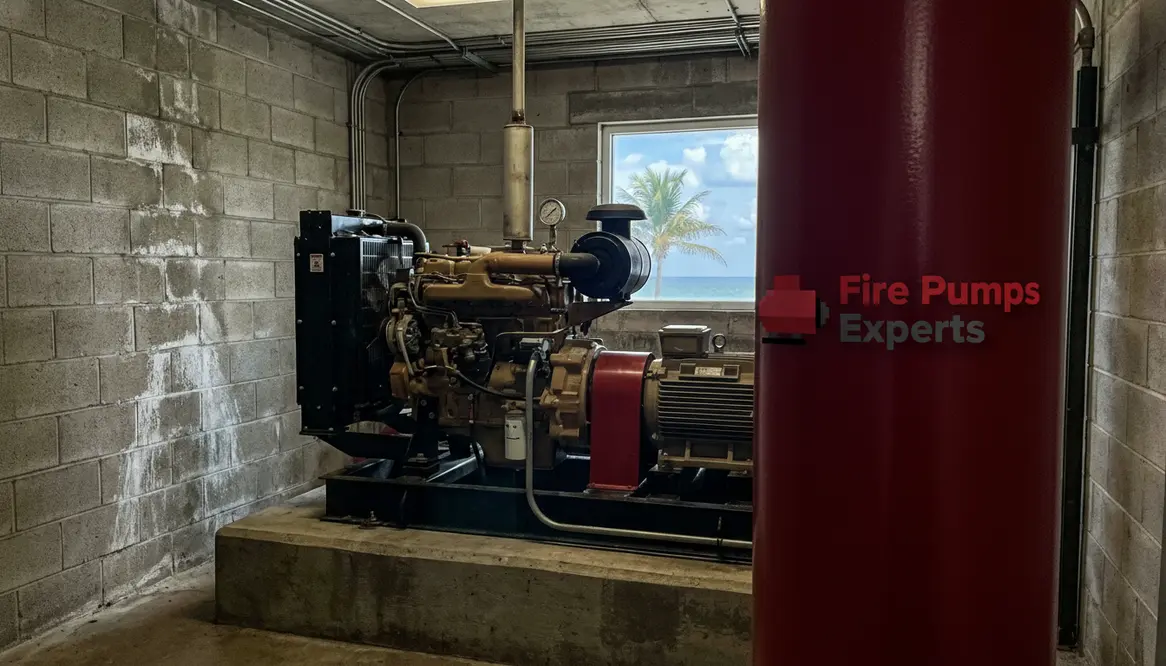
Miami Coastal Building Fire Pump Requirements Guide
How coastal conditions, hurricanes, and high-rise design shape the way serious facilities think about fire pumps in Miami.
I have spent many years around pump rooms that hum like a quiet engine room on a ship. And in Miami, that comparison is not far from the truth. Coastal buildings live with water on every side. Sometimes it comes as humidity, sometimes as storm surge, and sometimes as the simple reality of building in one of the most dynamic coastal environments in the country.
That is exactly why miami coastal building fire pump requirements matter so much for commercial towers, hospitals, warehouses, and large industrial facilities. These systems do far more than push water through pipes. They create a dependable safety backbone for properties that must operate through storms, flooding risks, and intense fire protection demands. And if you think of them as the quiet guardians of a building, well… you would not be wrong.
Today, I want to walk you through how fire pump systems work in Miami’s coastal landscape, why they are different from inland installations, and what property owners of major facilities should understand before the next hurricane season knocks on the door.
Why Coastal Buildings in Miami Need Specialized Fire Pump Systems
Miami is beautiful. Palm trees sway, the ocean sparkles, and somewhere nearby someone is always filming a music video. However, coastal beauty comes with engineering challenges that make fire protection planning far more serious than in most cities.
Salt Air, Corrosion, and Mechanical Fatigue
First, salt air attacks mechanical systems. Over time, corrosion becomes a quiet enemy that weakens pipes, valves, and pump housings. Therefore, commercial properties near the coast must install equipment built for marine level durability to stay ahead of the environment instead of constantly fighting it.
Flooding Risk and Pump Room Location
Second, flooding risk changes how pump rooms are designed. A fire pump that sits below grade in a flood prone district is a bit like parking your sports car in a tidal pool. Eventually something goes wrong. Because of that, Miami codes and engineering standards often push pumps into elevated mechanical spaces or protected enclosures where storm surge and street flooding cannot easily reach them.
Wind, Water Pressure, and Redundancy
Finally, coastal wind events increase the importance of redundancy. When a storm passes through South Florida, municipal water pressure can fluctuate. Fire pumps ensure that high rise sprinklers and standpipes continue delivering reliable pressure even when city systems struggle, which is exactly what miami coastal building fire pump requirements are built to address.
In short, coastal fire protection is not just about fire. It is about resilience.
Miami Coastal Building Fire Pump Requirements Explained Simply
When property managers ask me about miami coastal building fire pump requirements, they often expect a dense stack of code books and complicated engineering diagrams. Those exist, of course. However, the core ideas are surprisingly straightforward.
The systems must deliver reliable water pressure to fire protection systems under the worst possible conditions.
Four Principles Behind Reliable Coastal Fire Pump Systems
- Dedicated fire pump rooms
Large facilities must isolate pumps in rooms designed to resist fire exposure and flooding. These spaces include drainage systems, ventilation, and protected electrical supplies. - Redundant power sources
Diesel driven pumps remain common in coastal facilities because they operate even if electrical service fails during storms. - Corrosion resistant materials
Salt heavy air requires stainless components, coated housings, and marine grade fittings to extend system life. - Performance testing and certification
Commercial systems must undergo routine flow testing and inspections to verify they meet pressure and flow demands required by fire codes.
Put simply, the goal is reliability under stress. Because when alarms activate in a 40 story building, nobody wants to hear the phrase “the pump might work.”
How Flood Risk Changes Fire Pump Design in Major Facilities
Flood risk adds a fascinating twist to fire protection engineering. It forces designers to think like both firefighters and coastal engineers.
Elevation and Pump Protection
First, elevation becomes critical. Many large Miami properties now install pump assemblies above known flood levels. This design prevents saltwater intrusion that could disable motors or controllers and fits squarely within practical miami coastal building fire pump requirements for resilience.
Drainage and Emergency Access
Next, drainage planning becomes extremely detailed. Pump rooms often include trench drains and sump systems capable of removing water quickly. Otherwise, one heavy storm could turn a mechanical room into a swimming pool. And while I enjoy a pool day as much as the next person, a fire pump definitely does not.
Finally, designers consider access during emergencies. Flooded streets cannot stop maintenance teams from reaching pump equipment. Therefore, facilities often incorporate protected access routes, elevated service corridors, and sealed electrical conduits.
These design choices transform the fire pump system into something closer to critical infrastructure than a simple mechanical component.
Key System Components Every Coastal High Rise Should Prioritize
Commercial towers and industrial complexes rely on several components working together. When designed correctly, they form a reliable fire suppression backbone that stays ready 24 hours a day.
Core Mechanical Elements
- Diesel or electric fire pump assemblies
- High capacity controllers
- Backflow preventers
- Pressure maintenance jockey pumps
- Seismically anchored pump bases
Environmental Protection Elements
- Flood protected pump rooms
- Corrosion resistant piping
- Independent ventilation systems
- Water tight electrical conduits
- Emergency fuel storage systems
Together, these elements allow large buildings to maintain constant pressure within their fire protection networks. And that matters because sprinklers at the top of a tall tower require enormous pressure to operate effectively.
Think of it like lifting water through dozens of floors. Gravity is stubborn. Pumps must be even more stubborn.
For owners who want to see how expert technicians handle pump testing, inspection, and maintenance, it is worth looking at a specialized fire pump service resource such as Kord Fire’s fire pump systems service page for an example of what comprehensive support can look like.
What Building Owners Often Overlook During Fire Pump Planning
Now here is where experience becomes valuable. I have seen many large property projects invest millions into architecture while quietly underestimating the complexity of fire protection infrastructure.
Maintenance, Testing, and “Out of Sight” Systems
One common oversight involves long term maintenance planning. Fire pumps must undergo regular testing that simulates real demand conditions. Without that testing, components can degrade silently. miami coastal building fire pump requirements may be met on day one, but if nobody keeps an eye on wear, corrosion, and performance data, that early compliance does not guarantee future reliability.
Room Placement and Access
Another issue involves room placement. Designers sometimes squeeze pump rooms into leftover spaces deep within parking structures. While that might look efficient on paper, it often complicates flood protection and emergency access. When technicians need to troubleshoot a pump while water is pushing into the building, every extra turn in a parking ramp feels like a design mistake.
Power Reliability and Backup Strategies
Then there is the power question. Electrical pumps work beautifully under normal conditions. However, Miami storms have a habit of rearranging power grids in dramatic fashion. Because of that reality, many major facilities still rely on diesel driven backup pumps, paralleling what you see in strict coastal design guidelines and practical interpretations of miami coastal building fire pump requirements.
If Hollywood ever makes a movie about building codes, this would be the suspenseful part. The audience would lean forward and whisper, “Did they install the backup generator?”
Are Fire Pump Systems Different for Waterfront Commercial Towers?
Yes. And the differences are more than cosmetic.
Waterfront structures face heavier corrosion exposure and higher flood probabilities. As a result, engineers typically strengthen materials, seal electrical systems, and elevate pump infrastructure so that breakers, controllers, and fuel supplies are not the first casualties of a rising tide.
Additionally, designers consider wind driven rain and storm surge. Pump controllers and fuel tanks must remain protected even during severe coastal storms, not only to meet miami coastal building fire pump requirements but to keep firefighters supplied with water and pressure during the worst hours of a hurricane.
Finally, large waterfront properties often coordinate fire pump performance with high capacity standpipe systems that serve multiple floors simultaneously during firefighting operations.
In other words, the closer you build to the ocean, the more carefully you must engineer your fire protection backbone.
FAQ About Fire Pump Systems in Miami Coastal Buildings
Keeping Miami’s Largest Buildings Protected
Fire pumps do not usually get the spotlight. Architects talk about glass facades, developers talk about skyline views, and tenants talk about location. Meanwhile, deep inside the building, a pump waits patiently for the moment it might be needed.
If you manage a commercial or industrial facility in South Florida, the right system design matters more than ever. Work with specialists who understand coastal engineering, code compliance, and the realities of operating large properties near the ocean. When the system is built correctly and supported according to miami coastal building fire pump requirements, it stands ready day and night to protect your building, your operations, and everyone inside.