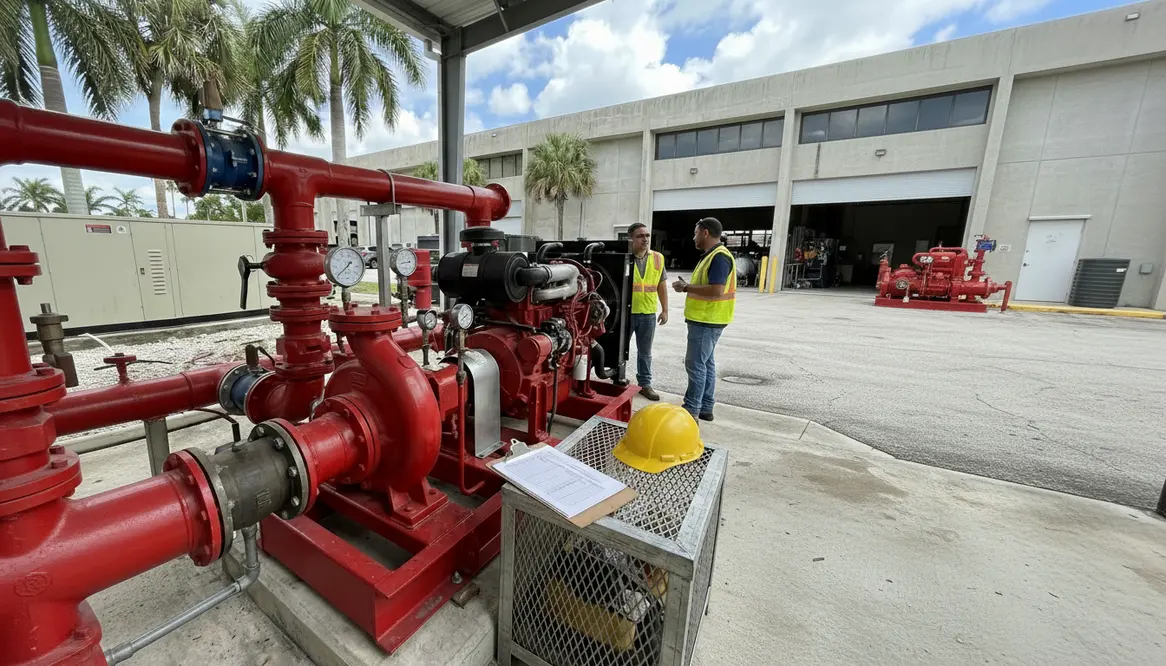
Miami Fire Pump Permit Process and Acceptance Tests
Miami moves fast. Towers rise, distribution centers expand, and large commercial facilities hum around the clock. Yet behind every polished lobby and humming warehouse sits a quiet guardian of life safety: the fire pump. And if you have ever worked through the fire pump permit process miami schedule acceptance tests manage delays maze, you know it is not exactly a beachside stroll.
I have walked this path with facility managers, engineers, and property owners across South Florida. The process involves paperwork, inspections, scheduling, coordination with authorities, and occasionally the patience of a Zen master. However, when handled correctly, the permitting journey becomes manageable. More importantly, it ensures the fire protection systems inside large commercial and industrial buildings actually perform when lives and assets depend on them.
So today, I will walk you through the reality of permitting, acceptance testing, and delay management in Miami. Think of it less like a bureaucratic nightmare and more like assembling a very important puzzle. Except the puzzle involves inspectors, pumps, diesel engines, and sometimes a scheduling calendar that behaves like it has a personal vendetta against you.
Understanding the Fire Pump Permit Process Miami Schedule Acceptance Tests Manage Delays
Let me start with the truth most project teams discover halfway through construction. Fire pump permits in Miami are not a single step. Instead, they unfold as a sequence of approvals tied to strict life safety codes.
For large commercial buildings, industrial facilities, and major property complexes, the process typically involves coordination between several groups.
- Mechanical and fire protection engineers
- Local building departments
- Fire marshals and inspectors
- Contractors responsible for installation
- Third party testing agencies
First, the design must meet NFPA standards and Miami Dade requirements. Next comes plan review. After approval, installation begins. However, the real moment of truth arrives during acceptance testing.
That test proves the pump can deliver the required pressure and flow under real conditions. In other words, it answers a simple question. If the worst happens, will this system actually work?
Because of that, inspectors take these tests seriously. And honestly, they should. A fire pump inside a high rise or distribution center is not decorative equipment. It is the difference between controlled suppression and catastrophic loss.
How Do I Schedule Fire Pump Acceptance Tests in Miami Without Losing My Mind?
Let us address the question I hear from property managers more than almost anything else.
How do I schedule fire pump acceptance tests in Miami without triggering a small existential crisis?
The key lies in timing and coordination. Acceptance testing usually requires multiple parties present at the same time. That includes the contractor, the pump technician, the inspector, and sometimes the fire department.
Consequently, scheduling becomes a delicate dance.
First, the installation must be fully complete. That means electrical connections, controller configuration, fuel supply for diesel units, and suction and discharge piping all ready to operate.
Second, the testing equipment must be on site. For major commercial properties, technicians often connect hoses to flow water through calibrated test headers or flow meters.
Third, documentation must already be prepared. Inspectors want to see design drawings, pump curves, and manufacturer data.
However, the real trick is booking the inspection window early. Miami inspectors have schedules that fill quickly. Waiting until the last moment can push testing back weeks.
And let me tell you something from experience. Construction schedules treat delays like dominoes. One falls, then suddenly everyone is scrambling.
It reminds me of that scene in Apollo 13 where engineers dump random parts on a table and say, “We have to make this fit into the hole for this.” Except in our case, the parts include inspectors, contractors, and a fire pump roaring to life at 3,000 gallons per minute.
Why Delays Happen During Fire Pump Permitting and Testing
Even well organized projects experience setbacks. The difference between chaos and control lies in anticipating the common trouble spots.
Several issues tend to slow the permitting and testing process for commercial and industrial facilities.
- Incomplete documentation submitted during plan review
- Installation deviations from approved drawings
- Electrical controller configuration errors
- Fuel supply problems for diesel pumps
- Unavailable inspectors during peak construction periods
However, the most common problem is simple misalignment between project teams. One contractor believes the system is ready. Another still needs to finish wiring. Meanwhile, the inspector arrives and discovers the pump cannot run.
And that moment feels a bit like inviting Gordon Ramsay into a kitchen before the stove is installed.
As a result, the inspection fails, the calendar resets, and the schedule shifts again.
For major commercial buildings, those delays can affect occupancy approvals, insurance requirements, and final construction timelines. That is why experienced teams treat acceptance testing like a production event rather than a casual appointment.
Managing Inspection Timelines for Large Commercial and Industrial Facilities
When I guide facility teams through this process, I focus on preparation long before inspectors arrive.
Think of it as rehearsing before opening night. Because when the pump starts, everything should work the first time.
Preparation Strategy
Technical Readiness
- Confirm controller programming
- Verify pump rotation and priming
- Inspect pressure relief valves
- Check diesel fuel levels and batteries
- Ensure test header piping is secure
Administrative Readiness
- Confirm inspector appointment times
- Prepare permit documentation
- Have pump curves and specifications ready
- Ensure contractor and technician availability
- Review inspection checklist beforehand
Once these items align, acceptance testing moves much smoother. Inspectors appreciate organized teams, and more importantly, they see that the building owner takes fire protection seriously.
And when a fire pump starts perfectly during the test run, there is a quiet moment of satisfaction. The gauges rise. Water flows. The inspector nods.
In that moment, all the scheduling emails and permit paperwork finally feel worth it.
Keeping the Fire Pump Permit Process Miami Schedule Acceptance Tests Manage Delays on Track
Now let us talk about the bigger picture. Managing the fire pump permit process miami schedule acceptance tests manage delays path requires more than reacting to problems. It requires steering the process from the beginning.
For large commercial buildings and industrial facilities, I always recommend three guiding principles.
Start Coordination Early
Fire pump systems interact with electrical infrastructure, water supply, alarms, and suppression systems. Therefore, early coordination prevents late surprises and keeps the entire fire pump permit process miami schedule acceptance tests manage delays path from spiraling out of control.
Bring Specialists Into the Conversation
Experienced fire pump technicians understand testing requirements and code expectations. Their insight often prevents costly rework, shortens scheduling headaches, and keeps the fire pump permit process miami schedule acceptance tests manage delays chain moving forward instead of backward.
Treat Acceptance Testing as a Milestone
Construction teams often focus on structural completion. Yet life safety approvals determine whether a building can legally operate. When acceptance testing is treated as a major milestone, the fire pump permit process miami schedule acceptance tests manage delays cycle becomes a coordinated plan instead of a last minute scramble.
When teams adopt that mindset, everything changes. Instead of scrambling near project completion, they approach inspections with confidence.
And trust me, confidence during a Miami inspection feels pretty good.
FAQ About Fire Pump Permits and Acceptance Testing in Miami
Below are some of the most common questions project teams ask when planning fire pump permits and acceptance testing in Miami.
Final Thoughts and the Path Forward
The truth is simple. Fire pumps protect people, property, and business continuity. Yet navigating permits, scheduling acceptance tests, and managing delays requires experience and steady coordination. If your commercial or industrial facility in Miami is approaching installation or inspection, partnering with a full service fire protection provider such as Kord Fire\u0027s fire pump services team can help you learn from real world performance issues and avoid common design or maintenance mistakes that lead to costly rework.
Instead of treating the process as a one time administrative hurdle, view it as an investment in the longterm reliability of your building. Clear documentation, early coordination, and a structured approach to acceptance testing make the entire journey smoother. The result is a fire pump system that not only passes inspection, but also stands ready for the moment it is truly needed.
With the right planning and support, the maze of permits, schedules, and tests becomes a path you can confidently manage rather than endure.