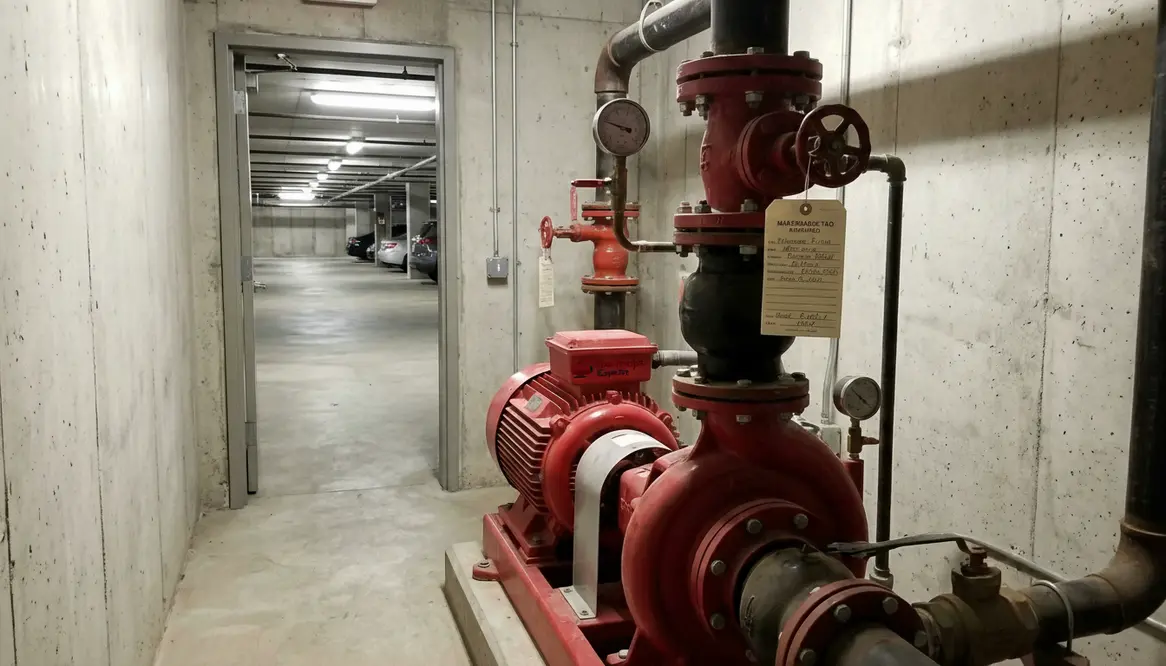
Multifamily Podium Fire Pump Systems Guide
I have spent years walking through buildings that carry lives above and risk below. And when residential units sit above parking, the stakes rise quietly but significantly. That is where multifamily podium fire pump systems step in, not as a luxury, but as a necessity. These systems do more than push water. They create time, and in fire protection, time is everything. So today, I will walk you through what really matters in these structures, with a steady hand and just enough humor to keep us both awake.
Why podium buildings change the fire protection game
When people live above a parking structure, we introduce a layered risk. Vehicles bring fuel loads, ignition sources, and unpredictable human behavior. Meanwhile, residents above expect safety to be seamless and invisible.
Because of that, I always look at podium construction as two worlds stacked together. The lower level behaves like a commercial hazard, while the upper floors resemble residential occupancy. Therefore, the fire pump must serve both realities at once.
And yes, cars do not plan to catch fire. But then again, neither did the Death Star.
Two occupancies, one fire pump
Podium projects tie commercial-like hazards to residential life safety expectations. multifamily podium fire pump systems have to satisfy both: higher parking demand and consistent, code-compliant coverage upstairs.
That combination means the pump is not just a box in a room. It is a risk management tool that quietly stands between a nuisance incident and a catastrophic one.
How do I size a fire pump for residential over parking?
I start with demand, not guesswork. First, I calculate sprinkler system requirements for both the parking level and the residential floors. Parking areas often require higher densities due to fuel loads, while residential levels may follow lighter design criteria.
However, the real trick is in combining them. The pump must meet the most demanding scenario without hesitation. That means accounting for standpipes, hose allowances, and elevation losses.
Additionally, I consider pressure zones. Taller podium structures often need zoning or pressure regulating devices. Otherwise, you risk overpressurizing upper floors or starving lower ones.
In short, the pump must be strong enough to handle the worst day, not the average Tuesday.
Designing for the “worst day”
multifamily podium fire pump systems live or die on worst-case math. Combined sprinkler and standpipe demand, elevation, and friction losses must be satisfied with margin, not wishful thinking.
If the design only works on paper, it will fail when smoke and heat rewrite the script. Solid hydraulics today prevent very public lessons later.
multifamily podium fire pump systems in real world design
Designing these systems is not just about numbers on paper. It is about how water moves through a building under stress.
For example, I always think about reliability first. That means dual power sources when required, proper controller placement, and easy maintenance access. Because when a system fails, it never sends a polite warning email.
Then there is layout. Parking levels often have wide open spans, while residential floors are compartmentalized. Therefore, sprinkler distribution changes drastically between levels.
Also, coordination with other systems matters. Fire alarms, ventilation, and emergency power all play a role. When these systems work together, the building behaves like a well rehearsed orchestra. When they do not, it is more like a middle school band concert.
Key components I never compromise on
Water Supply
Reliable supply is non negotiable. I verify municipal flow and always plan for worst case demand.
Pump Type
Electric pumps are common, but diesel adds resilience where power reliability is a concern.
Controllers
Smart controllers provide monitoring and diagnostics, which helps catch problems early.
Redundancy
Backup systems reduce failure risk. Because one point of failure is one too many.
Each component plays a role, but together they form a system that must perform instantly. No warm up. No second chances.
Common design mistakes that quietly create risk
I have seen projects where the pump was technically compliant but practically flawed. That is a dangerous place to be.
- First, undersizing happens more often than people admit. Designers sometimes underestimate combined demand, especially when parking hazards increase requirements.
- Next, poor coordination between trades leads to routing conflicts. Pipes get rerouted, friction loss increases, and suddenly the pump struggles to keep up.
- Then there is maintenance access. If technicians cannot reach the equipment easily, inspections get delayed. And delayed maintenance is like ignoring a check engine light. It never ends well.
- Finally, overlooking future expansion can create limitations. Buildings evolve, and your system should be ready for that.
multifamily podium fire pump systems and long term performance
A system is only as good as its upkeep. So I always emphasize lifecycle thinking from day one.
Routine testing ensures the pump performs under real conditions. Weekly churn tests, annual flow tests, and regular inspections keep everything honest.
Additionally, data monitoring is becoming more common. With the right tools, facility managers can track performance trends and address issues before they escalate.
And let us be honest, prevention is far less dramatic than emergency response. It is also much cheaper.
multifamily podium fire pump systems reward disciplined testing, record keeping, and clear ownership. When everyone knows who is responsible, systems age gracefully instead of becoming mechanical mysteries in forgotten rooms.
FAQ
Conclusion
If you are planning or upgrading a building where people live above parking, now is the time to get your fire protection right. I encourage you to work with specialists who understand the demands of large commercial and mixed use structures. At https://firepumps.org, we focus on performance, reliability, and long term value. Reach out today, and let us build a system that works when it matters most.