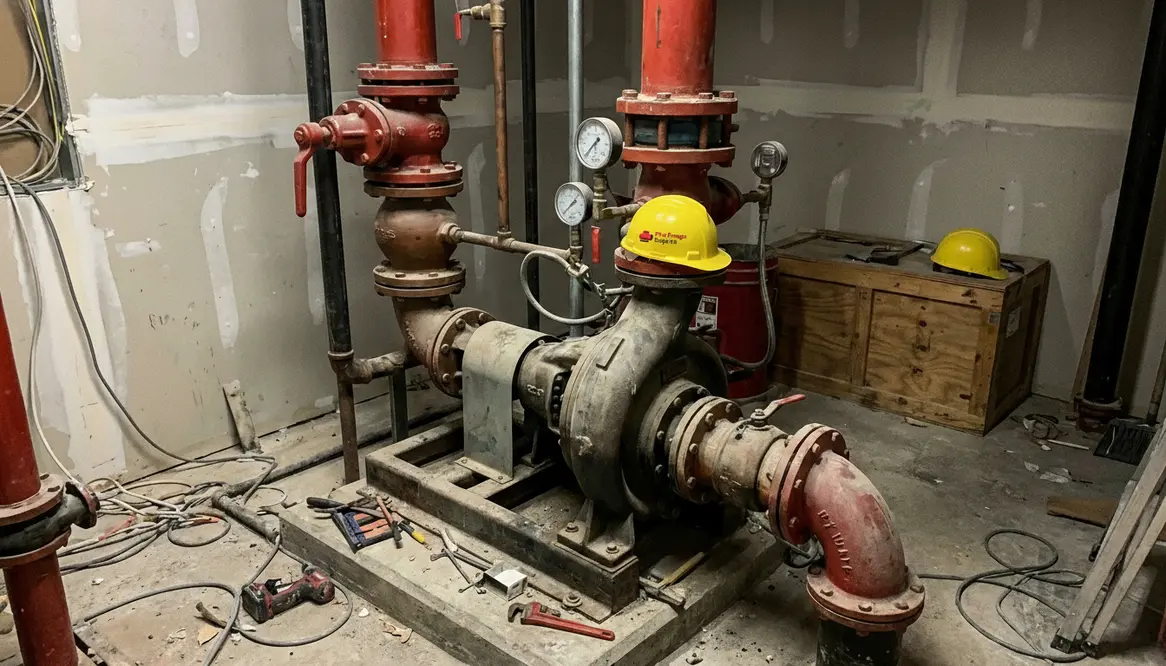
Older Commercial Building Fire Pump Upgrades
A practical guide to upgrading critical fire protection while the renovation dust is already in the air.
I have walked through more mechanical rooms than I care to count, and I can tell you this with calm certainty: ignoring your older commercial building fire pump needs is a bit like ignoring a check engine light on a long road trip. It may stay quiet for a while. Then one day, it does not. Renovation projects are the perfect moment to address these systems, not as an afterthought, but as a central piece of life safety. After all, when things heat up, you want more than hope on your side.
Why your pump matters more during renovation
Renovation is when walls move, loads change, and systems are exposed. It is also when your older commercial building fire pump needs finally step out of the shadows and demand attention.
Why Renovations Expose Hidden Fire Pump Problems
When I step into a renovation site, I do not just see new walls and fresh finishes. I see pressure changes, altered layouts, and systems that were never designed for today’s demands. As a result, fire pumps often fall behind quietly.
Moreover, many older commercial properties were built under different codes. While those systems may still function, they may not meet current safety expectations. That gap matters. A lot.
In addition, renovations often increase occupancy or change building use. That means higher water demand. And yes, your existing pump might look strong, but looks can be deceiving. Like that one actor who keeps playing a teenager well into their forties.
What should I evaluate first in a fire pump upgrade?
I always start with three things: capacity, reliability, and compliance. If one of those falters, the entire system becomes a liability.
Capacity
Capacity comes first. Can the current pump meet the updated flow and pressure requirements? If not, no amount of wishful thinking will fix it.
Reliability
Reliability follows closely. Older pumps may still run, but worn components increase the risk of failure when it matters most.
Compliance
Compliance ties it all together. Codes evolve, and renovation triggers review. Therefore, aligning your system with current standards is not optional. It is essential.
Older Commercial Building Fire Pump Needs and System Compatibility
Now, let us talk about compatibility, because this is where things get interesting. When upgrading systems in older facilities, you rarely get a clean slate. Instead, you work with what is already there.
For example, your existing piping network may not support a higher capacity pump. Additionally, electrical infrastructure might struggle with modern equipment demands. Therefore, I always assess the entire ecosystem, not just the pump.
Here is how I typically break it down:
Existing System
- Pipe sizing limitations
- Aging valves and fittings
- Outdated controllers
Upgrade Considerations
- Hydraulic recalculations
- Controller modernization
- Electrical capacity review
Consequently, the goal is not just replacement. It is integration. And when done right, the system feels less like a patchwork and more like a well conducted orchestra.
Smart Design Choices That Save Time and Headaches
I have learned that good design during renovation is like good storytelling. Everything connects, and nothing feels forced.
Accessibility
First, I prioritize accessibility. Fire pumps tucked into impossible corners may look neat on paper, but maintenance teams will not thank you later. Trust me on that.
Redundancy
Next, I focus on redundancy where appropriate. In larger commercial and industrial properties, a backup strategy can mean the difference between a controlled event and a full scale disaster.
Future expansion
Then, I consider future expansion. Because if history has taught us anything, buildings evolve. And your fire protection system should not hold you back.
Besides, no one wants to rip open freshly renovated walls because someone said, “We will deal with that later.” Famous last words.
Balancing Cost, Compliance, and Long Term Value
Let us address the elephant in the room. Budget. Renovations are already expensive, and fire pump upgrades can feel like a heavy addition.
However, cutting corners here is a risky gamble. While a lower upfront cost might look appealing, long term maintenance issues and compliance failures often cost far more.
Instead, I recommend a balanced approach:
- Invest in high efficiency, code compliant equipment
- Plan for lifecycle maintenance, not just installation
- Work with specialists who understand complex commercial systems
As a result, you gain reliability, avoid costly surprises, and protect both property and people. And that is a return on investment that never goes out of style.
FAQ: Fire Pump Considerations for Renovation Projects
Conclusion: Build It Right While the Walls Are Open
Renovation gives you a rare opportunity to get ahead of your older commercial building fire pump needs instead of reacting to them. I encourage you to take a thoughtful approach, invest in the right solutions, and partner with experts who understand large scale systems. When you do, you are not just upgrading equipment. You are building confidence, safety, and resilience into the very bones of your property. And that is a legacy worth leaving behind.
If you are unsure where to begin, reviewing guidance and resources from organizations like https://firepumps.org can help frame the questions you bring to your design and construction team.