Orlando Retail Center Fire Pump Requirements Guide
Walk through any large retail center in Orlando on a Saturday afternoon and you will see a small city in motion. Families wander through stores, delivery trucks hum in the back corridors, and somewhere behind the scenes sits a quiet piece of equipment that most shoppers will never notice. The fire pump. Yet when I talk with property managers about orlando retail center fire pump requirements, the mood shifts from casual to serious pretty quickly. After all, one well designed fire pump system can mean the difference between a small incident and a disaster that shuts down an entire commercial complex.
So today I want to walk through what really matters for large retail facilities in Orlando. Not the dry, checkbox version you might hear in a code seminar. Instead, I will explain how these systems work, why the rules exist, and how smart property owners stay compliant without losing sleep or their operating budgets. And yes, we might even crack a few jokes along the way because fire safety does not have to feel like a lecture from your high school principal.
Understanding Orlando Retail Center Fire Pump Requirements
When I evaluate a major retail property in Orlando, the first thing I look at is demand. Large retail complexes consume enormous amounts of water during a fire event. Sprinkler systems, standpipes, and sometimes exterior hydrants all pull from the same supply.
However, city water pressure alone often cannot meet that demand. That is where the fire pump enters the story.
Orlando follows Florida Fire Prevention Code along with NFPA 20, the national standard governing fire pumps. Together, these regulations establish how pumps must be designed, installed, tested, and maintained in commercial environments.
Key drivers in large retail compliance
For large retail centers, several factors immediately shape compliance.
- High sprinkler demand. Large floor areas require heavy water flow.
- Multi tenant occupancy. Dozens of businesses increase risk exposure.
- Long pipe runs. Large buildings reduce pressure without pump assistance.
- Insurance requirements. Many insurers demand verified fire pump performance.
Because of these realities, most large retail complexes rely on diesel or electric fire pumps capable of delivering hundreds or even thousands of gallons per minute.
And yes, those pumps must run reliably when the worst possible moment arrives. Fires rarely schedule themselves for convenient times. They love weekends, holidays, and grand openings.
Why Large Retail Centers Require Higher Pump Capacity
Retail centers operate differently than warehouses or office buildings. The layout alone introduces challenges. Wide storefronts, open ceilings, decorative displays, and constantly changing inventory all affect sprinkler demand.
Consequently, the fire pump must compensate for these variables.
Anchor stores, amenities, and hydraulic demand
Large anchor stores alone may require extremely high water flow. Add food courts, theaters, and service corridors, and the hydraulic demand climbs quickly. Without a properly sized pump, sprinkler systems may not deliver the pressure needed to control a fire.
Let me put it this way.
If sprinklers are the firefighters inside the building, the fire pump is the caffeine in their coffee. Without it, they simply do not move fast enough.
Shared infrastructure and future expansion
Additionally, Orlando retail complexes often include multiple buildings connected through shared water infrastructure. Therefore engineers must account for simultaneous system demand. A pump that serves one structure today might need to support several tomorrow if the property expands.
Forward thinking design matters. Otherwise you may find yourself upgrading the system after construction, which is about as fun as rebuilding your car engine during rush hour.
What Do Orlando Inspectors Look For During Fire Pump Compliance Reviews?
When inspectors walk into a commercial fire pump room, they are not just glancing at the shiny red equipment. They are evaluating performance, accessibility, and reliability.
Clearances and access
First, they verify the pump installation meets NFPA clearance rules. Fire pump rooms must provide enough space for maintenance and emergency access. If technicians cannot reach components quickly, response time suffers.
Power reliability and emergency operation
Next comes power reliability. Electric pumps require dedicated power feeds and backup arrangements. Meanwhile diesel pumps must maintain fuel supply and ventilation. Either way, the system must operate even if the building loses normal power.
Testing records and alarms
Testing records also matter. Orlando authorities expect routine performance testing to confirm pumps deliver rated flow and pressure. These tests are not optional paperwork exercises. They verify that mechanical components actually work under load.
Finally, inspectors review alarm and monitoring connections. Fire pump operation must trigger signals that notify the fire alarm system and monitoring center. When a pump starts unexpectedly, someone needs to know immediately.
Think of it like the check engine light in your car. Except in this case the vehicle weighs 400 tons and holds a mall full of people.
Critical Components Every Retail Fire Pump System Needs
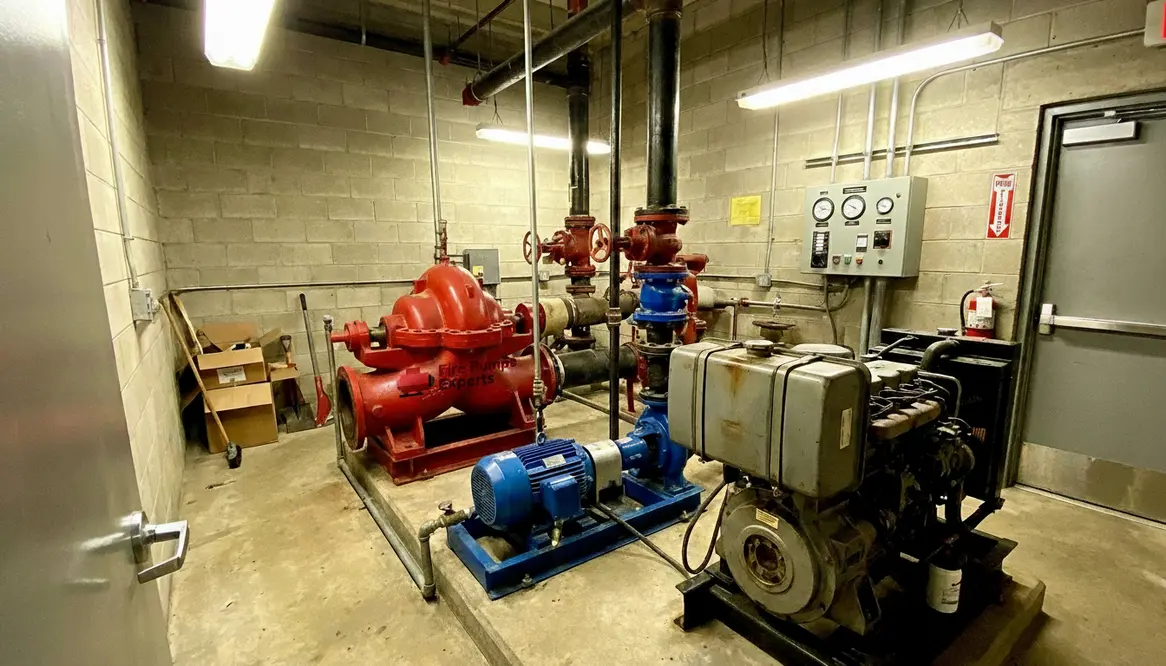
Although every property has unique engineering details, most retail center fire pump installations share several essential components. Each plays a role in keeping water moving during a fire emergency.
Primary pump and controls
Primary Pump Unit
The heart of the system. This pump provides the pressure and flow necessary to support sprinkler and standpipe demand.
Controller Panel
The controller manages automatic startup, monitoring, and alarm communication.
Jockey Pump
This smaller pump maintains pressure in the system and prevents the main pump from cycling unnecessarily.
Support systems and testing
Backflow Prevention
Protects municipal water supply from contamination while maintaining required flow.
Test Header
Allows technicians to perform flow testing and verify system performance.
Fuel or Power Supply
Diesel tanks or dedicated electrical feeds ensure operation during emergencies.
Together, these components create a reliable firefighting infrastructure that operates automatically when needed.
And unlike your office coffee machine, these systems are not allowed to mysteriously break every Monday morning.
Design Strategies That Meet Orlando Retail Center Fire Pump Requirements
Meeting orlando retail center fire pump requirements starts long before installation. In fact, successful projects begin during early design planning.
Hydraulic modeling and pump selection
I always recommend hydraulic modeling first. Engineers calculate sprinkler demand across the largest and most remote areas of the property. Then they evaluate municipal water supply to determine how much additional pressure the fire pump must provide.
Next, designers select pump types based on building needs. Electric pumps work well when reliable utility power exists. However, diesel pumps often appear in large retail centers because they operate independently of electrical infrastructure.
Location, resilience, and long term planning
Location also matters. Fire pump rooms should remain accessible to fire department crews while staying protected from flooding and structural hazards. Orlando properties occasionally face severe storms, so smart design accounts for environmental risk.
Finally, long term maintenance planning must be part of the strategy. Pumps require weekly churn tests and annual performance verification. If access or testing connections are poorly designed, routine maintenance becomes difficult.
And trust me, anything that makes maintenance harder will eventually come back to haunt the property owner.
If you want to see what comprehensive fire pump service looks like in action, take a look at how specialized providers handle inspections, testing, and maintenance at https://kordfire.com/fire-pump/. It is a helpful reference point when you are comparing service expectations for orlando retail center fire pump requirements.
Maintenance Realities for High Traffic Commercial Properties
Large retail centers operate almost nonstop. That constant activity makes fire pump maintenance especially important.
Weekly checks and annual flow tests
Weekly inspections confirm that controllers function properly and that pumps start automatically. Technicians also check fuel levels, valve positions, and system pressure readings.
Additionally, annual flow tests push the pump to full capacity to verify performance under real conditions. These tests simulate emergency demand and reveal issues that smaller inspections might miss.
Managing disruption in a live retail environment
Retail property managers sometimes worry these procedures will disrupt business operations. Fortunately, experienced technicians coordinate testing schedules to minimize impact.
After all, shoppers come to buy shoes and electronics. They do not expect to witness a surprise engineering demonstration in the parking lot.
Still, consistent maintenance protects the investment and ensures the system works exactly when needed. When you are chasing full compliance with orlando retail center fire pump requirements, those inspection reports become just as valuable as your lease agreements.
FAQ About Fire Pumps in Orlando Retail Centers
Protect Your Property Before the Emergency Happens
Large retail centers run on precision, coordination, and preparation. Fire protection should follow the same philosophy. If your property needs help navigating fire pump planning, testing, or compliance, our team specializes in fire protection systems for major commercial and industrial facilities. We help owners meet code requirements, maintain reliable equipment, and keep operations running safely. Reach out today and let us make sure your fire pump system is ready long before anyone ever needs it.