
Denver High Altitude Fire Pump Systems Guide
Designing reliable fire pumps a mile above sea level is part science, part art, and entirely unforgiving when you get it wrong.
I have spent years walking mechanical rooms in tall office towers, distribution centers, hospitals, and manufacturing plants across Colorado. The first thing I usually notice is the altitude. At 5280 feet above sea level, Denver changes how water moves, how engines breathe, and how fire protection systems perform. That is exactly why denver high altitude fire pump systems demand special attention in large commercial and industrial buildings.
At sea level, pumps behave one way. Up here in the Mile High City, physics politely taps you on the shoulder and says, “Not so fast.” Air pressure drops. Engines lose power. Water behaves differently inside long vertical piping runs. Because of that, designing reliable fire protection for major properties in Denver becomes both a science and an art. And honestly, if you do it right, the system quietly waits in the background like a good security guard. If you do it wrong, well… that is a story nobody wants to tell.
Why Elevation Changes Fire Protection in Denver
First, let me paint the picture. Fire pumps exist to deliver water at a pressure strong enough to push through miles of pipe, up dozens of floors, and out of sprinkler heads exactly when needed. However, Denver sits more than a mile above sea level. That altitude changes several mechanical realities.
For example, atmospheric pressure drops as elevation increases. Because of this, suction pressure entering a pump often starts lower than designers expect. Consequently, the pump must work harder to move the same amount of water.
Engines face their own challenge. Diesel driven fire pumps lose power at higher elevations because thinner air means less oxygen for combustion. I sometimes explain it like asking a marathon runner to perform at the top of a mountain while breathing through a coffee straw. They will still run. They just will not run the same way.
Additionally, Denver commercial buildings often climb vertically. Office towers, hotels, medical campuses, and distribution hubs push water through long pipe runs that multiply friction loss. Therefore, a fire pump system in a major property here must overcome both altitude effects and building height.
And yes, gravity still works in Denver. I checked.
How I Design Denver High Altitude Fire Pump Systems for Large Facilities
When I work on denver high altitude fire pump systems for commercial and industrial properties, I start with one guiding idea. The pump must perform during the worst possible moment, not during an easy test day when everyone is sipping coffee.
So I focus on several design adjustments.
1. Correct horsepower adjustments
Diesel engines lose roughly three percent of power for every thousand feet of elevation. Denver sits over five thousand feet above sea level. Therefore, engines can lose more than fifteen percent of their rated strength. Because of that, I specify engines with increased horsepower so they can still meet flow demand during a fire event.
2. Suction supply analysis
Water supply conditions vary across Denver. Some districts provide strong municipal pressure, while others rely on storage tanks or combined supplies. Consequently, I examine suction pressure carefully to prevent cavitation, which can damage a pump faster than a superhero punching drywall.
3. Pressure zoning for tall buildings
High rise commercial towers require pressure zones to control water force across many floors. Without zoning, lower levels might experience dangerously high pressure. Meanwhile upper floors could starve for water. Smart zoning keeps everything balanced.
4. Controller calibration
Controllers must react quickly to pressure drops. However, in high altitude environments I verify sensor accuracy and start sequences carefully so the system engages smoothly and avoids pressure spikes.
All of this sounds technical. And it is. Still, when the system finally runs during acceptance testing and water roars through the discharge header like a freight train, I always smile a little. That sound means the building is ready.
What Happens to Fire Pumps at 5280 Feet?
This question comes up constantly when property owners, engineers, or facility managers evaluate protection systems. The short answer is simple. Altitude reduces performance if you do not compensate for it.
But let us break it down clearly.
High Altitude Challenges
- Lower atmospheric pressure reduces suction conditions
- Diesel engines lose horsepower
- Large vertical piping increases friction loss
- Pressure control becomes more sensitive in tall structures
- Municipal supply pressure can fluctuate across districts
Engineering Solutions I Apply
- Oversized or adjusted pump horsepower ratings
- Altitude corrected diesel engines
- Detailed hydraulic calculations for vertical systems
- Pressure reducing valves and zoned risers
- Backup water storage for large campuses
Because of these adjustments, properly designed systems perform just as reliably as those at sea level. In fact, once calibrated, many Denver pump installations operate with impressive stability. Think of them as mountain athletes. They train at altitude, so when the moment arrives, they are ready.
Components That Matter Inside High Rise and Industrial Pump Rooms
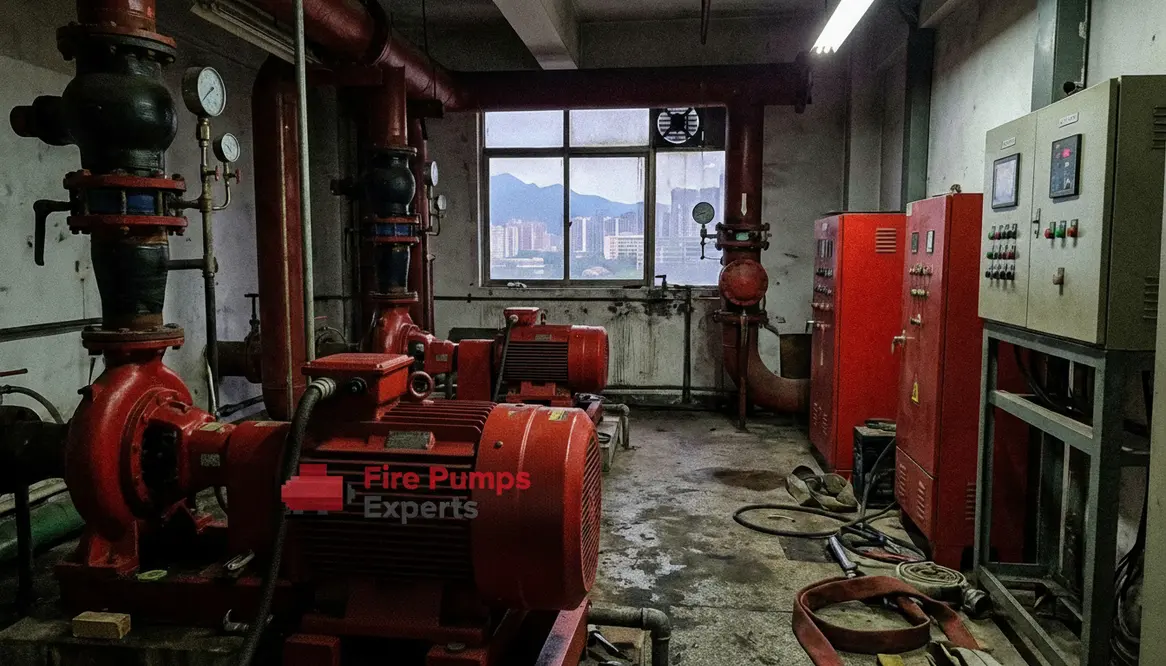
Whenever I walk into a pump room in a major facility, I see more than a single machine. A dependable fire protection system depends on a network of components working together in perfect timing.
The pump assembly
The heart of the system. Whether electric or diesel driven, the pump must deliver the required gallons per minute at the correct pressure for the building hazard classification.
The driver
In Denver commercial facilities, diesel drivers often appear because they operate during power outages. However, electric motors also serve many buildings with reliable utility infrastructure.
Controllers and sensors
These units monitor system pressure and automatically start the pump during a drop. Precision matters here. Even small calibration errors can delay activation.
Relief valves and pressure control
High rise buildings can develop intense pressure near lower floors. Therefore, relief valves and regulating devices protect piping and sprinkler heads from excessive force.
Water storage and supply connections
Large campuses sometimes integrate dedicated tanks. These ensure adequate water supply even when municipal pressure fluctuates.
When all these parts align correctly, the system behaves like a well rehearsed orchestra. Nobody in the building notices it. And that is exactly the point.
Reliability Planning for Denver High Altitude Fire Pump Systems
Design is only half the story. Reliability keeps protection ready year after year. In my experience, the best denver high altitude fire pump systems combine smart engineering with disciplined maintenance.
First, weekly and monthly testing confirms pump start sequences and flow conditions. These tests reveal pressure drift, controller issues, or engine performance changes long before an emergency occurs.
Next, diesel engines require special attention at elevation. Air intake systems, fuel quality, and cooling performance must remain clean and balanced. Otherwise the engine may struggle during a full demand event.
In addition, facility managers should monitor suction pressure trends. Denver infrastructure continues to grow, and municipal supply conditions can change as new developments appear.
Finally, documentation matters more than people think. Clear records of flow tests, inspections, and repairs help engineers evaluate long term performance. They also help authorities verify compliance with fire codes and insurance requirements.
I like to say a fire pump is a little like Batman. It stays hidden most of the time. Yet when the signal lights up the sky, it better arrive instantly.
FAQ About Fire Pumps in Denver Commercial Buildings
The questions below come up constantly whenever owners and facility teams start asking about denver high altitude fire pump systems and what makes them different from standard installations.
Protecting Denver’s Largest Buildings
Designing dependable fire protection at altitude takes experience, careful calculations, and equipment built for the job. If you manage a high rise, hospital, manufacturing plant, or large commercial property, the performance of your pump system is not something to leave to guesswork. Our team specializes in evaluating, designing, and maintaining denver high altitude fire pump systems built for complex facilities.
If you are looking to upgrade your overall fire protection strategy alongside your pump work, explore how specialists handle advanced sprinkler technologies such as the self-retracting telescoping fire sprinkler solutions from Kord Fire Protection, then make sure your pump, risers, and distribution are designed to support that performance from the ground up.
Reach out to firepumps.org and let us help ensure your building stays protected when it matters most.