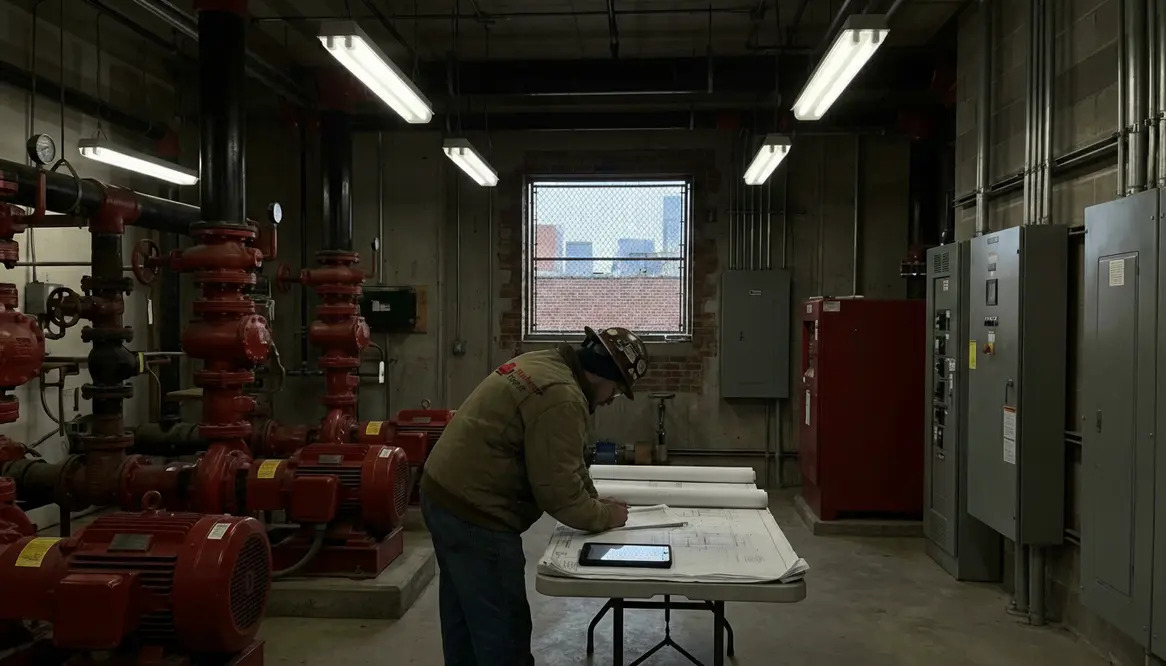
Philadelphia Fire Pump Permit Plan Review Tips
I have spent a good part of my career walking through mechanical rooms the size of small apartments, listening to the hum of pumps and the quiet anxiety of facility managers who just want their building approved without delays. If you manage a commercial tower, hospital campus, warehouse complex, or industrial facility, you already know the stakes are high. A delayed permit can stall construction schedules, insurance approvals, and even occupancy dates.
That is exactly why the topic of philadelphia fire pump permit plan review avoid corrections matters more than most people think. In Philadelphia, the permit and plan review process for fire pumps is thorough, technical, and sometimes… let us say enthusiastic about red ink. However, with the right preparation and understanding, those corrections can shrink dramatically. In fact, once you understand what reviewers expect, the process starts to feel less like a maze and more like a checklist. And honestly, I prefer checklists. They do not argue back.
Understanding the Philadelphia Fire Pump Permit Plan Review Avoid Corrections Process
First, let me paint the big picture.
Philadelphia requires a permit and plan review for fire pump installations in large commercial and industrial properties. This includes high rise office buildings, manufacturing plants, distribution centers, hospitals, universities, and multi building complexes. The goal is simple. The city wants to confirm the pump system can deliver the water pressure firefighters depend on when things go sideways.
However, plan reviewers are not simply glancing at drawings. They evaluate compliance with NFPA 20, Philadelphia Fire Code, hydraulic calculations, equipment specifications, and installation details. Consequently, even a small omission can trigger corrections.
I often tell property owners this simple truth. Reviewers are not trying to slow you down. They are trying to make sure the system works on the worst day imaginable. Once you accept that perspective, the process becomes far easier to navigate.
Still, many projects stumble during review. Why? Usually because the plans were rushed, incomplete, or copied from a different project with different building conditions. And believe me, reviewers notice. They have seen every shortcut in the book.
What Philadelphia Plan Reviewers Look For in Commercial Fire Pump Submissions
If I could sit every engineer and facility director down for ten minutes before submission, I would highlight the same core items.
Because when these pieces are clear, corrections drop dramatically.
- Accurate hydraulic calculations that match the building demand and sprinkler system requirements.
- Proper pump selection with manufacturer data sheets showing capacity and pressure curves.
- Complete pump room layout including clearances, access, and equipment spacing.
- Suction and discharge piping details that follow NFPA requirements.
- Controller and power supply information including emergency power where required.
- Test header and flow testing configuration that allows proper commissioning.
Additionally, reviewers often focus on pump room construction. Fire rated walls, drainage, ventilation, and access points all matter. I have seen projects corrected simply because the room door swing direction was not shown clearly.
Yes, a door. Sometimes compliance really does come down to the details.
Why Fire Pump Plans for Large Buildings Often Get Sent Back
Now let us talk about the most common trouble spots.
Many commercial and industrial projects receive corrections because the fire pump design was treated like a side task rather than a critical system. However, the pump is the beating heart of a sprinkler network. If the heart fails, the whole system struggles.
One major issue is mismatched information between drawings and calculations. For example, I have seen pump curves showing one capacity while the hydraulic calculations demand another. Reviewers catch that immediately.
Another frequent problem is incomplete pump room documentation. Plans might show the pump but not the electrical controller location, the relief valve discharge, or the test header piping route. Consequently, reviewers ask for clarification.
And then there is the classic copy and paste mistake.
Someone uses drawings from a different facility. Maybe a warehouse in New Jersey or a hotel in Ohio. Unfortunately, Philadelphia codes and building conditions do not always match those designs. Reviewers notice the mismatch quickly.
At that moment the project enters correction territory.
Not the end of the world. But certainly not the fast lane.
How I Prepare Plans to Pass Review the First Time
When I approach a fire pump permit submission, especially for a major commercial facility, I follow a deliberate sequence. Think of it as the difference between assembling furniture with instructions versus guessing and hoping the extra screws are decorative.
Design Preparation
- Confirm building hazard classification
- Verify water supply test results
- Match pump capacity to hydraulic demand
- Coordinate sprinkler and standpipe needs
- Review NFPA 20 equipment spacing
Submission Readiness
- Include manufacturer pump curves
- Show full pump room layout
- Detail suction and discharge piping
- Provide electrical and controller data
- Confirm test header location
Because each element supports the others, skipping one step invites problems later. Furthermore, I always review the submission from the perspective of the plan examiner. If something feels vague or unfinished, it probably is.
That mindset alone has saved countless rounds of corrections.
How to Prepare a Philadelphia Fire Pump Permit Plan Review Avoid Corrections Strategy
Large commercial properties benefit from a proactive approach long before the permit application goes out the door.
First, I recommend coordinating early with fire protection engineers, mechanical teams, and electrical designers. Fire pump systems intersect with all three disciplines. When those teams communicate clearly, design conflicts disappear.
Next, confirm the building water supply conditions through accurate flow testing. Without reliable data, pump sizing becomes guesswork. And guesswork rarely survives a plan review.
Additionally, I strongly encourage documenting the entire pump room in detail. Layout drawings should show clearances, service access, and piping orientation. This helps reviewers visualize the real world installation.
Finally, double check that every document aligns. Calculations, equipment data sheets, riser diagrams, and floor plans should all tell the same story.
When everything lines up, the submission reads like a well rehearsed orchestra rather than a group of musicians tuning their instruments. At that point, your own internal checklist for philadelphia fire pump permit plan review avoid corrections starts to feel less like a burden and more like insurance against schedule chaos.
FAQ About Philadelphia Fire Pump Permits
Before we get to a more formal checklist, here are quick answers to questions that come up constantly when people talk about philadelphia fire pump permit plan review avoid corrections strategies for complex sites.
Final Thoughts on Getting Your Fire Pump Approved
The path to philadelphia fire pump permit plan review avoid corrections is not mysterious. It simply demands careful preparation, accurate calculations, and detailed documentation. When those elements align, the review process becomes smoother and faster for major commercial properties, whether you are building a single high rise or an entire campus.
A practical way to pressure test your package is to imagine walking a reviewer through your submittal page by page. Do they have to guess where the test header discharges, how the emergency power feeds the controller, or whether the suction piping really meets NFPA 20? The more questions your documents answer without a phone call, the more likely your permit moves in a straight line instead of looping through corrections.
If your facility needs expert guidance preparing a compliant fire pump submission, you do not have to figure it out from scratch. Firms that live and breathe fire protection can help you coordinate disciplines, tighten your documentation, and build a repeatable philadelphia fire pump permit plan review avoid corrections checklist for future projects as well.
For example, full-service contractors like fire pump inspection and service specialists support everything from weekly churn tests to complex pump configurations, giving owners and design teams a clearer view of how their permit drawings translate into long-term reliability. When the real-world system is built on the same disciplined thinking as the plans, approvals come faster, inspections go smoother, and your building is far better prepared for the day the pumps are truly needed.