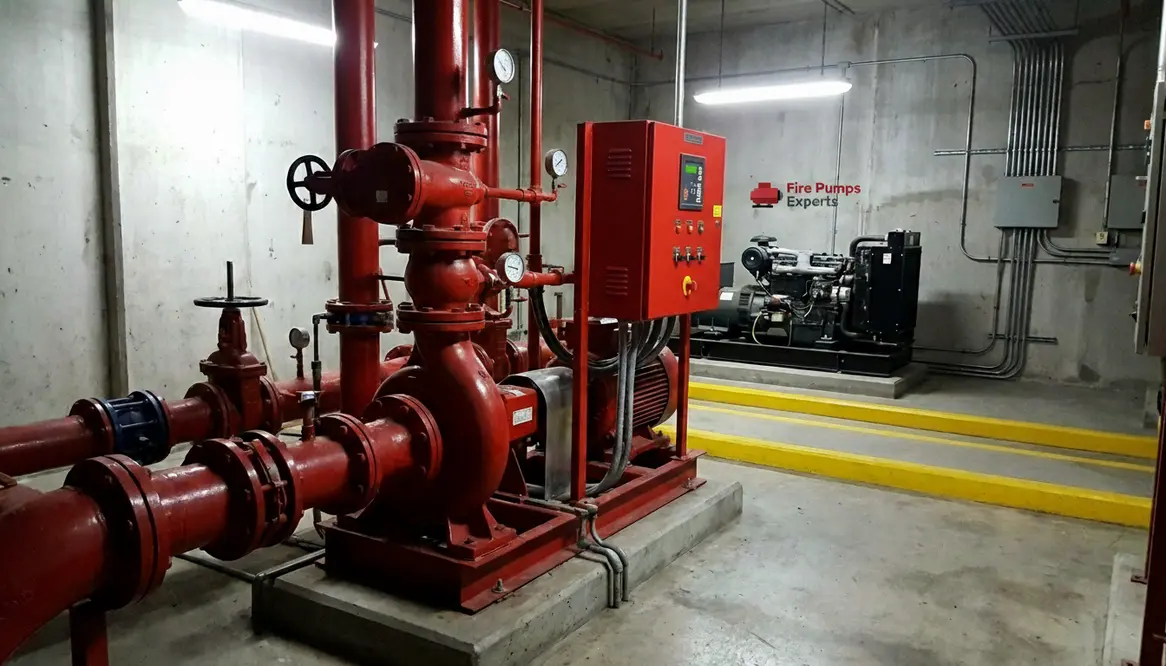
Residential Tower Fire Pump System Planning Guide
A practical, experience-driven guide to planning, placing, and maintaining residential tower fire pump systems so they perform when gravity and chaos are both working against you.
I have spent enough time around high rise properties to know one simple truth. Gravity is not your friend when fire breaks out on the 40th floor. That is exactly where residential tower fire pump systems step in, quietly waiting like a seasoned bodyguard who only moves when things go wrong. In tall residential buildings, fire protection is not just a code requirement. It is a carefully engineered lifeline that must perform without hesitation, without drama, and preferably without needing a Hollywood slow motion scene.
So today, I will walk you through fire pump planning for tall residential buildings. Think of this as less of a lecture and more of a calm conversation, with a few chuckles along the way.
In this guide, the spotlight is firmly on residential tower fire pump systems: how to size them, where to put them, how to power them, and how to keep them ready for the one day you hope never comes.
If you are responsible for a high rise, your fire pump is not just another piece of equipment. It is the quiet specialist on call 24/7, holding a very specific grudge against uncontrolled fire.
How do I plan fire pump capacity for a tall residential building
I always start with demand. Not wishful thinking, not best case scenarios, but real hydraulic demand. The height of the building drives pressure requirements, while occupancy and layout define flow.
First, I calculate the required gallons per minute for the standpipe and sprinkler systems. Then, I factor in elevation loss. Water does not like climbing stairs any more than we do. Every foot of vertical rise demands more pressure.
Next, I account for friction loss through piping. Even the best designed systems resist flow slightly. Therefore, I include a margin that ensures the fire pump delivers consistent pressure at the highest and most remote outlets.
Finally, I select a pump that comfortably exceeds these combined demands. Not barely meets. Exceeds. Because in fire protection, cutting it close is not a personality trait you want.
Translating building realities into pump numbers
For residential tower fire pump systems, I look at three realities:
- How high the water must travel to reach the top occupied floor
- How many hose valves, sprinklers, and zones might demand water at once
- How much pressure must still exist at the most remote outlet, even on a bad day
Once those pieces are clear, the math becomes less mysterious and more like assembling a puzzle with very unforgiving consequences if you force the wrong pieces together.
Core design elements that shape reliable fire pump systems
Once capacity is clear, I focus on the components that keep everything running smoothly. A fire pump is not just a pump. It is a system of coordinated parts working in harmony.
Key mechanical components
- Fire pump unit sized for pressure and flow
- Driver selection such as electric or diesel
- Jockey pump to maintain system pressure
- Controller with automatic start logic
System support elements
- Dedicated water supply with redundancy
- Backflow prevention and isolation valves
- Pressure relief systems for safety
- Monitoring and alarm integration
Meanwhile, I always consider reliability. Power loss is common during fires, so diesel driven pumps often serve as a backup or primary driver. Think of it as having a generator that refuses to panic.
Placement strategy for residential tower fire pump systems
Location matters more than people think. I have seen beautifully designed systems fail simply because the pump room was poorly placed.
I prefer positioning fire pumps at or below grade whenever possible. This improves suction conditions and reduces the risk of cavitation. In simpler terms, the pump gets water without struggling like someone trying to drink a milkshake through a coffee stirrer.
Additionally, I ensure the room is protected from flooding, has proper ventilation, and allows easy access for maintenance. Because eventually, someone will need to service that pump, and no one enjoys crawling through a maze of pipes like an action movie side character.
Separation from other building systems is also key. Fire protection equipment deserves its own dedicated space, free from interference and accidental shutdowns.
Why location defines performance
For residential tower fire pump systems, the room layout and location decide how easily operators can test, repair, and upgrade equipment over decades of service. A beautifully calculated pump that nobody can safely reach is not a success story.
Power supply and redundancy planning that actually works
Now we get to the part where I become slightly paranoid. And that is a good thing.
I always plan for failure scenarios. If primary power fails, what happens next. If a controller malfunctions, what is the backup. If the water source drops, how quickly can it recover.
Layers of redundancy that matter
- Dual power feeds where feasible
- Backup diesel drivers for critical applications
- Independent control systems with clear status indication
- Onsite water storage sized for realistic fire durations
These are not luxuries. They are necessities in tall residential buildings where evacuation takes time and pressure must remain stable throughout the event.
Moreover, I ensure testing systems are built in. Weekly churn tests and periodic full flow testing confirm the system remains ready. Because a fire pump that has not been tested is like a superhero who forgot their powers at home.
Compliance and standards I never ignore
Codes are not suggestions. They are lessons learned from past failures. I align every design with NFPA 20 for fire pumps and NFPA 14 for standpipes, along with local authority requirements.
However, I do not stop at minimum compliance. I look at the building’s specific risks, occupancy load, and height. Then I adjust accordingly. Because meeting the bare minimum is fine for passing inspections, but it is not always enough for real world resilience.
In addition, coordination with other systems such as fire alarms and emergency power ensures everything activates seamlessly. When systems talk to each other, response times improve dramatically.
Using guidance without designing on autopilot
Standards give a solid foundation, but the details of residential tower fire pump systems still depend on the real building: its residents, its fire strategy, and the local infrastructure feeding it. That is where experienced judgment makes the difference.
Long term performance and maintenance planning
A fire pump system is not a set it and forget it installation. It is a long term commitment.
I design with maintenance in mind. Clear access paths, labeled components, and intuitive layouts make inspections easier. Over time, this reduces errors and keeps systems in peak condition.
Keeping readiness from fading over time
Furthermore, I encourage building operators to adopt strict testing schedules. Weekly visual checks, monthly runs, and annual performance tests ensure the system does not surprise anyone at the worst possible moment.
And let’s be honest. Surprises are great for birthday parties. Not so much for fire emergencies.
FAQ about fire pump planning for tall residential buildings
Conclusion
Planning fire pump systems for tall residential buildings is equal parts engineering and foresight. I approach every project with one goal. Build a system that performs flawlessly when everything else goes wrong. If you are managing a high rise or developing a major property, now is the time to invest in a solution that will not hesitate when it matters most. Reach out through a qualified fire protection professional or an educational resource like https://firepumps.org and let’s design a system that stands ready, quietly confident, and always prepared.