Retail Plaza Fire Pump Systems Planning Guide
I have spent years walking through large commercial sites where everything looks calm on the surface, yet beneath that calm sits a system that must perform flawlessly in seconds. When I talk about retail plaza fire pump systems, I am not talking about just another piece of equipment tucked away in a back room. I am talking about the heartbeat of fire protection for shared retail spaces, where multiple tenants depend on one coordinated strategy. And trust me, when alarms go off, nobody wants surprises except maybe in a Marvel post credit scene.
How do I plan fire protection for a shared retail site?
I start with one principle. Shared risk demands shared responsibility. In a retail plaza, every unit may have different hazards, yet they rely on a unified fire pump system. So, I map out water demand across all tenants, not just the largest one. Then, I align that demand with local codes and real world conditions.
Next, I evaluate peak simultaneous usage. For example, a restaurant grease fire and a storage area sprinkler activation could overlap. Therefore, I size the system for worst case scenarios, not best case optimism. Because hope is not a fire protection strategy.
Finally, I ensure the layout supports equal pressure distribution. Long pipe runs, elevation changes, and multiple risers can create imbalance. So, I design with precision, making sure no tenant becomes the weak link.
Understanding demand across multiple tenants
In shared retail environments, no two spaces behave the same. A clothing store has a different fire profile than a grocery anchor or a fitness center. Therefore, I break down each occupancy type and assign realistic demand values.
However, I do not stop there. I also consider future tenant turnover. Retail spaces evolve quickly. Today it is a bookstore. Tomorrow it is a high density storage concept with lithium batteries. So, I build flexibility into the system.
Because of that, modern retail plaza fire pump systems often include capacity buffers. These buffers allow upgrades without ripping apart the entire infrastructure. Think of it as buying a jacket one size up. It may feel roomy now, but you will thank yourself later.
Balancing efficiency with code compliance
Code compliance is non negotiable. Still, I aim for more than just passing inspections. I design systems that perform efficiently over time. That means selecting pumps that operate near their optimal range during normal testing and emergency conditions.
Additionally, I pay close attention to controller settings and redundancy. A single failure point in a shared retail site can affect dozens of businesses. So, I often recommend backup power integration and intelligent monitoring.
Meanwhile, I keep maintenance in mind. If a system is difficult to test or service, it will eventually be neglected. And neglect is the quiet villain in most fire protection failures.
What I prioritize
- Accurate hydraulic calculations
- Future tenant adaptability
- Reliable power supply
- Accessible equipment layout
What I avoid
- Undersized pumps
- Overcomplicated piping
- Hidden maintenance barriers
- Single points of failure
Equipment placement and system coordination
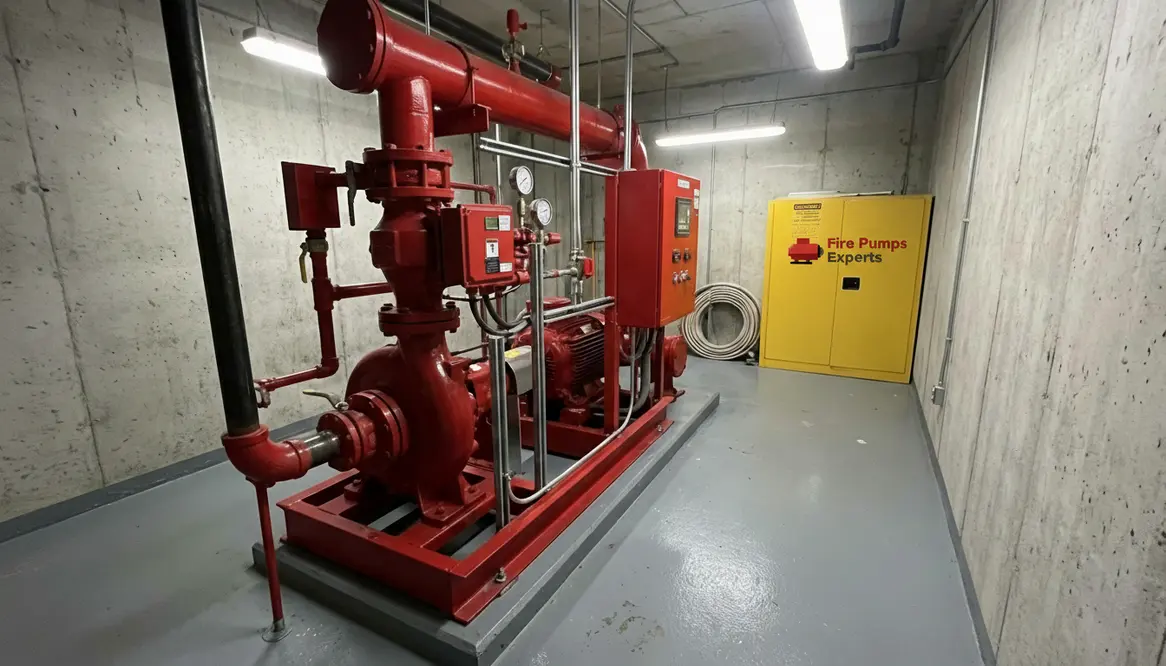
Where you place the fire pump matters more than people think. I have seen systems installed in locations that practically require a treasure map to access. That might work in an adventure movie, but not during an emergency.
So, I position pumps in areas that allow quick access for both firefighters and maintenance teams. Then, I coordinate with electrical, structural, and plumbing systems early in the design phase. This avoids conflicts that can delay projects or compromise performance.
Furthermore, I ensure proper ventilation and drainage. Fire pumps generate heat and require stable conditions. Ignoring that is like expecting your laptop to run smoothly inside an oven.
Long term reliability in high traffic commercial spaces
Retail plazas operate almost nonstop. Because of that, reliability becomes a long term commitment, not a one time installation. I always emphasize routine testing and monitoring.
In addition, I recommend integrating smart diagnostics. These systems can alert facility managers before small issues become major failures. It is like having a check engine light that actually tells you what is wrong instead of just causing anxiety.
Moreover, I work with property managers to create clear maintenance schedules. When everyone understands their role, the system stays dependable. And in a shared environment, clarity prevents finger pointing later.
Well planned retail plaza fire pump systems do not call attention to themselves on a normal day. They sit quietly in the background, ready to protect tenants, shoppers, and investments the instant something goes wrong.
Why shared systems raise the stakes
When multiple tenants depend on a common fire protection backbone, the design margin gets very thin. A shortcut in one corner of the project can ripple across the entire property. That is why carefully engineered retail plaza fire pump systems matter more than a single-occupant design tucked into a standalone box store.
I treat the pump room like the main server room of a data center. You would not accept guesswork on power, cooling, or redundancy for critical IT. The same mindset applies here: documented performance curves, verified water supply, and clear line of sight on how changes in occupancy affect the shared system.
Coordination with the broader site
Good planning reaches beyond the pump and piping. I coordinate with site utilities, fire department access routes, and even signage. A beautifully sized fire pump is useless if first responders cannot quickly locate and operate key valves, connections, and controls.
I also clarify ownership boundaries. In many plazas, the property owner manages core fire protection assets while tenants handle interior build outs. The more transparent that line is, the less likely you end up with someone assuming “the other guy” handled a crucial modification that never actually got done.
FAQ: Fire pump planning for shared retail sites
Questions about retail plaza fire pump systems usually start with sizing and end with “what did we forget?” The reality is that the questions themselves are a clue: when owners and designers are asking detailed questions early, the finished system is almost always stronger.
Bringing it all together
Planning fire protection for shared retail spaces is not about checking boxes. It is about building a system that quietly stands ready every second of every day. I approach each project with a focus on durability, adaptability, and precision. Because when everything is on the line, the system must perform without hesitation.
If you manage or develop large commercial properties, now is the time to evaluate your approach. Work with experts who understand the complexity of shared environments and can design systems that grow with your needs. The right strategy today ensures safety, compliance, and peace of mind for years to come.
When retail plaza fire pump systems are planned well, nobody talks about them. Tenants open for business, customers shop, and the pump room stays quiet. But in the rare moments when alarms sound and sprinklers open, all of that preparation turns into one thing that matters most: water where it is needed, at the pressure it is needed, exactly when it is needed.
If you want a deeper technical breakdown of options, performance curves, and component choices, you can start with resources like https://firepumps.org and then align those details with local requirements and your plaza’s specific tenant mix.