Seismic Fire Pump Design Requirements Guide
Fire Pump Design for Seismic Zones
I have spent a lot of time around pump rooms in large commercial and industrial buildings. Some of them hum quietly like a well tuned orchestra. Others feel like a mechanical jungle gym waiting for gravity to test its luck. However, when a facility sits in an earthquake prone region, the conversation quickly turns serious. That is where seismic fire pump design requirements step into the spotlight.
In simple terms, these requirements ensure that a fire pump system keeps working after the ground decides to dance. Hospitals, data centers, distribution hubs, and high rise commercial towers cannot afford a fire protection system that fails when it is needed most. Therefore, engineers design every component with movement, vibration, and structural stress in mind. And trust me, earthquakes are not gentle critics. They review your design like Simon Cowell on a bad audition day.
So today I will walk through how I approach fire pump systems in seismic regions. Along the way, I will explain the strategy behind resilient equipment layouts, anchoring methods, and performance reliability for major commercial and industrial facilities.
Why Earthquake Resilience Matters for Commercial Fire Pump Systems
First, let us set the stage. A fire pump exists for one purpose. It moves water with enough pressure to control or extinguish a fire. In a large property, that pump supports hundreds or even thousands of sprinkler heads. If the pump fails during a crisis, the entire protection network weakens.
Now add an earthquake to the mix. Suddenly pipes shift, structures flex, and heavy equipment tries to move in directions nobody planned for. Consequently, an unprotected pump assembly may slide, tip, disconnect, or fracture connected piping.
That is exactly why engineers apply seismic protection to fire pump systems in critical facilities. In my experience working with large commercial properties, resilience comes down to three goals.
- Keep the pump physically anchored and stable
- Protect piping and electrical connections from stress
- Maintain operational readiness immediately after seismic activity
Furthermore, many jurisdictions require compliance with seismic standards tied to building codes and fire protection regulations. For facility owners, meeting those requirements is not just about paperwork. It is about protecting assets worth millions, sometimes billions.
Besides, when your data center hosts half the internet traffic for a region, the last thing you want is a sprinkler system that shrugs and says, “Sorry boss, the earth moved.”
Key Engineering Principles Behind Seismic Fire Pump Design Requirements
Whenever I design or review a pump system in an earthquake zone, I focus on several engineering principles that support seismic fire pump design requirements. These ideas guide the entire system layout.
Anchorage and Structural Stability
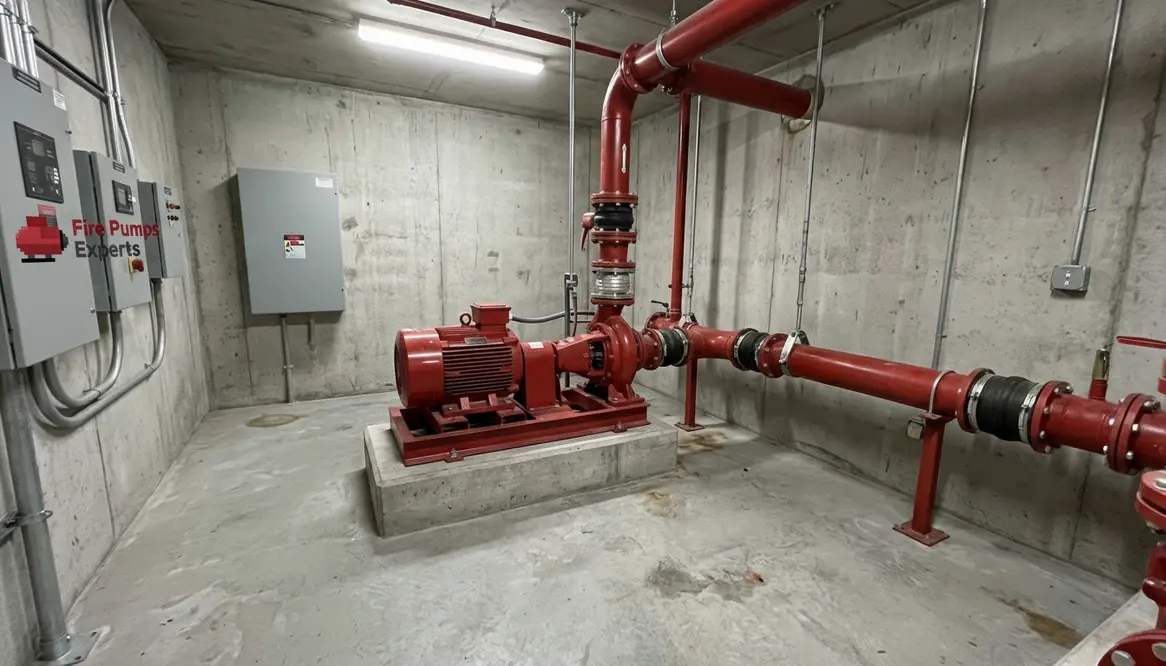
The fire pump, driver, and controller must be anchored securely to a reinforced foundation. Typically, engineers use seismic rated anchor bolts and concrete inertia bases. As a result, the equipment resists horizontal and vertical forces during ground motion.
In large pump rooms serving industrial campuses or high rise buildings, this anchoring becomes especially important because the pump assemblies can weigh several thousand pounds.
Flexible Piping Connections
Rigid piping behaves poorly during earthquakes. It prefers calm stability, not sudden lateral movement. Therefore, designers integrate flexible couplings or seismic joints near the pump suction and discharge lines.
This flexibility absorbs motion and prevents pipe fractures. Think of it like giving the piping system a little yoga training before the big test.
Equipment Clearance and Layout
Spacing matters more than many people realize. Adequate clearance around the pump allows components to move slightly without colliding with walls or adjacent equipment. Additionally, it helps maintenance teams access the system after an event.
Because let us be honest, the best fire pump in the world still needs humans to inspect it after the ground decides to shake like a dance floor in a Marvel movie finale.
Power and Control Protection
Electric controllers, diesel engines, and fuel systems also require seismic considerations. Mounting brackets, conduit supports, and fuel line restraints all help maintain reliable operation. After all, a pump without power is basically a very expensive paperweight.
How I Design a Pump Room That Survives the Shake
When planning a pump room for a major commercial or industrial property, I treat the space almost like a small fortress for mechanical equipment. Every detail supports durability and accessibility.
Structural Considerations
- Reinforced concrete housekeeping pads
- Seismic rated anchor bolts
- Equipment bracing where needed
- Clear structural load paths
- Separation from vibration sensitive equipment
Mechanical and Utility Protection
- Flexible couplings at pump connections
- Seismically supported piping
- Secure fuel storage for diesel pumps
- Protected electrical conduit runs
- Redundant monitoring systems
Together, these design choices support the broader framework of seismic fire pump design requirements. More importantly, they help ensure the pump stays operational even if the surrounding structure experiences significant movement.
In large logistics facilities or manufacturing plants, this reliability becomes crucial. Those buildings often store high value equipment and inventory. Consequently, the fire pump system must perform regardless of what the earth decides to do beneath it.
What Do Engineers Check When Evaluating Seismic Fire Pump Design Requirements?
Good question. Whenever I evaluate a system, I look beyond the pump itself. Instead, I study how the entire network behaves during seismic forces.
First, I examine the structural anchorage of the pump assembly. Engineers calculate expected lateral forces based on building codes and seismic zones. The anchors must resist those loads without pulling free.
Next, I review the piping configuration. Long rigid pipe runs without flexible connections often fail during earthquakes. Therefore, strategic placement of couplings or expansion joints becomes critical.
Then I inspect the support system. Piping must use seismic rated hangers and bracing. Without them, pipes can swing or collapse during intense motion.
Electrical reliability also plays a role. Controllers and transfer switches must remain accessible and stable. Additionally, emergency power systems require secure mounting to ensure the pump can start when needed.
Finally, I evaluate accessibility for post event inspection. After an earthquake, facility teams must quickly confirm that the fire protection system still operates. A well designed pump room makes that process straightforward.
In short, effective compliance with seismic fire pump design requirements comes from viewing the system as a coordinated ecosystem rather than a single piece of equipment.
Balancing Code Compliance With Real World Reliability
Building codes and fire protection standards provide the foundation for safe design. However, I always remind property owners that code compliance is the starting line, not the finish line.
For large commercial campuses, distribution centers, healthcare complexes, and data facilities, the cost of downtime can be enormous. Therefore, I often recommend design strategies that exceed the minimum standards tied to seismic fire pump design requirements.
For example, additional piping flexibility or reinforced anchoring may add modest construction cost. Yet those upgrades can dramatically increase survivability during severe seismic events.
Furthermore, routine inspection and testing remain essential. Even the best design cannot compensate for neglected maintenance. Fire pumps need regular performance testing, controller checks, and visual inspection of seismic restraints.
Think of it like maintaining a classic car. You would not park a vintage Mustang for ten years and expect it to roar to life on command. The same logic applies to mission critical fire protection systems.
If you want a deeper look at how ongoing inspections support long term performance, resources like Kord Fire’s article on routine fire pump inspections and their importance at routine fire pump inspections can complement your seismic planning strategy.
Frequently Asked Questions
Conclusion
Designing a reliable fire pump system in an earthquake zone requires careful planning, engineering discipline, and a clear understanding of seismic fire pump design requirements. If your commercial or industrial property operates in a seismic region, the right design approach protects both lives and assets.
At firepumps.org, we help major facilities build resilient fire pump systems that stay ready when the unexpected happens. Reach out today and let us strengthen your fire protection strategy before the ground decides to move.