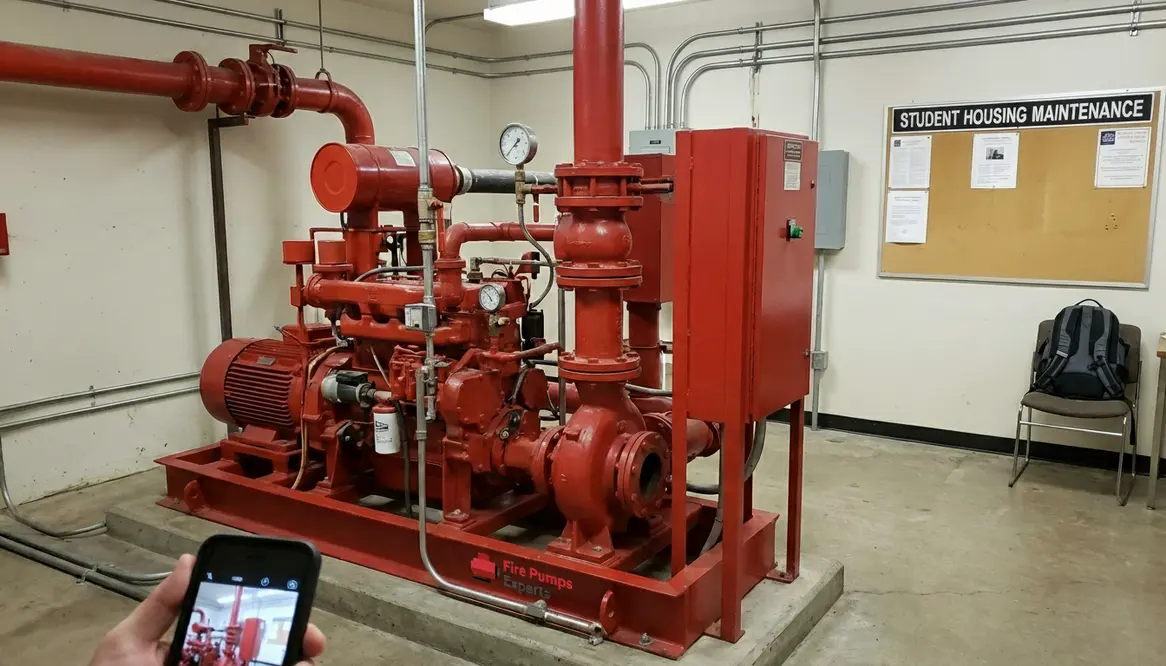
Student Housing Fire Pump Requirements Guide
I have spent enough time around large buildings to know one simple truth. When you pack hundreds, sometimes thousands, of students into one place, fire safety stops being a checklist item and becomes a living system. That is where student housing fire pump requirements step into the spotlight. Within the first few minutes of any emergency, the right fire pump does not just support sprinklers. It buys time, creates order, and frankly, keeps chaos from auditioning for the lead role. And yes, if buildings had personalities, the fire pump would be the calm, unshakable one narrating while everything else panics.
Why dense student living changes everything
Student housing is not just another commercial property. It behaves differently. For one, occupancy loads spike fast. Rooms are shared, lounges stay busy, and late night cooking experiments occasionally go… off script. Because of that, fire protection systems must respond instantly and consistently.
Therefore, I always look at density first. More people means higher evacuation demand, but also higher water demand. Sprinkler systems require sustained pressure across multiple floors at once. If the system drops even slightly, performance suffers. Consequently, fire pumps must be sized not just for average use, but for peak simultaneous discharge.
Additionally, modern student buildings are taller and more complex. That vertical reach increases friction loss in pipes. So, without a properly designed pump system, water simply will not travel where it needs to go. No drama, just physics.
What do student housing fire pump requirements actually demand?
I get this question a lot, and the answer is both straightforward and layered. At the core, student housing fire pump requirements revolve around delivering reliable water pressure and flow under worst case conditions.
However, codes and standards such as NFPA 20 and local regulations shape the details. These include:
- Capacity and flow rates that match sprinkler system design density
- Redundancy considerations in larger facilities to avoid single points of failure
- Power supply reliability, often requiring backup generators
- Automatic activation so response time is immediate
Moreover, inspectors do not just look at installation. They expect ongoing testing, maintenance logs, and performance verification. In other words, the pump is not a set it and forget it deal. It is more like a gym membership. You only get results if you actually use it.
Designing for pressure, flow, and real world behavior
When I approach a system design, I think in terms of behavior, not just numbers. Buildings do not operate in perfect lab conditions. People open multiple sprinkler heads, valves fluctuate, and demand spikes unpredictably.
Therefore, I focus on three pillars. First, pressure stability. The pump must maintain consistent output even when demand shifts suddenly. Second, flow capacity. It must meet the highest expected load without hesitation. Third, system integration. Pumps must work seamlessly with alarms, valves, and backup systems.
Additionally, I consider wear over time. A pump that performs beautifully on day one but degrades quickly is a liability. So, selecting durable components and planning regular testing becomes just as important as initial sizing.
Common mistakes I see in large student housing projects
Now, let me save you some future headaches. I have seen a few patterns repeat, and none of them end well.
- First, undersizing the pump. It might pass on paper, but in reality, it struggles under peak demand.
- Second, ignoring backup power. When the grid fails, the fire pump must not.
- Third, poor maintenance planning. Even the best system fails if it is neglected.
On the lighter side, I have also seen systems installed in spaces so tight you would think they were designed during a game of Tetris. Access matters. If technicians cannot reach the equipment easily, maintenance suffers. And when maintenance suffers, reliability follows.
Balancing compliance with long term performance
Compliance Focus
- Meeting codes and inspections
- Passing initial system acceptance tests
- Documenting installation and specifications
- Ensuring proper alarms and triggers
Performance Focus
- Consistent pressure during peak demand
- Durability across years of operation
- Ease of maintenance and testing
- Adaptability to building changes
While compliance gets the building open, performance keeps it safe over time. I always remind stakeholders that codes represent the minimum. Real safety lives above that line, especially when talking about student housing fire pump requirements that need to stand up to real-world abuse, not just plan review.
How I future proof fire pump systems in student housing
Student populations grow. Buildings expand. Usage patterns change. Therefore, I design with flexibility in mind. I often account for potential system expansion, whether through scalable pump capacity or space for additional equipment.
Additionally, I recommend smart monitoring systems. These tools track performance in real time and flag issues before they escalate. Think of it as giving your fire pump a voice. And unlike most group chats, this one only speaks when something actually matters.
Finally, I emphasize routine testing. Weekly and annual checks ensure the system remains ready. Because in an emergency, there is no warm up period. It is go time. If you are unsure where your current setup stands against modern student housing fire pump requirements, start by reviewing test records, monitoring data, and any recent building changes that may have outgrown the original design.
FAQ
The questions below come up constantly when planning or upgrading systems to meet current student housing fire pump requirements. Keeping these answers handy makes design conversations much faster and far less stressful.
Final thoughts and next steps
When I look at student housing, I do not just see buildings. I see responsibility at scale. Meeting student housing fire pump requirements is not about checking boxes. It is about building systems that respond instantly, perform consistently, and endure over time. If you manage or develop large facilities, now is the moment to evaluate your setup, upgrade where needed, and partner with experts who understand complex commercial systems.
Start by reviewing your latest inspection reports, pump test curves, and any recent renovations that may have shifted hydraulic demand. Compare those findings against current codes, local amendments, and best practices. When in doubt, bring in a fire protection engineer who works routinely with student housing fire pump requirements and can model performance instead of guessing from rule-of-thumb.
If you want a reference point while you plan your upgrades, resources like https://firepumps.org can help you frame the right questions before you commit to equipment. Because when safety is on the line, good enough is never enough, and a well-designed fire pump system becomes one of the most reliable allies your building will ever have.