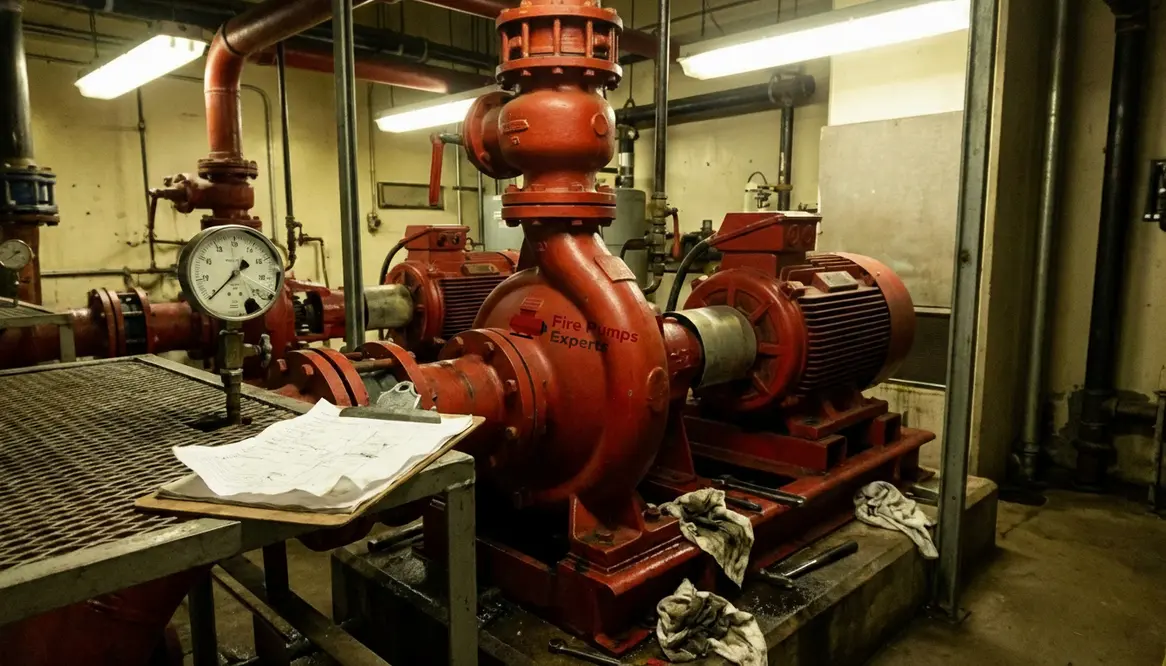
Top Fire Pump Inspection Failure Causes and Prevention
Why Fire Pumps Fail During Inspections and How to Prevent It
I have spent years walking through mechanical rooms in large commercial towers, hospitals, manufacturing plants, and distribution centers. The hum of equipment, the smell of oil, the quiet confidence that everything will work when needed. Yet during inspections, I often see the same uncomfortable truth. Fire pumps that should perform flawlessly fail their tests.
Most of those failures are not dramatic. No sparks flying. No alarms screaming like a scene from an action movie. Instead, the issues come from predictable fire pump inspection failure causes that quietly build over time. Poor maintenance. Small mechanical neglect. Testing done halfway. And sometimes, a system installed perfectly years ago but slowly forgotten.
In commercial and industrial buildings, that quiet neglect can become expensive. Inspections fail, compliance slips, insurance questions start appearing, and facility managers suddenly inherit a problem nobody wanted to own.
So today I want to walk through the real reasons pumps fail inspections and more importantly how I prevent those failures before the inspector even opens their clipboard.
Fire Pump Inspection Failure Causes I See Most in Commercial Buildings
Let me start with something simple. Fire pumps rarely fail because they are bad machines. In fact, most are built like tanks. The real trouble comes from the environment around them and the way they are maintained.
When I evaluate systems in large properties, several fire pump inspection failure causes appear again and again.
Common technical problems
- Churn test pressure problems. If the pump cannot maintain correct churn pressure, the inspector immediately knows something is off.
- Controller issues. Faulty controllers, outdated firmware, or wiring issues can stop the pump from starting automatically.
- Closed or partially closed valves. It sounds ridiculous, but it happens more often than you would believe.
- Fuel system problems on diesel pumps. Old fuel, clogged filters, or weak batteries can sabotage a test.
- Blocked sensing lines. Pressure sensing lines collect debris over time and quietly lie to the controller.
Underlying risk factors
- Busy maintenance teams that never quite get back to the pump room
- Turnover in facility staff and loss of system knowledge
- Renovations that quietly change hydraulic conditions
- “If it is not alarming, it must be fine” culture
- Fire protection treated as an expense, not as infrastructure
What fascinates me is how ordinary these problems are. None require exotic engineering to prevent. They simply require attention.
And attention, in large facilities, is often the first casualty of a busy maintenance schedule.
What Happens During a Fire Pump Test That Causes Failures?
During an inspection, the pump must prove it can perform under demand. That means running through a series of flow and pressure tests while inspectors observe how the system behaves.
I have watched perfectly good pumps stumble during this moment because the supporting pieces were neglected.
Where tests expose hidden weaknesses
For example, during flow testing we open test headers and simulate real demand. If pressure drops below acceptable levels, inspectors immediately begin looking for fire pump inspection failure causes. The pump might run, but if it cannot maintain required pressure at specific flow rates, the system fails.
In many commercial properties, the pump itself is fine. Instead, the building has slowly changed around it. Renovations alter pipe friction. New tenants increase water demand. Valves shift during other maintenance projects. Over time, the system drifts away from the conditions it was originally designed for.
Then inspection day arrives like a surprise quiz nobody studied for.
I like to tell facility managers this simple truth. Fire pumps are loyal machines. They will do their job if we do ours.
Ignore them long enough, though, and they will embarrass you in front of the inspector. Kind of like a teenager asked to clean their room before guests arrive.
Inside the Mechanical Room: Problems That Quietly Grow Over Time
Mechanical Issues
- Worn couplings or misalignment
- Seal leaks that slowly worsen
- Air trapped in suction lines
- Corrosion on sensing lines
- Cooling line blockages
Operational Oversights
- Missed weekly churn tests
- Incomplete documentation
- Controller alarms ignored
- Battery testing skipped
- Improper valve positions after service
These issues rarely trigger panic during daily operations. The pump room still looks tidy. The gauges still move. Nothing appears broken.
However, inspectors look deeper. They understand the subtle fire pump inspection failure causes that accumulate behind the scenes.
For example, I once inspected a large distribution facility where the pump ran beautifully. Smooth motor, stable pressure, great flow.
The inspection still failed.
Why?
The sensing line feeding the controller was partially clogged with sediment. The pressure readings were wrong. The controller responded late during startup. The pump technically worked, but the system behavior failed compliance standards.
The fix took twenty minutes.
The failed inspection report lasted much longer.
How I Prevent Fire Pump Inspection Failures Before Inspectors Arrive
I approach prevention the same way a pilot approaches pre flight checks. Methodical. Calm. Nothing rushed.
Large commercial properties benefit from structured preparation long before inspection season arrives.
Trend the data, not just the alarms
First, I run performance trend checks throughout the year. I compare flow and pressure readings to historical data. If numbers drift, I investigate early.
Look beyond the pump casing
Next, I inspect the supporting components surrounding the pump. Many fire pump inspection failure causes originate outside the pump housing itself.
- Verify valve positions across the system
- Flush pressure sensing lines
- Inspect relief valves and circulation lines
- Test controller auto start sequences
- Check diesel batteries and fuel quality
Treat paperwork as part of the system
Additionally, I review documentation with the same seriousness as mechanical work. Inspectors expect clear maintenance records in commercial and industrial buildings. Missing logs can trigger questions that delay approvals.
Rehearse inspection day
Finally, I simulate inspection conditions weeks before the official test. That rehearsal exposes weaknesses without the pressure of an inspector watching.
Think of it like rehearsing a presentation before a board meeting. You do not want your first run to happen when the executives are already seated.
If your facility team wants outside help staying ahead of these fire pump inspection failure causes, working with a specialized fire pump service provider like Kord Fire Protection can turn inspections from a headache into a predictable, well-documented routine.
Smart Facilities Treat Fire Pumps Like Critical Infrastructure
The most reliable systems I see belong to facilities that treat fire protection equipment as essential infrastructure rather than background machinery.
Hospitals, data centers, and major manufacturing plants understand something important. Their fire pumps protect millions of dollars in property and operations.
Because of that, they actively monitor performance indicators connected to the typical fire pump inspection failure causes seen in large facilities.
- They schedule quarterly system reviews.
- They verify flow test results against original pump curves.
- They update maintenance procedures when building conditions change.
- They budget for proactive repairs instead of emergency reactions.
- They train staff on how the fire pump system actually works.
And perhaps most importantly, they involve specialists who focus on commercial scale fire pump systems. Not every contractor understands the complexity of high capacity industrial pump rooms.
When that expertise is present, inspections become routine rather than stressful.
And nobody has to pace outside the mechanical room like a nervous movie character waiting for the results.
FAQ: Fire Pump Inspection Failures
What causes most fire pump inspection failures?
The most common causes include valve misalignment, clogged sensing lines, controller faults, weak diesel batteries, and skipped maintenance testing.
How often should commercial fire pumps be tested?
Weekly churn tests, monthly inspections, and annual flow testing are standard for most commercial and industrial systems.
Can a fire pump run but still fail inspection?
Yes. If the pump cannot maintain required pressure, starts incorrectly, or records inaccurate readings, inspectors may fail the system.
Do controller issues cause inspection failures?
Yes. Controllers manage automatic startup and pressure response. Faulty controllers are a common reason systems fail compliance tests.
Why are sensing lines important in fire pump systems?
Sensing lines feed pressure data to the controller. Blockages or corrosion can produce incorrect readings that affect pump performance during testing.
Conclusion
Fire pump inspections should never feel like a gamble. When commercial and industrial facilities understand the real fire pump inspection failure causes, they can correct small issues long before inspectors arrive. If you manage a large property, the smartest move is proactive testing, detailed system reviews, and expert support focused on commercial pump systems. When the day of inspection finally comes, the result should feel less like a surprise and more like a confirmation that your protection system is ready to perform.