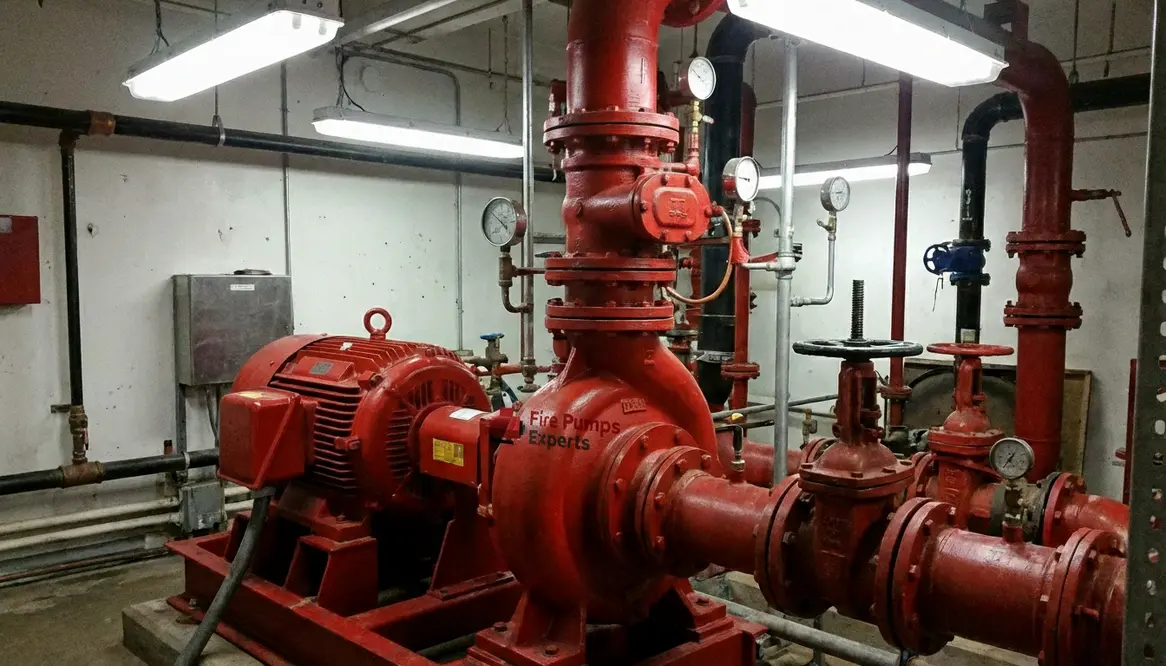
When Is a Fire Pump Required by Code
A practical guide for facility managers, engineers, and anyone wondering if that big red pump in the mechanical room is really necessary.
When a Fire Pump Is Required by Code
I get this question more often than you might think: when is a fire pump required? Usually it comes from facility managers, property engineers, or someone staring at a set of fire protection drawings while quietly wondering if the building really needs that big red pump sitting in a mechanical room.
The answer is not random. Codes such as NFPA 20 and building regulations lay out clear conditions that trigger the need for a fire pump. However, the real story sits behind the numbers. Water pressure, building height, hazard levels, and system demand all play a role. And trust me, once you understand the logic behind it, the rules start to make sense. In fact, the code writers are not trying to complicate your life. They are simply making sure that when a sprinkler head opens during a fire, water arrives with enough force to do its job.
So let me walk you through it the same way I explain it to clients responsible for large commercial and industrial properties. Think of it as a calm tour through the mechanics of code requirements. And along the way, we might even make fire pumps sound slightly less intimidating.
Quick Answer: When Is a Fire Pump Required?
In plain terms, a fire pump is typically required whenever the available water supply cannot provide enough pressure and flow to satisfy the hydraulic demand of your sprinkler or standpipe system. That gap between “what the system needs” and “what the city main delivers” is where the pump earns its keep.
That is the heartbeat behind the question facility teams keep asking: when is a fire pump required for this particular building?
The Core Principle Behind Fire Pump Requirements
Before we get into specifics, it helps to understand the central idea that drives every code requirement. Fire protection systems depend on water pressure and water flow. Without both, sprinklers and standpipes become little more than decorative plumbing.
In many cities, the municipal water supply already provides enough pressure to feed a sprinkler system in a commercial building. However, that is not always the case. In fact, once buildings grow taller, larger, or more complex, the available pressure from the city main often falls short.
This is where the question when is a fire pump required becomes important.
A fire pump boosts water pressure so that the system meets the hydraulic demand calculated during system design. In other words, it gives the building the muscle it needs to fight a fire effectively.
Therefore, whenever the municipal supply cannot deliver the required pressure and flow for the fire protection system, codes typically require a fire pump.
It sounds simple. And in principle, it is. But the conditions that lead to that decision can be surprisingly varied.
Pressure Problems in Large Commercial Buildings
One of the most common reasons a fire pump becomes necessary involves pressure loss inside large buildings.
Water loses pressure as it travels upward and across long piping networks. Gravity plays a role. Pipe friction plays a role. Even fittings and valves take their tiny toll along the way.
Consequently, high rise offices, large industrial facilities, distribution centers, and expansive commercial campuses often reach a point where the city water supply simply cannot keep up.
Let me paint the picture.
If a sprinkler on the top floor of a twenty story building opens, the system must still deliver the pressure and flow required by code. Without assistance, the municipal supply might arrive at that sprinkler with the enthusiasm of a sleepy garden hose.
Not ideal.
So the system designer calculates the demand and compares it to the available water supply. If the numbers do not match, a fire pump steps in to bridge the gap.
In practical terms, this means many major commercial buildings depend on fire pumps simply to overcome elevation and friction loss.
When Is a Fire Pump Required for High Demand Systems?
Sometimes the building is not especially tall. Yet the fire protection demand itself is enormous.
This happens frequently in industrial facilities, manufacturing plants, large storage warehouses, and high hazard occupancies. These properties often require sprinkler systems designed for higher flow rates to control fires involving combustible materials or industrial processes.
High Demand, Low Supply: The Code Trigger
Therefore, the system demand may exceed what the local water main can deliver.
At that point, the design team faces the classic code driven moment: when is a fire pump required to meet the calculated demand?
If the available supply cannot satisfy the hydraulic calculations for the sprinkler system, standpipe system, or foam system, then a pump becomes part of the solution.
Think of it like upgrading the engine in a truck. The load increased, so the power must increase too.
Except in this case the cargo is life safety.
Common Triggers That Lead to Fire Pump Installation
Typical Code Driven Triggers
- Insufficient municipal water pressure
- High rise commercial buildings
- Large industrial campuses with long pipe runs
- High hazard storage or manufacturing facilities
- Combined sprinkler and standpipe demand
- Underground parking levels requiring additional pressure
Situations That Surprise Property Owners
- Campus style buildings spread across large footprints
- Facilities far from municipal water mains
- Major retrofits that increase sprinkler density
- New storage configurations with higher hazard classifications
- Pressure loss from aging municipal infrastructure
In other words, the trigger is rarely just one factor. Usually it is a combination of building design, water supply limits, and fire protection demand.
And yes, sometimes the realization arrives late in the design process. That moment can feel a little like discovering you forgot popcorn halfway through a movie. Technically the show continues, but the experience changes.
What Codes Actually Look For During Design
Fire protection engineers do not guess whether a fire pump is necessary. Instead, they perform a water supply analysis.
First, they conduct a water flow test at the municipal main. This test reveals the available pressure and flow under real world conditions. Next, they run hydraulic calculations for the sprinkler and standpipe systems.
These calculations determine how much pressure and flow the system needs during a fire event.
Then comes the comparison.
If the available water supply falls below the system demand, the answer to when is a fire pump required becomes crystal clear. The system requires pressure boosting to comply with code.
However, the analysis does not stop there.
Designers also account for safety margins, future expansion, and reliability. Commercial and industrial facilities cannot afford a fire protection system that barely meets the numbers on paper.
After all, a distribution warehouse holding millions in inventory is not the place to gamble on borderline water pressure.
Retrofits and Expansions That Trigger Fire Pumps
Interestingly, many fire pumps appear years after a building opens.
Facilities evolve. Storage arrangements change. Production equipment expands. Additionally, many commercial buildings upgrade their sprinkler systems to meet newer codes.
Each change can alter the hydraulic demand of the system.
For example, a warehouse that once stored boxed consumer goods might transition into high density rack storage. That new configuration requires higher sprinkler flow rates.
Suddenly the existing water supply cannot keep up.
At that moment, building owners circle back to the same question: when is a fire pump required during a retrofit or system upgrade?
If the updated sprinkler design demands more pressure than the city supply provides, the code solution often points directly to a fire pump installation.
It is not glamorous equipment. But when designed and maintained properly, it quietly protects entire facilities.
Kind of like the unsung hero in a movie. The one who saves the day while the flashy characters get all the screen time.
Real-World Help With Fire Pump Decisions
If you are staring at a design that is right on the edge and wondering when is a fire pump required for your specific building, it helps to have specialists walk the property, review your test data, and confirm what the codes actually expect.
Teams like Kord Fire’s fire pump service experts do exactly that: verify your supply, identify risks, and recommend compliant, practical solutions that match both your building and your budget.
FAQ: Fire Pump Requirements for Commercial and Industrial Buildings
Below are some of the most common questions facility teams ask when they are trying to understand when is a fire pump required in real projects.
Conclusion
Understanding when a fire pump becomes necessary is not just a code exercise. It is about ensuring that commercial and industrial facilities have the pressure and flow needed when seconds matter most.
If you manage a large property and want clarity on system requirements, it helps to move beyond rules of thumb and get real data: water flow tests, hydraulic calculations, and a clear answer to the question, in your specific case, of when is a fire pump required and when the existing supply is enough on its own.
If you manage a large property and want clarity on system requirements, our team at FirePumps.org can help evaluate your water supply, system demand, and compliance needs. Reach out today and let us make sure your fire protection system stands ready when it matters most.