El Segundo Aerospace Fire Suppression Water Pressure
I have spent enough time around industrial buildings to know one truth. Fire protection is quiet when it works well. No alarms. No drama. Just steady systems waiting in the background like a good stage crew. In aerospace manufacturing plants, that quiet reliability matters even more. When I talk with facility engineers in Southern California, the conversation often circles back to one crucial topic: el segundo aerospace fire suppression water pressure. Without consistent pressure, even the best sprinkler network becomes little more than decorative plumbing.
El Segundo sits beside some of the most advanced aerospace production lines in the country. Satellites, avionics, and high value manufacturing demand strong protection systems. So today I will walk through how these facilities maintain dependable fire protection water pressure, why the systems must stay stable every second of the day, and what smart engineering practices keep those pipes ready to respond faster than a superhero cameo in a Marvel movie.
Inside the Demands of El Segundo Aerospace Fire Suppression Water Pressure
Aerospace plants are not ordinary commercial buildings. They house precision equipment, advanced materials, and production spaces that stretch across massive square footage. Because of that scale, el segundo aerospace fire suppression water pressure must stay both powerful and consistent.
When I walk through one of these facilities, I immediately notice the long sprinkler mains running across high ceilings. These systems must deliver water across huge distances while still meeting strict flow requirements. Meanwhile, fire codes demand reliable pressure at every sprinkler head.
However, municipal water alone rarely delivers what these plants need. City supply fluctuates. Demand changes throughout the day. A nearby industrial facility could draw water at the exact moment a fire system activates. Therefore, aerospace facilities build layered pressure solutions that remove uncertainty.
That usually starts with large fire pumps, dedicated storage tanks, and advanced monitoring controls. Together, they form a safety net that keeps water moving exactly where it should.
And yes, if you ever wondered what engineers get excited about at lunch, it is pump curves. Trust me. I have seen the diagrams.
Because of this layered setup, el segundo aerospace fire suppression water pressure stays stable even when municipal supply dips or facility demand spikes.
How Fire Pumps Stabilize Pressure in Large Manufacturing Facilities
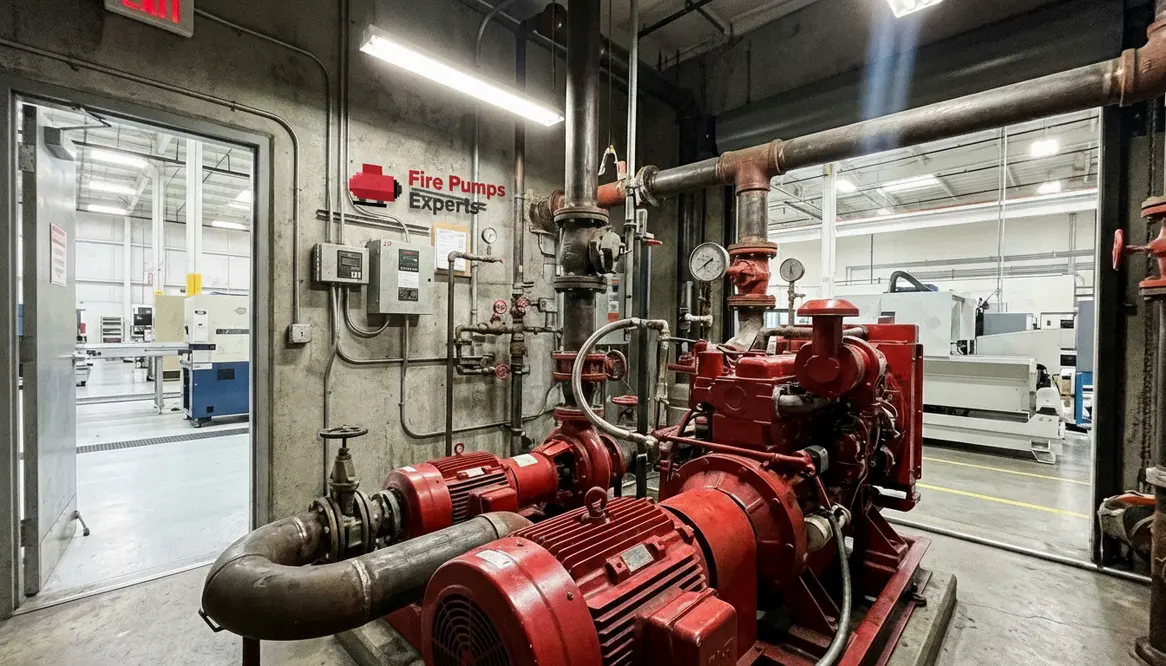
Fire pumps are the backbone of pressure stability. Without them, large commercial facilities could never maintain the water flow required for modern sprinkler systems.
In El Segundo aerospace plants, engineers design pump systems that respond instantly to demand. When the pressure in the fire protection line drops, the pump starts automatically and boosts flow across the network.
Moreover, these pumps operate under strict testing schedules. Facility managers run weekly churn tests and monthly inspections. That routine confirms the pump can deliver full power when needed.
Most aerospace facilities rely on several types of pumps.
- Electric fire pumps that connect to reliable power infrastructure
- Diesel fire pumps that provide backup protection if power fails
- Jockey pumps that maintain steady line pressure during normal conditions
The jockey pump deserves special attention. It keeps the system pressurized during everyday operations. That means the large fire pump does not start every time a tiny pressure fluctuation occurs.
Think of it as the calm security guard at the front desk. Quiet. Alert. And always ready to call in backup when things escalate.
Because of this layered setup, el segundo aerospace fire suppression water pressure becomes more than a design target. It turns into a daily operational reality that supports high value production without constant worry.
Key Infrastructure That Protects Water Pressure Across Aerospace Plants
Water Storage Systems
Large industrial tanks store thousands of gallons of dedicated fire protection water. These tanks isolate the fire system from fluctuations in city supply. As a result, pressure remains predictable during emergencies, even when neighboring users are pulling heavily on the municipal line.
Pressure Control Valves
Valves regulate water movement through long piping networks. They prevent pressure spikes that could damage pipes while ensuring remote areas still receive enough flow. Properly tuned valves balance el segundo aerospace fire suppression water pressure from pump discharge to the most distant sprinkler head.
Looped Piping Networks
Instead of one long pipe path, many facilities design looped systems. Water can travel multiple directions through the building. Therefore pressure stays balanced even if one segment shuts down for maintenance or future expansion work.
Industrial Grade Sprinkler Zones
Engineers divide massive buildings into zones. Each zone receives carefully calculated water supply based on hazard level, storage height, and equipment layout. This zoning helps maintain the correct pressure at each sprinkler head while avoiding unnecessary oversizing.
Supervisory Monitoring Systems
Digital monitoring tools track pressure, pump status, and valve positions in real time. When something changes, facility teams know immediately. That visibility keeps small anomalies in el segundo aerospace fire suppression water pressure from becoming large, expensive problems.
Backflow Prevention Assemblies
These assemblies protect municipal water systems while preserving stable internal pressure for the building. Properly selected and installed backflow devices keep the fire protection network ready without compromising public infrastructure.
Together, these systems support reliable el segundo aerospace fire suppression water pressure across large aerospace campuses that may span multiple structures and risk profiles.
What Role Do Inspections and Testing Play in Water Pressure Reliability?
If someone asks me the secret to reliable fire protection systems, I answer with one word. Maintenance.
Even the best equipment fails without regular inspection. Therefore aerospace manufacturing facilities follow strict testing programs aligned with national fire protection standards and local code requirements.
Weekly checks verify pump readiness. Monthly inspections confirm valves remain open and operational. Annual flow tests measure actual water delivery across the system and expose friction losses that might have crept in over time.
During those tests, technicians measure pressure at several points in the building. They verify that the system still meets the design criteria. If pressure drops below target levels, engineers investigate immediately instead of waiting for an alarm during a real incident.
Sometimes the fix involves recalibrating a pressure valve. Other times technicians replace aging pump components. In rare cases, facilities upgrade entire pump assemblies to meet new production demands or code updates.
Because aerospace plants evolve quickly, fire protection systems must evolve too. New manufacturing lines may increase hazard levels. Additional square footage can stretch piping networks. As a result, maintaining stable el segundo aerospace fire suppression water pressure becomes an ongoing engineering project rather than a one-time installation task.
Still, when teams stay proactive, the system works quietly in the background. Just like a good sound engineer during a concert. You never notice them until something goes wrong.
Engineering Strategies That Keep Pressure Consistent in High Value Facilities
Aerospace manufacturing environments hold extraordinary value. One production line may contain millions of dollars in equipment. Therefore engineers build fire protection systems with redundancy and resilience, not just minimum compliance.
First, they design systems with safety margins. Pumps deliver more capacity than the minimum requirement. Consequently, the system maintains strong performance even as equipment ages or minor friction losses accumulate in the piping network.
Next, facilities separate domestic water from fire protection supply. This isolation prevents routine building usage from reducing pressure during emergencies and keeps firefighting demand dedicated to one purpose only.
Additionally, many sites install multiple pumps in parallel configurations. If one pump needs service, another remains ready. That redundancy protects el segundo aerospace fire suppression water pressure from unexpected downtime and allows maintenance without jeopardizing coverage.
Engineers also consider seismic stability. Southern California facilities must secure tanks, pipes, and pumps against earthquake movement. Structural bracing keeps the fire system intact during seismic events so that pressure can still reach the sprinklers when shaking stops and fire risk peaks.
Finally, advanced monitoring platforms collect system data twenty four hours a day. Pressure trends reveal early warning signs long before a problem becomes serious. Abnormal starts, slow pressure decay, or unexpected jockey pump activity all become clues for attentive facility teams.
In other words, maintaining pressure is not a single device or quick fix. It is an ecosystem of smart design, constant observation, and disciplined maintenance supported by experienced specialists who work with complex systems every day.
Real-World Support For Fire Pump Performance
Behind every quiet, reliable aerospace fire protection system sits a team that understands how pumps, controls, and sprinklers fit together. Partnering with a company that specializes in fire pumps, NFPA 20 compliance, and ongoing testing can make the difference between hoping the system will work and knowing it will. Resources like the NFPA 20 overview for fire pump design, installation, and compliance at Kord Fire Protection’s NFPA 20 fire pump guide give facility teams a deeper look at how pumps should perform when called into action.
FAQ About Aerospace Fire Protection Water Pressure
Facility teams, risk managers, and plant engineers tend to ask similar questions when they evaluate fire protection in aerospace settings. Here are a few of the most common topics that come up in planning meetings and walk-throughs.
Protecting Aerospace Facilities Starts With Reliable Water Pressure
When I stand inside an aerospace manufacturing facility in El Segundo, I see more than machines and assembly lines. I see a carefully engineered safety network designed to protect people, technology, and entire production ecosystems. Maintaining reliable el segundo aerospace fire suppression water pressure sits at the center of that protection. If your commercial or industrial facility depends on a high performance fire pump system, now is the time to evaluate its strength. Work with experienced specialists who understand large scale systems and keep your protection ready every second of the day.